Bayajidda and the Snake of Kusugu
The founding legend of the Hausa states: a stranger kills the snake in Daura's well, marries Queen Daurama and fathers the line of the Hausa kings.
Source: Palmer, Sudanese Memoirs, 1928 (to check)
The Lore · West Africa · Lore Universe
Hausa states
Hausa city-states, Bori spirit possession tradition, Hausa women traders, Islamic synthesis, Sokoto Caliphate.
Why its stories are told
Stories are told to teach, to praise, to heal, to remember and to entertain, and each purpose has its own tellers.
The people call themselves Hausawa (singular Bahaushe, feminine Bahaushiya), their language Hausa (harshen Hausa) and their homeland Ƙasar Hausa, 'the land of Hausa', often simply Arewa, 'the north'.
The Land · Geography
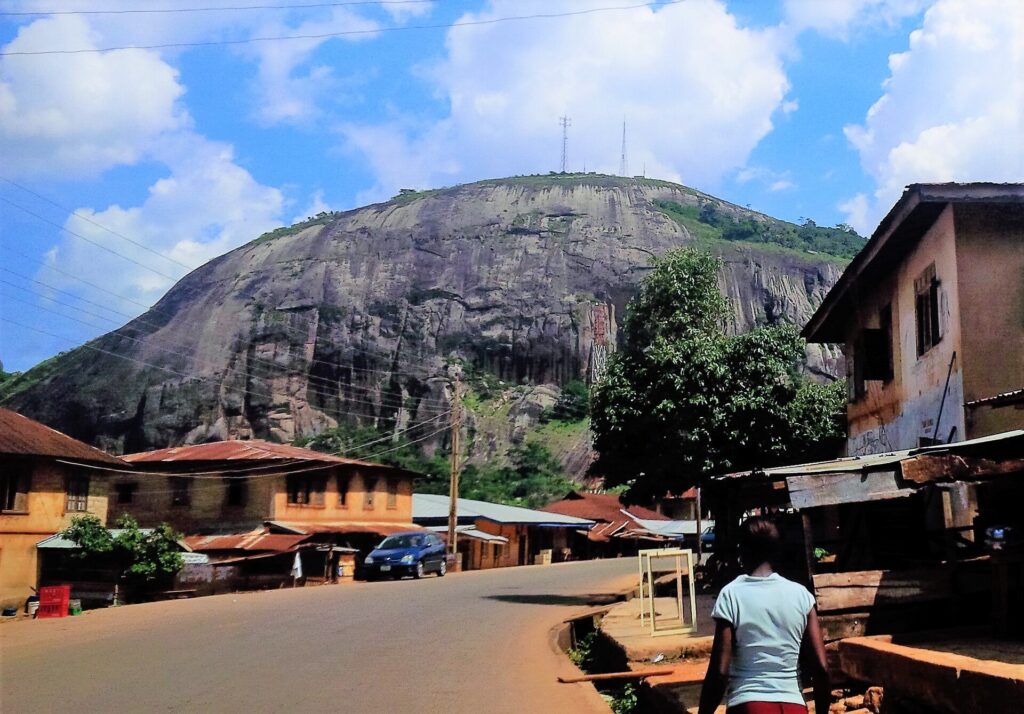
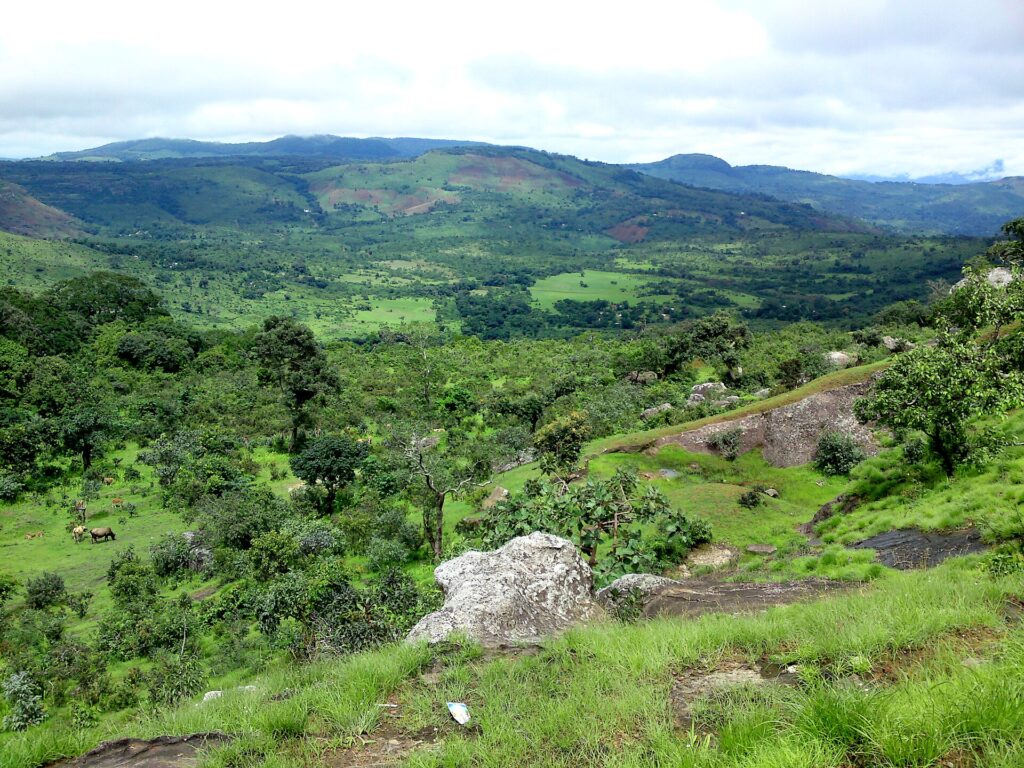
Hausaland lies in the Sudan and Sahel savanna, a wide plain of grassland and scattered trees broken by granite hills (inselbergs) and seasonal rivers. To the north it fades into the dry Sahel toward the Sahara; to the south it rises to the Jos Plateau and runs down to the Benue and the forest edge.
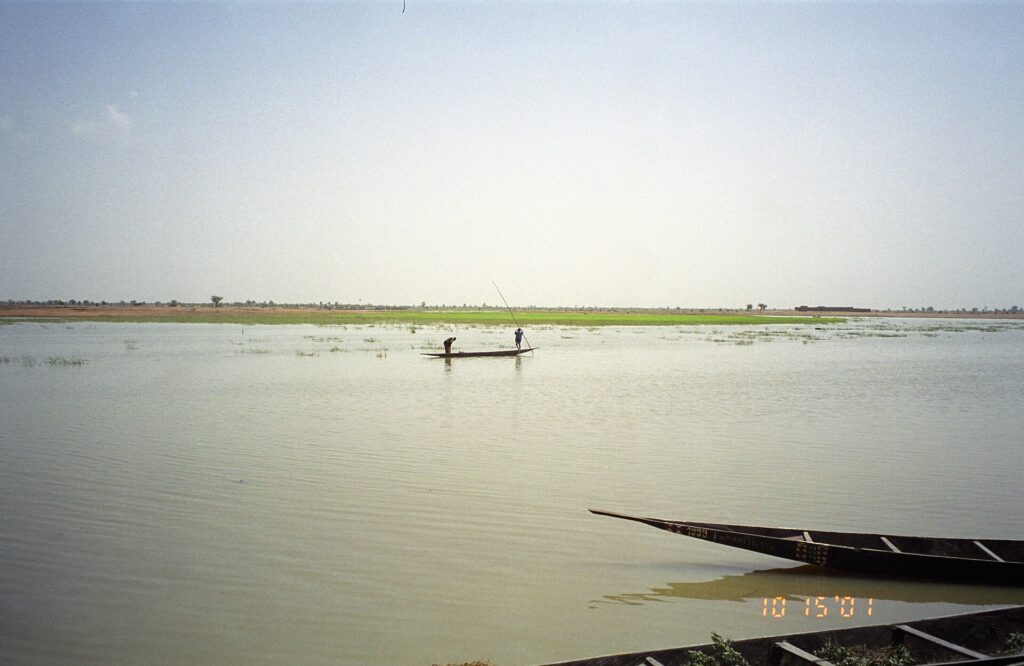
The climate is ruled by two seasons. The rains (damina) come from about May or June to September, bringing millet, sorghum, groundnuts, cowpeas and cotton; the long dry season brings the dusty harmattan wind from the Sahara. Rivers such as the Sokoto (Rima), Kano and Hadejia swell and shrink, and their flood plains (fadama) support dry-season farming.
The land shapes the stories. Water is precious, so the founding legend centres on a well. Hills such as Dala in Kano were early settlements and spirit sites. The bush (daji) beyond the farmed land is the domain of wild animals, iskoki and dangerous strangers, while the walled town (birni) is the place of order, faith and rule. Many tales send a character out from the town into the bush and back.
The land is also a crossroads: the savanna linked the Sahara trade to the north with the forest to the south, and Hausa towns grew rich as markets between them.
The People · Cultural Foundation · Society
This tradition belongs to the Hausawa of the savanna between the Niger River and Lake Chad: northern Nigeria (Kano, Katsina, Kaduna, Jigawa, Sokoto, Zamfara, Kebbi and neighbouring states) and southern Niger (Maradi, Zinder, Tahoua, Dogondoutchi and the Arewa region). Hausa is the largest Chadic language and is spoken as a first or second language by tens of millions.
The Hausa states took shape in the late first millennium CE as walled towns (birane, singular birni) grew from farming settlements around hills, iron working and markets. The Kano Chronicle dates the first king of Kano, Bagauda, to around 999 CE; archaeologists and historians treat its early dates as approximate. Daura is honoured as the oldest of the seven.
Movement shaped the people as much as settlement. The Bayajidda legend imagines a founder from the east via Borno, which many scholars read as memory of political ties with Kanem-Borno rather than literal migration. From the 14th century Wangarawa (Mande-speaking Muslim traders and scholars) settled in Kano and Katsina; from the 15th century Fulbe (Fulani) pastoralists and scholars moved into Hausaland; and Hausa traders in turn carried the language down long-distance routes to the forest and coast, founding the zongo quarters of towns across West Africa.
Five values shape Hausa narrative most strongly.
1. Kunya: modesty, restraint and a proper sense of shame. A character who loses kunya, by boasting, speaking out of turn or exposing what should be private, is set up to fall.
2. Hankali: good sense, patience and self-control. The wise listener, the patient wife and the shrewd trader win where force fails.
3. Karamci: generosity and hospitality, above all from those with wealth or office toward those who depend on them.
4. Mutunci: dignity and standing, the respect a person earns and must protect through conduct.
5. Faith and acceptance of what God has decreed (ƙaddara), which places human striving inside a larger order.
These differ from Western narrative values in emphasis. A hero is not admired for self-assertion against the group; the person who keeps their place in a web of obligations, while using wit inside it, is the model. The order of priority runs from God, to household and lineage, to the ruler and town, and only then to personal desire.
Unfamiliar story logic follows. A clever lie that restores order may be praised, while a truthful word spoken without kunya is punished. A youngest son (Auta) succeeds by patience and good manners rather than strength. And an ending that returns everyone to their proper station counts as happy even if no one has changed.
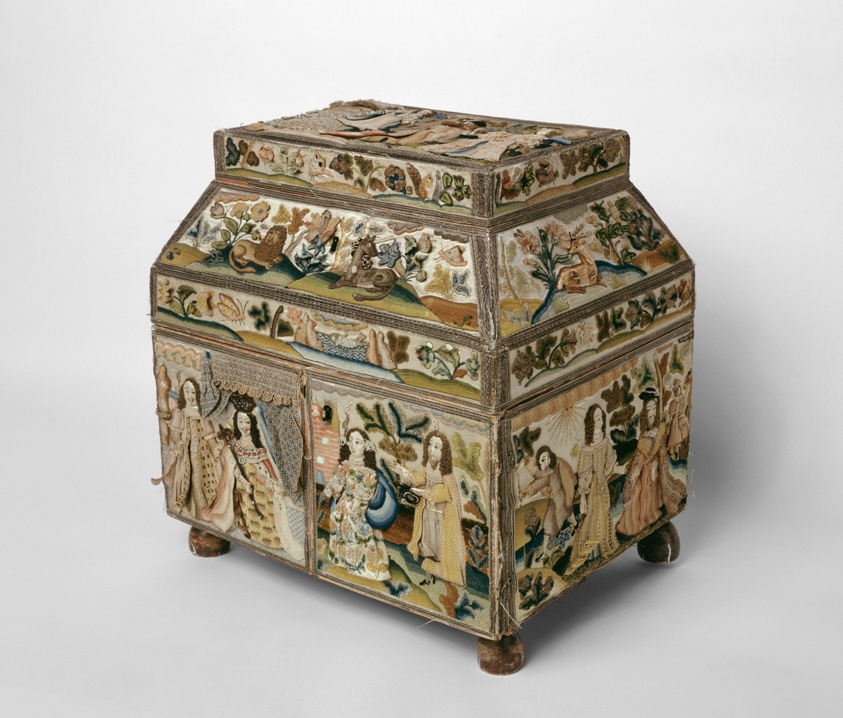
Hausa gender roles have changed greatly over the centuries and continue to change.
The early states remember powerful women. Daura was ruled by a line of queens before Bayajidda, in tradition; Amina of Zazzau led armies; and senior royal women held titles such as Magajiya and Iya. In Kano the Chronicle credits Muhammad Rumfa (late 15th century) with introducing kulle, the seclusion of wives.
Today many married women in towns live in auren kulle, marriage with seclusion, rarely leaving the compound by day. Seclusion does not end their economic life. Women cook food for sale, process grain, spin, sew, embroider and trade from home, using children and other intermediaries to buy and sell in the market, and they keep their own earnings. Rotating savings groups (adashe) and gift exchanges among women build their own wealth and networks, as Polly Hill, Enid Schildkrout and Barbara Callaway have documented.
Women lead in Bori, where most adepts are women, and in religious teaching in the tradition of Nana Asma'u, whose 'Yan Taru movement trained women teachers from the early 19th century.
Men hold public office, mosque leadership and long-distance trade. Bori also gives space to people outside conventional roles, including 'yan daudu, men who take on feminine manners, studied by Rudolf Gaudio.
Age is a strong principle of respect. Juniors greet seniors first, kneel or crouch for parents and elders, lower their eyes, and do not argue in public. Older siblings have authority over younger ones, and the eldest son often inherits leadership of the household.
Elders hold genealogy, history, proverbs and the memory of who owes what to whom. Grandmothers hold the tales and are the first teachers of children; elderly malamai hold religious learning and are sought for blessing and judgement; elderly Bori adepts hold the songs and knowledge of the spirits.
Adulthood comes with marriage more than with years. A married man heads a household; a married woman, especially after bearing children, gains standing, and in later life, when seclusion matters less, a woman may move freely, trade openly and act as a matchmaker or adviser.
Youth is a time of learning and service. Young men form work groups and compete in wrestling and boxing, and young women and girls once took part in public dances and games, some of which have declined.
In tales the youngest child, Auta, often wins, showing that age hierarchy is a rule tales love to test: the junior who respects the order while outwitting the seniors is honoured, while the junior who openly defies it is punished.
Hausa society is stratified by office, learning, wealth and occupation, as M. G. Smith analysed in The Hausa System of Social Status (1959).
At the top are the masu sarauta, the ruling title-holders: the emir (sarki) and titled officials such as the Galadima, Madawaki and Waziri. Alongside them stand the malamai, the scholars, whose standing comes from learning and piety, and the attajirai, wealthy merchants. Most people are talakawa, commoners, farmers and craftspeople. Until the colonial period and after, slavery (bauta) was widespread, and slave descent long carried stigma.
Occupations are ranked. Some crafts, such as weaving and leatherwork, are respected; others carry low status though they are necessary, including butchery (mahauta), barber-surgery (wanzamai) and praise-singing (maroka). These are often inherited within families, though Hausa occupational groups are not caste in the strict sense of fixed endogamy everywhere.
The storytellers' position is therefore mixed. Grandmothers who tell tales have the respect of age; maroka are socially low but feared for their words and needed by every patron; malamai who compose poetry are high. Each tells from their own place.
In stories, rulers are often foolish or greedy and outwitted by commoners, giving voice to the governed in a form the powerful can laugh at.
The basic unit is the gida, the household compound, headed by a man (mai gida) and holding his wives, children and often his married sons and their families. Historically, large farming households (gandu) worked shared fields under the household head, with members also holding private plots.
Kinship is mainly patrilineal for inheritance and office, but ties through the mother are close and warmly regarded. Marriage between cousins is common and approved.
Compounds form wards (unguwa), each with a ward head (mai unguwa). Wards make up towns and villages under village heads (dagaci) and district heads (hakimi), who answer to the emir. This chain of office, from emir to ward head, descends from the Hausa states and the Sokoto Caliphate and survives today as the traditional institutions alongside the modern state.
The wider community is the Muslim umma, and for traders, the network of Hausa communities across West Africa, held together by language, faith, credit and hospitality.
Membership carries obligations: to contribute to ceremonies, support kin, respect office-holders and keep the household's honour. The consequence of being cast out, by disgrace, debt or open defiance of religion, is loss of protection, marriage prospects and trade. In stories the outcast is often the bush-dweller, close to the spirits.
Through Time · History
Around 999 CE, according to the Kano Chronicle, Bagauda became the first king of Kano; historians treat this and other early Chronicle dates as approximate.
1349–1385), the Chronicle records the arrival of Wangarawa Muslim scholars and traders and the first mosque in Kano.
In the late 15th century Muhammad Rumfa (r. c.
1463–1499) rebuilt Kano, founded the Kurmi market and received the North African scholar Muhammad al-Maghili, who wrote him advice on Islamic government around 1493.
In the 16th century, by most reckonings, Amina of Zazzau led the armies of Zaria; some scholars place her in the 15th century instead.
In 1804 Shehu Usman ɗan Fodio made his hijra from Degel and began the jihad against the rulers of Gobir.
In 1808 the Gobir capital Alkalawa fell, and in 1809 Muhammad Bello founded Sokoto as the capital of the Caliphate.
In 1903 British forces conquered Kano and Sokoto, and Northern Nigeria came under colonial rule.
In 1960 Nigeria became independent, and Niger did the same that year.
By the late first millennium CE, walled farming and iron-working towns were growing in the savanna that became Hausaland.
Around 999 CE, according to the Kano Chronicle, Bagauda became the first king of Kano; historians treat this and other early Chronicle dates as approximate.
In the reign of Yaji of Kano (c. 1349–1385), the Chronicle records the arrival of Wangarawa Muslim scholars and traders and the first mosque in Kano.
In the late 15th century Muhammad Rumfa (r. c. 1463–1499) rebuilt Kano, founded the Kurmi market and received the North African scholar Muhammad al-Maghili, who wrote him advice on Islamic government around 1493.
In the 16th century, by most reckonings, Amina of Zazzau led the armies of Zaria; some scholars place her in the 15th century instead.
In 1804 Shehu Usman ɗan Fodio made his hijra from Degel and began the jihad against the rulers of Gobir.
In 1808 the Gobir capital Alkalawa fell, and in 1809 Muhammad Bello founded Sokoto as the capital of the Caliphate.
In 1903 British forces conquered Kano and Sokoto, and Northern Nigeria came under colonial rule.
In 1960 Nigeria became independent, and Niger did the same that year.
The stories carry this history: Bayajidda's legend recalls ties with Borno, the Chronicle remembers resistance at Dala, and jihad poetry still recites the reformers' deeds.
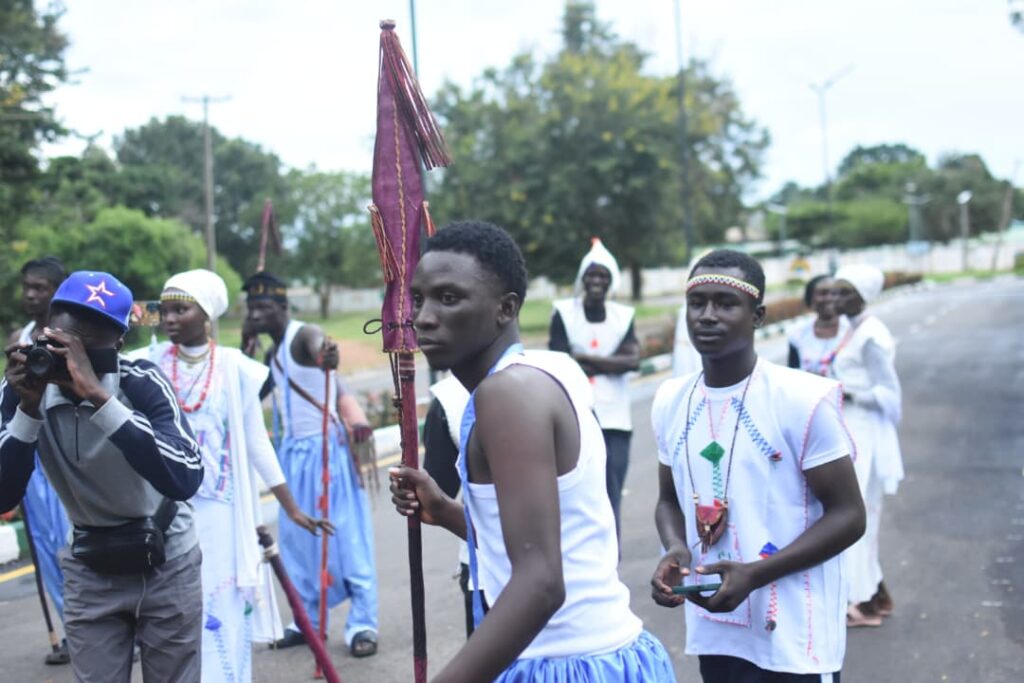
Movement into and out of Hausaland shaped its culture. Into Hausaland came Wangarawa traders and scholars from the Mali region from the 14th century, bringing Islam and long-distance trade; Fulbe (Fulani) herders and scholars from the west from about the 15th century, who later led the jihad; Kanuri from Borno; and Tuareg and North African traders across the Sahara.
Hausa culture is a long conversation with neighbours. With Islam and the Arabic-speaking world came writing, law, the mosque, Sufi orders such as the Qadiriyya and Tijaniyya, and a literary culture that turned Arabic metres into Hausa verse. Many Hausa words come from Arabic, and Ajami writing made Hausa itself a written language long before colonial rule.
Hausa stories exist because the city-states needed to explain who ruled, why, and by what right. Founding legends such as Bayajidda's killing of the snake at Daura tie royal houses to a single origin and to each other. Chronicles and praise songs keep the order of kings, the wars between Kano and Katsina, and the rise of Zazzau under Amina. Two great transformations shaped the tradition.
The Sacred · Deities and Spirits
Appears in Bori ceremony and praise songs as one of the chief iskoki.
Known through Bori songs and possession performance as the young nobleman of the spirit court.
Appears in Bori ceremony among the white (Muslim) spirits.
Honoured among the Maguzawa and in rural Bori; appears in Greenberg's account of Maguzawa religion.
Appears in Bori and in accounts of spirit illness in Hausaland and Niger.
Appears in Bori possession, where adepts take on the hyena's gait.
Appears in Bori possession, where adepts crawl on the ground.
Appears in Bori ceremony as the spirit of fire.
Bagauda and Tsumburbura in the Kano Chronicle; the cult at Dala and its priest Barbushe.
For the Muslim majority, sacredness comes from God and from His word. The Qur'an, its written verses, the mosque, the prayer times, the Sallah festivals, the pilgrimage to Mecca and the graves of saints and scholars all carry baraka (blessing). Written Arabic letters are powerful in themselves: verses written on a wooden slate (allo) and washed off with water (rubutun sha) are drunk for healing and protection, and verses sewn into leather amulets (laya) are worn.
The older layer, kept by Maguzawa and Azna communities and within Bori, locates sacredness in the iskoki and their dwelling places: certain trees, rocks, wells, streams, hills and crossroads. Sacred too are the spirits' colours, foods and praise names, and the musical instruments used to call them. Places such as the Kusugu well at Daura and Dala hill in Kano carry memories of both layers.
Royal power has its own sacred objects, kept in palaces and handled only by the keepers. The Kano Chronicle names the Dirki, a sacred object of the Kano kings; such regalia belong to their keepers.
The mechanism of sacredness is relationship and correct conduct. Something becomes sacred because God has blessed it or a spirit inhabits it, and it stays powerful only when the proper words, purity and offerings are kept.
At the summit, for nearly all Hausa today, is the one God, Allah, called also Ubangiji ('the Lord'), the Creator and Judge, beyond any rank of other beings. Even Bori adepts describe the iskoki as God's creatures acting by His permission.
Beneath God, in the Islamic order, are the angels and the prophets, and then the jinn and humans, both of whom will be judged.
The Bori iskoki form a hierarchy modelled on the Hausa court. Accounts vary, but the spirits are commonly grouped into families and houses with their own chiefs. Among the best known are Sarkin Rafi ('Lord of the Stream'), Ɗan Galadima ('the Prince', a handsome, gambling aristocrat), Malam Alhaji (an elderly Muslim scholar), Inna ('Mother', linked with farming and the Maguzawa), Doguwa ('the Tall One', a forest spirit), Kure (a hyena spirit), Mai Ja Ciki ('the One Who Crawls', a snake) and Ba-Toye (a fire spirit). Each has domains, colours, foods, songs and preferred adepts.
Relations among the spirits follow human patterns: kinship, marriage, rivalry and rank. Relations with humans are reciprocal. The spirits can cause illness and misfortune, and can heal and protect when given recognition, offerings and a body to ride. The adept honours the spirit; the spirit serves the adept.
Hausa Islam has no cult of ancestors in the sense of offerings to the dead as active powers. The dead are prayed for: prayers (addu'a) are said for them, alms are given in their name, and the Qur'an is recited on their behalf. Graves of the righteous, above all the tomb of Shehu Usman ɗan Fodio at Hubbare in Sokoto, are visited (ziyara) for blessing, which reformist Muslims question.
Ancestors are present in other ways. Genealogy matters greatly: royal houses, scholarly families and occupational lineages trace their right to office through named forebears, and praise songs recite those names. To be a descendant of a known founder is to carry an obligation to act worthily of them.
Among the Maguzawa the link between kin and spirit is closer. Joseph Greenberg's study (1946) records that iskoki are inherited within patrilineages: families honour particular spirits, who protect them when given their due and afflict them when neglected. The spirits are not the dead themselves but beings bound to the lineage across generations.
What the forebears want from the living is continuity: that the line continues, that its standing is kept, that its duties of faith and conduct are honoured. Shame on the living shames those who came before.
The Hausa spirit world has two overlapping maps.
The Islamic map is that of the Qur'an: God, the angels (mala'iku), the jinn (aljannu), human beings, and the realms of the grave, Paradise (Aljanna) and Hell (Wuta). Many Hausa identify the Bori iskoki with jinn, which places them inside the Islamic creation as beings made of smokeless fire, able to believe or disbelieve.
The Bori map is of a spirit society organised like a Hausa state. The iskoki live in an invisible city called Jangare and have rulers, titled officials, wives, children, slaves, Muslims and non-Muslims, and members of different peoples (Fulbe, Tuareg, Gwari, Maguzawa and others). Scholars commonly distinguish two broad groups: farfaru, white or Muslim spirits, and baƙaƙe, black spirits linked with the non-Muslim past. Accounts of their numbers and ranks vary greatly by region and by adept.
The two worlds share space. Iskoki live in the same towns and bush as people and are found in trees, water, abandoned places and the hot hours of the day.
Spirits cross into the human world by touching or mounting people. Humans enter the spirit world only by being mounted and, in dreams; the adept does not travel to Jangare but becomes, for the time of the ceremony, the spirit's horse.
Hausa ritual life runs on two calendars that meet in people's lives.
Islamic rites mark the main life transitions: the naming ceremony (suna) on the seventh day after birth, when a ram is slaughtered and the child's name is announced; the circumcision of boys (kaciya); the completion of Qur'anic study (sauka), celebrated by the family; marriage (aure), with its gifts, contract and the bride's move to her husband's house; and the washing, prayer and burial of the dead. The year is marked by Ramadan and the two Sallah festivals, which royal towns celebrate with the durbar (hawan sallah), processions of mounted horsemen before the emir.
Bori rituals restore balance. A person whose illness or misfortune is traced to an iska is brought to the adepts; music calls the spirits; the spirit who mounts the person identifies itself, and its wishes are learned. Initiation (girka) then binds the new adept to the spirit for life. Regular ceremonies honour the spirits, and some communities in Niger hold larger seasonal ceremonies.
In stories, ritual is often the frame or the resolution. A naming ceremony or wedding sets a tale in motion; a marriage closes it; the founding of Daura ends with the queen's marriage to Bayajidda, a ritual act that makes the dynasty.
For the Muslim majority there is one God, Allah, and no other deity. Beings described below are, in Bori and among the Maguzawa, iskoki: powerful spirits with personalities, ranks and rites, understood by most adepts as God's creatures. Accounts vary widely by region and teacher.
Sarkin Rafi, 'Lord of the Stream', is a senior spirit of water. Ɗan Galadima, 'the Prince', is a young aristocrat, handsome, generous and fond of gambling, who appears as a nobleman of the spirit court. Malam Alhaji is an old Muslim scholar who bends over his prayer beads and coughs, and is consulted for advice; adepts possessed by him act out piety and age. Inna, 'Mother', is linked with farming, fertility and the Maguzawa, and is honoured in rural Hausaland. Doguwa, 'the Tall One', is a female spirit of the bush and trees, often feared. Kure is a hyena spirit and Mai Ja Ciki a snake spirit, whose adepts limp or crawl. Ba-Toye is a fire spirit.
Each spirit has its colours, foods, songs and rhythms, its taboos and its preferred adepts. Sacred protocol requires that a spirit be greeted by its titles, given its music and offerings, and its taboos observed; the details of each spirit's rites belong to their keepers.
In the Kano Chronicle, Tsumburbura is the spirit of Dala hill, worshipped by the earliest people of Kano under its priest Barbushe.
Hausa tradition names several kinds of non-human beings.
Iskoki (singular iska, 'wind') are the main class of spirits. They are invisible, live in their own society, and can touch, strike or mount people. In Bori they are commonly grouped into farfaru (white, Muslim spirits) and baƙaƙe (black, non-Muslim spirits), and into families and houses. They may cause illness when angered or neglected and heal when honoured. Interaction is through music, offerings and possession, under the guidance of experienced adepts.
Aljannu (jinn) are the spirits of Islamic teaching; many Hausa treat iskoki and aljannu as the same beings under two names. Muslim healers address them through Qur'anic recitation.
Iskokin daji, 'bush spirits', haunt the wild land, trees and water, and are especially dangerous to travellers at noon and night.
Lineage spirits among the Maguzawa protect particular families when given their due.
The dead are not normally spirits who wander; but stories tell of the restless dead and of strangers who are not what they seem.
The rules: spirits must be treated with respect; their names and titles must be used correctly; their taboos must be observed; and dealings with them belong to those who know how. Muslims protect themselves with prayer and written verses.
Several beings and animals recur in Hausa stories.
The great snake of the Kusugu well, called Sarki ('King') in many tellings, held the well of Daura and let the people draw water only on Fridays until Bayajidda cut off its head. It stands for a power that blocks the life of the town.
The dodo is an ogre or monster of the tales, living in the bush, eating people, sometimes taking a beautiful human form to deceive a bride or a traveller. Clever heroines and youngest sons escape or destroy it.
Gizo, the spider, is the great trickster, greedy, clever and always hungry, with his wife Koki. He lives among humans and animals alike, and his tricks often explain why things are as they are.
Kura, the hyena, is strong, stupid and greedy, the usual victim of Gizo and Zomo. Zomo, the hare, is small and quick-witted and often defeats bigger animals.
Zaki, the lion, is king of the animals in tale-towns, powerful but often outwitted.
Bori spirits themselves take animal forms: Kure as hyena, Mai Ja Ciki as snake.
These creatures relate to humans as mirrors. Animal kingdoms copy Hausa towns, with their rulers, markets and marriages, so the tales can mock power and greed safely, through a spider or a hyena.
Islamic law sets the main prohibitions: eating pork or carrion, drinking alcohol, theft, adultery, neglect of prayer and fasting, and the worship of anything beside God. For reformist Muslims Bori itself falls under this last heading, which is why it has been opposed by the Sokoto reformers, by later Islamic movements and by some state authorities.
Social taboos centre on kunya. A person should avoid speaking the name of a spouse, and parents traditionally avoid speaking the name of a first-born child and show restraint toward that child in public; scholars of Hausa kinship have described this first-born avoidance at length. Women in seclusion should not be seen by unrelated men; elders should not be contradicted openly.
Each iska has its own taboos, which its adepts must observe: particular colours, foods, smells or actions that offend it. Breaking them can bring the spirit's anger as illness or misfortune.
Consequences differ by kind. Some are immediate, such as a spirit's sudden attack. Some are delayed and collective: chronicles and jihad poetry attribute the fall of rulers and the suffering of towns to injustice and neglect of religion. Some, in Islamic terms, wait for the Day of Judgement.
What cannot be undone is death, and a public loss of honour, which can follow a family for generations.
This part carries no pictures. Gods, spirits, the ancestors and ceremonies are named, with their roles, and drawn as marks only.
The Stories · Signature Stories
The legend of Bayajidda is the founding story of the Hausa states. Tellings vary; this follows the most widely recorded version. A prince named Abuyazidu, son of a king of Baghdad, quarrelled with his father and left with followers. He came to Borno, where the ruler gave him his daughter Magira in marriage but, fearing his strength, took away his horsemen.
And 2 more stories in the catalog below.
The Telling · Oral Tradition · Narrative Structure
The Figures · Survival and Diaspora
Recurring figures carry Hausa stories.
The trickster: Gizo the spider, greedy and clever, who wins by wit and loses by excess. He teaches both admiration for intelligence and caution about greed. Zomo the hare is the trickster who is usually in the right.
The dupe: Kura the hyena, strong and foolish, whose greed makes him an easy victim.
The youngest son: Auta, overlooked by his elder brothers, who succeeds through good manners, patience and help from those he has treated kindly. His arc runs from lowest to highest.
The orphan girl and the jealous co-wife: the mistreated stepdaughter or junior wife's child is tested in the bush and rewarded; the favoured child imitates her and is punished. These tales comment on the polygamous household.
The stranger-founder: Bayajidda, Bagauda, who come from outside, serve the town and marry into its ruling line.
The woman ruler: Daurama and Amina, who hold power in a world where most rule is male.
The scholar-saint: the malam who sees what others cannot, and in history Shehu Usman ɗan Fodio and Nana Asma'u.
The ruler: often foolish, vain or greedy in tales, outwitted by a commoner; noble and just in praise songs.
The praise-singer: feared, flattered and necessary, whose words make and unmake reputations.
Survival and diaspora
Yes. The Hausa storytelling tradition is fully living, though its forms have shifted. Tatsuniyoyi are still told to children, though radio, television and phones now compete with the evening circle. Praise-singing thrives at weddings, naming ceremonies, palace events and political rallies.
Hausa tradition travelled far and took new shapes. In West Africa the zongo communities of Ghana and the Hausa quarters of coastal and southern cities keep Hausa language, Islam and customs, and Hausa became a common language for many Muslim migrants who were not Hausa by birth.
Since the tradition never died, revival here means recovery, documentation and new creation. Scholars at Bayero University Kano, Ahmadu Bello University and Usmanu Danfodiyo University have edited and translated Ajami manuscripts, collected oral literature and studied Hausa poetry and song.
The Catalog · its places, peoples, practices and sources

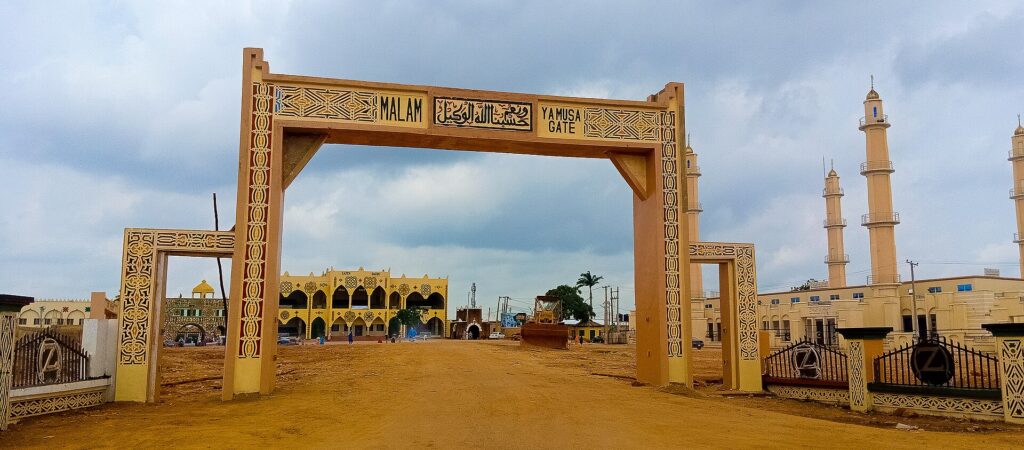
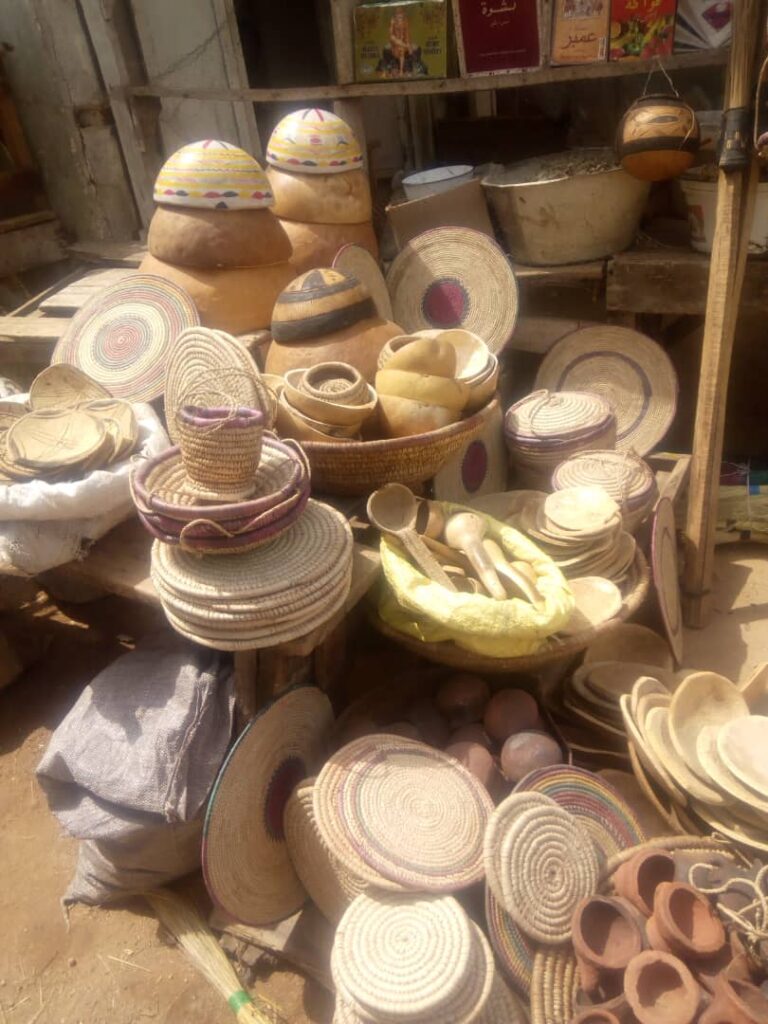
The World Bible
For the reader who wants all of it: every section of Seven Cities, in its eleven parts.
The people call themselves Hausawa (singular Bahaushe, feminine Bahaushiya), their language Hausa (harshen Hausa) and their homeland Ƙasar Hausa, 'the land of Hausa', often simply Arewa, 'the north'. Hausa is pronounced HOW-sah; Hausawa how-SAH-wah; Ƙasar KAH-sar, with the hooked Ƙ an ejective k. Hausa is a tonal Chadic language written today in Boko (Latin letters with the hooked consonants ɓ, ɗ, ƙ and ƴ) and, for centuries before that, in Ajami, Arabic script adapted to Hausa.
The seven original states are remembered as Hausa Bakwai, 'the Hausa Seven': Daura, Kano, Katsina, Zazzau (Zaria), Gobir, Rano and Biram (Garun Gabas). A second seven, Banza Bakwai, 'the illegitimate' or 'worthless seven', names neighbouring states the legend links by a lesser descent; the lists vary between tellers but usually include Zamfara, Kebbi, Nupe, Gwari, Yauri, Kwararafa and Ilorin.
Key names in this holding: Bori (BOH-ree), the spirit possession tradition, whose spirits are iskoki (ees-KOH-kee, singular iska, 'wind'); tatsuniya (tah-tsoo-NEE-yah, plural tatsuniyoyi), the told folktale; labari, a narrative held to be true; kirari, praise epithets; and waƙa, song and poem. Non-Muslim Hausa are known as Maguzawa in Nigeria and Azna (Asna) in Arewa in Niger.
This tradition belongs to the Hausawa of the savanna between the Niger River and Lake Chad: northern Nigeria (Kano, Katsina, Kaduna, Jigawa, Sokoto, Zamfara, Kebbi and neighbouring states) and southern Niger (Maradi, Zinder, Tahoua, Dogondoutchi and the Arewa region). Hausa is the largest Chadic language and is spoken as a first or second language by tens of millions.
The Hausa states took shape in the late first millennium CE as walled towns (birane, singular birni) grew from farming settlements around hills, iron working and markets. The Kano Chronicle dates the first king of Kano, Bagauda, to around 999 CE; archaeologists and historians treat its early dates as approximate. Daura is honoured as the oldest of the seven.
Movement shaped the people as much as settlement. The Bayajidda legend imagines a founder from the east via Borno, which many scholars read as memory of political ties with Kanem-Borno rather than literal migration. From the 14th century Wangarawa (Mande-speaking Muslim traders and scholars) settled in Kano and Katsina; from the 15th century Fulbe (Fulani) pastoralists and scholars moved into Hausaland; and Hausa traders in turn carried the language down long-distance routes to the forest and coast, founding the zongo quarters of towns across West Africa.
Hausa stories exist because the city-states needed to explain who ruled, why, and by what right. Founding legends such as Bayajidda's killing of the snake at Daura tie royal houses to a single origin and to each other. Chronicles and praise songs keep the order of kings, the wars between Kano and Katsina, and the rise of Zazzau under Amina.
Two great transformations shaped the tradition. The first was the slow coming of Islam from the 14th century, which brought literacy, Arabic learning and a new idea of legitimate rule while older spirit practice continued alongside it. The second was the jihad led by Shehu Usman ɗan Fodio from 1804, which built the Sokoto Caliphate and made reform of belief and law a matter of state; its scholars wrote poems in Fulfulde, Arabic and Hausa to teach the faith.
The stories serve many functions: moral teaching for children in tatsuniyoyi, legitimation of rulers in chronicles and kirari, healing and social commentary in Bori, and religious instruction in written waƙoƙi. Sacred and secular are told apart by setting. Qur'anic recitation and religious verse belong to the mosque, school and gathering of scholars; Bori songs belong to the possession ceremony; tatsuniyoyi are told at home, after dark, mainly by women to children, and are understood as fiction.
This holding draws on published scholarship and on Hausa writers and tellers whose work is in print. Records that need checking against the original publications are marked (to check) in the catalogue.
Key written sources include the Kano Chronicle, an Arabic history of Kano's rulers translated by H. R. Palmer (1908; reprinted in Sudanese Memoirs, 1928); the Hausa poem Waƙar Bagauda, edited by Mervyn Hiskett; the works of the Sokoto scholars, including the poems of Nana Asma'u edited by Jean Boyd and Beverly Mack (1997); and Murray Last's The Sokoto Caliphate (1967).
For Bori, the main studies are A. J. N. Tremearne's The Ban of the Bori (1914), which must be read for its data rather than its colonial framing, Fremont Besmer's Horses, Musicians, and Gods (1983) and Adeline Masquelier's Prayer Has Spoiled Everything (2001) on Bori in Niger. For tales, Frank Edgar's Hausa collections (1911–1913), translated by Neil Skinner as Hausa Tales and Traditions (1969). For women's lives, Mary Smith's Baba of Karo (1954), the life story of a Hausa woman told in her own words.
Hausa scholarship carries much of this work, at Bayero University Kano (including its Centre for Research in Nigerian Languages), Ahmadu Bello University Zaria, Usmanu Danfodiyo University Sokoto and the Arewa House archive in Kaduna. Named community representatives for this holding are yet to be recorded.
Five values shape Hausa narrative most strongly.
1. Kunya: modesty, restraint and a proper sense of shame. A character who loses kunya, by boasting, speaking out of turn or exposing what should be private, is set up to fall.
2. Hankali: good sense, patience and self-control. The wise listener, the patient wife and the shrewd trader win where force fails.
3. Karamci: generosity and hospitality, above all from those with wealth or office toward those who depend on them.
4. Mutunci: dignity and standing, the respect a person earns and must protect through conduct.
5. Faith and acceptance of what God has decreed (ƙaddara), which places human striving inside a larger order.
These differ from Western narrative values in emphasis. A hero is not admired for self-assertion against the group; the person who keeps their place in a web of obligations, while using wit inside it, is the model. The order of priority runs from God, to household and lineage, to the ruler and town, and only then to personal desire.
Unfamiliar story logic follows. A clever lie that restores order may be praised, while a truthful word spoken without kunya is punished. A youngest son (Auta) succeeds by patience and good manners rather than strength. And an ending that returns everyone to their proper station counts as happy even if no one has changed.
Causation in Hausa thought works on several levels at once. Ultimately all things happen by the will of God (Allah, also called Ubangiji, 'the Lord'), and people say Allah ya yi, 'God has done it'. Within that, nearer causes are recognised: human effort and neglect, the envy and ill will of others, harmful magic (sammu), the soul-eating attributed to mayu, and the action of iskoki, spirits who can strike, possess or protect. An illness may be treated with medicine, Qur'anic prayer and a Bori ceremony without contradiction, because each addresses a different level of cause.
The individual is always a person-in-relation: child of a household (gida), member of a patrilineal kin group, subject of a ruler, member of the community of believers (al'umma). Standing comes from how well one fills these roles.
Time is understood in layers. Islamic time runs in a line from creation to the Day of Judgement and is counted in the lunar calendar of prayers, Ramadan and the two Sallah festivals. Farming time cycles through the seasons of damina (rains), kaka (harvest), rani (cool dry season) and bazara (hot season before the rains). Dynastic time is a sequence of named reigns.
Reality is layered too. Alongside the visible world lies the world of iskoki, invisible but present in the same towns, wells, trees and roads, and able to cross into human bodies.
Stories are told to teach, to praise, to heal, to remember and to entertain, and each purpose has its own tellers.
Tatsuniyoyi are told mainly by grandmothers and mothers to children in the evening, in the compound, after the day's work. They teach manners, cleverness and the dangers of greed and pride, and they are where most Hausa first meet Gizo the spider, Zomo the hare and Kura the hyena.
Maroka (praise-singers, singular maroki) and makaɗa (drummers) perform kirari and waƙa for rulers, title-holders, wrestlers, farmers and patrons, on public occasions and at the palace. Their speech names and ranks people, and it can shame as well as praise, which gives the singer a power that patrons respect and sometimes fear.
Malamai (Muslim scholars) compose and recite religious poetry and teach in Qur'anic schools. Bori adepts and their musicians sing the songs and praise names of the iskoki during possession ceremonies, which are held for healing, initiation and festival.
The storytelling relationship carries clear power lines. Elders speak and the young listen; the patron pays and the praise-singer names; the spirit speaks through the adept and the community listens. Stories told by women in the home and by low-status singers in public both carry social commentary that could not be spoken directly.
Hausa storytelling has several structural patterns, set by genre.
The tatsuniya moves in a short arc framed by fixed formulas. The teller opens with Ga ta nan, ga ta nanku ('Here it is, here it is for you'), and the listeners answer Ta zo mu ji ta ('Let it come, so we may hear it'). A situation of lack or rivalry is set up, often with a test repeated two or three times, and ends with a reversal that rewards good conduct and exposes folly. The teller closes with a formula, often given as Ƙurunƙus, kan ƙusu ('Snap, the rat's head is off'), that marks the return to the everyday.
Founding legends and chronicles follow a different pattern: a sequence of reigns or generations, each a short episode, linked by genealogy. The Kano Chronicle is a list of kings with notes on each reign's events.
Bori narrative is not linear in the same way. The iskoki have personalities, kin ties and histories that are revealed piece by piece through songs, praise names and the behaviour of possessed adepts, so the story of a spirit is assembled over many ceremonies.
Taken together, the tradition is best described as a hybrid: an episodic, genealogical spine of rulers and founders, short moral tales framed by call-and-response, and an open-ended, performed mythology of spirits.
Tension in Hausa stories usually comes from disturbed order rather than from a single hero's struggle against an enemy.
In tatsuniyoyi the driving force is often a breach of proper conduct: a co-wife's jealousy, a greedy friend's trick, a child's disobedience, or a creature that steps outside its station. Gizo the spider causes trouble through greed and cunning; the plot runs until his trick is exposed or rebounds on him.
In founding legends the tension is an imbalance in the community. In the Bayajidda story the people of Daura can draw water only on Fridays because a great snake holds the well. Killing it is less a duel than a release of the town's life.
In chronicles and praise songs the conflict is rivalry between states and houses, Kano against Katsina, Zazzau against its neighbours, and later the reforming jihad against the rulers of Gobir, presented by its scholars as a struggle between true faith and corrupt rule.
In Bori the tension is between the human and the spirit world. An illness, a run of misfortune or a woman's barrenness signals that an iska is unsatisfied. The ceremony identifies it and negotiates a lasting relationship. The drama is one of recognition and accommodation rather than defeat.
The protagonist changes with the genre.
In tatsuniyoyi the central figure is often a trickster animal, Gizo the spider above all, or a human type: the youngest son Auta, the mistreated orphan, the patient wife, the overlooked daughter. These are types rather than individuals with inner lives; their names describe their place.
In founding stories the protagonist is a founder whose deed opens a lineage: Bayajidda at Daura, Bagauda at Kano. The real subject is the royal house and the town, which the founder stands for.
In chronicles the protagonist is the dynasty, carried by a sequence of kings, with a few figures who stand out, such as Muhammad Rumfa of Kano and Amina of Zazzau.
In the narratives of the Sokoto jihad the protagonist is a scholar-leader, Shehu Usman ɗan Fodio, together with the community of believers who followed him; his daughter Nana Asma'u stands beside him as teacher and poet.
In Bori the protagonists are the iskoki themselves, with the adept as the body through which they act. The spirit is the character; the human is the horse.
Across the tradition, then, the protagonist is rarely a lone individual pursuing personal destiny. It is a type, a founder, a house or a spirit, and its success is measured by what it brings to the community.
A satisfying Hausa ending restores proper order.
In tatsuniyoyi the good are rewarded and the foolish or wicked are punished, often by their own scheme turning against them. The orphan marries well; the jealous co-wife's daughter is shamed; Gizo is caught. Many tales end by stating why something is so (why the spider hides in corners, why the hyena limps), turning the plot into an explanation of the present world.
Founding legends resolve in a marriage and a line of descendants. Bayajidda's victory over the snake ends with his marriage to Queen Daurama and the birth of the sons and grandsons who found the Hausa states. The ending is a beginning: the tale opens into history.
Chronicles do not resolve; they continue. Each reign closes and the next opens, and the chronicle's last entry is simply the present.
Bori ceremonies resolve not by expelling the spirit but by establishing a relationship. The iska is named, given its colours, food and songs, and the afflicted person becomes its adept, so that what began as illness ends as a lasting bond.
Religious narrative resolves in the hereafter: right conduct is rewarded by God, if not now then at Judgement, and the story ends with a call to prayer or repentance.
Hausa narrative time is layered, with several streams at once.
The chronicle stream is linear and counted in reigns. The Kano Chronicle names each king, the length of his rule and what happened in it, so history is a line of rulers stretching back to Bagauda. Waƙar Bagauda retells the same line in verse and frames it with a religious meditation on the passing of all worldly power.
The tale stream is timeless. Tatsuniyoyi happen in an unplaced past, when animals spoke and ruled their own towns; no date matters and the same tale can be told at any time.
The Islamic stream runs from creation through the prophets to the Day of Judgement, and gives the other streams their outer frame. The Sokoto scholars placed the jihad inside it, seeing Shehu Usman as a reformer (mujaddid) of his age.
The ritual stream of Bori is cyclical and present: spirits who have existed since before human memory appear again and again, whenever they are called and whenever they choose to mount an adept. Their stories are not past events but standing relationships.
Farming and festival life adds an annual cycle of rains, harvest and dry season, and of fasting and Sallah, against which all the other streams are lived.
The community is never just the background in Hausa stories; it is the audience that judges and, often, the real beneficiary of the plot.
In the Bayajidda legend the people of Daura, who cannot draw water from their well, are the reason the story exists. The founder's deed is valued because it gives the town water every day of the week.
In tatsuniyoyi the animal towns and human villages have rulers, councils and markets, and the characters' actions are judged by how they affect neighbours, co-wives and kin. Public exposure before the community is a common ending: the trick is revealed in the market or at the ruler's court.
Individuals are expected to fit their role in household, lineage and town. A character who acts for personal gain against the group, like Gizo, becomes the lesson; a character who serves the group, even by trickery, is honoured.
Audiences expect a story to confirm shared values, entertain, and, in the case of praise-song and Bori, to place people within the social order by naming them. A maroki's song tells the crowd who is who; a Bori ceremony shows the community which spirit has chosen whom, and invites everyone to witness and accept the relationship.
Hausa moral thought rests on Islamic law and ethics, joined to older standards of conduct that predate Islam and remain alive in everyday speech.
Right action is generous, modest and patient: honouring parents and elders, caring for guests, keeping one's word, controlling the tongue, and fulfilling religious duties. Wrong action is greedy, boastful or shameless: cheating in the market, betraying a friend, exposing private matters, envy, and pride in wealth or office.
Morality is in part absolute, set by God's law, and in part relational, judged by what a person owes in their particular position. What is honourable for a ruler, a malam, a wife, a praise-singer or a child is not the same, and stories often turn on someone failing the duties of their place.
Condemnation falls on the greedy, the ungrateful, the arrogant and those who harm others in secret. Honour goes to the generous patron, the patient wife, the respectful youngest son and the learned, pious scholar.
Stories teach by example and consequence. Proverbs (karin magana) state the lesson in a line; tatsuniyoyi show the lesson enacted. Gizo is a teacher in reverse: listeners laugh at his cleverness and then watch it fail, learning both to admire wit and to distrust greed.
Transformation in Hausa stories is usually change of status rather than change of inner character.
In tatsuniyoyi a poor orphan becomes a ruler's wife; the despised youngest son becomes heir; the boastful are brought low. The person was good or foolish from the start; the story moves them to the place they deserve. Physical transformation also appears: a beautiful stranger turns out to be a dodo (ogre) or a spirit in disguise, or an animal acquires the mark it bears today.
Founding legends celebrate the transformation of a place. After the snake is killed, Daura changes from a town under constraint into the seat of a dynasty, and from it the Hausa world grows.
The tradition's great historical transformation is religious. Chronicles and jihad poetry describe rulers and peoples turning to Islam, or turning back to it under the reformers, and present this as passing from ignorance (jahilci) to knowledge.
Bori celebrates a different transformation: a sick or troubled person becomes an adept, a horse of the spirits, with a new name, a new community and new standing. What it mourns is the loss of the old balance, and some Bori songs carry a note of grief for a world that reformers and modern life have pushed aside.
For the Muslim majority, sacredness comes from God and from His word. The Qur'an, its written verses, the mosque, the prayer times, the Sallah festivals, the pilgrimage to Mecca and the graves of saints and scholars all carry baraka (blessing). Written Arabic letters are powerful in themselves: verses written on a wooden slate (allo) and washed off with water (rubutun sha) are drunk for healing and protection, and verses sewn into leather amulets (laya) are worn.
The older layer, kept by Maguzawa and Azna communities and within Bori, locates sacredness in the iskoki and their dwelling places: certain trees, rocks, wells, streams, hills and crossroads. Sacred too are the spirits' colours, foods and praise names, and the musical instruments used to call them. Places such as the Kusugu well at Daura and Dala hill in Kano carry memories of both layers.
Royal power has its own sacred objects, kept in palaces and handled only by the keepers. The Kano Chronicle names the Dirki, a sacred object of the Kano kings; such regalia belong to their keepers.
The mechanism of sacredness is relationship and correct conduct. Something becomes sacred because God has blessed it or a spirit inhabits it, and it stays powerful only when the proper words, purity and offerings are kept.
Hausa Islam has no cult of ancestors in the sense of offerings to the dead as active powers. The dead are prayed for: prayers (addu'a) are said for them, alms are given in their name, and the Qur'an is recited on their behalf. Graves of the righteous, above all the tomb of Shehu Usman ɗan Fodio at Hubbare in Sokoto, are visited (ziyara) for blessing, which reformist Muslims question.
Ancestors are present in other ways. Genealogy matters greatly: royal houses, scholarly families and occupational lineages trace their right to office through named forebears, and praise songs recite those names. To be a descendant of a known founder is to carry an obligation to act worthily of them.
Among the Maguzawa the link between kin and spirit is closer. Joseph Greenberg's study (1946) records that iskoki are inherited within patrilineages: families honour particular spirits, who protect them when given their due and afflict them when neglected. The spirits are not the dead themselves but beings bound to the lineage across generations.
What the forebears want from the living is continuity: that the line continues, that its standing is kept, that its duties of faith and conduct are honoured. Shame on the living shames those who came before.
The Hausa spirit world has two overlapping maps.
The Islamic map is that of the Qur'an: God, the angels (mala'iku), the jinn (aljannu), human beings, and the realms of the grave, Paradise (Aljanna) and Hell (Wuta). Many Hausa identify the Bori iskoki with jinn, which places them inside the Islamic creation as beings made of smokeless fire, able to believe or disbelieve.
The Bori map is of a spirit society organised like a Hausa state. The iskoki live in an invisible city called Jangare and have rulers, titled officials, wives, children, slaves, Muslims and non-Muslims, and members of different peoples (Fulbe, Tuareg, Gwari, Maguzawa and others). Scholars commonly distinguish two broad groups: farfaru, white or Muslim spirits, and baƙaƙe, black spirits linked with the non-Muslim past. Accounts of their numbers and ranks vary greatly by region and by adept.
The two worlds share space. Iskoki live in the same towns and bush as people and are found in trees, water, abandoned places and the hot hours of the day.
Spirits cross into the human world by touching or mounting people. Humans enter the spirit world only by being mounted and, in dreams; the adept does not travel to Jangare but becomes, for the time of the ceremony, the spirit's horse.
Hausa ritual life runs on two calendars that meet in people's lives.
Islamic rites mark the main life transitions: the naming ceremony (suna) on the seventh day after birth, when a ram is slaughtered and the child's name is announced; the circumcision of boys (kaciya); the completion of Qur'anic study (sauka), celebrated by the family; marriage (aure), with its gifts, contract and the bride's move to her husband's house; and the washing, prayer and burial of the dead. The year is marked by Ramadan and the two Sallah festivals, which royal towns celebrate with the durbar (hawan sallah), processions of mounted horsemen before the emir.
Bori rituals restore balance. A person whose illness or misfortune is traced to an iska is brought to the adepts; music calls the spirits; the spirit who mounts the person identifies itself, and its wishes are learned. Initiation (girka) then binds the new adept to the spirit for life. Regular ceremonies honour the spirits, and some communities in Niger hold larger seasonal ceremonies.
In stories, ritual is often the frame or the resolution. A naming ceremony or wedding sets a tale in motion; a marriage closes it; the founding of Daura ends with the queen's marriage to Bayajidda, a ritual act that makes the dynasty.
At the summit, for nearly all Hausa today, is the one God, Allah, called also Ubangiji ('the Lord'), the Creator and Judge, beyond any rank of other beings. Even Bori adepts describe the iskoki as God's creatures acting by His permission.
Beneath God, in the Islamic order, are the angels and the prophets, and then the jinn and humans, both of whom will be judged.
The Bori iskoki form a hierarchy modelled on the Hausa court. Accounts vary, but the spirits are commonly grouped into families and houses with their own chiefs. Among the best known are Sarkin Rafi ('Lord of the Stream'), Ɗan Galadima ('the Prince', a handsome, gambling aristocrat), Malam Alhaji (an elderly Muslim scholar), Inna ('Mother', linked with farming and the Maguzawa), Doguwa ('the Tall One', a forest spirit), Kure (a hyena spirit), Mai Ja Ciki ('the One Who Crawls', a snake) and Ba-Toye (a fire spirit). Each has domains, colours, foods, songs and preferred adepts.
Relations among the spirits follow human patterns: kinship, marriage, rivalry and rank. Relations with humans are reciprocal. The spirits can cause illness and misfortune, and can heal and protect when given recognition, offerings and a body to ride. The adept honours the spirit; the spirit serves the adept.
Hausa verbal art is built on formula, tone and rhythm.
The tatsuniya opens with a set exchange: the teller says Ga ta nan, ga ta nanku ('Here it is, here it is for you') and the listeners reply Ta zo mu ji ta ('Let it come so we hear it'). It closes with a formula announcing the end. Inside, the teller changes voice for each character, uses repeated episodes, and sings short songs that the listeners join. Gizo is often given a nasal voice.
Praise-singing uses kirari, strings of praise epithets for a person, lineage or spirit, delivered fast and loud, with a rising pitch that seizes the crowd's attention. A maroki can pile up epithets, ancestral names and metaphors for long passages, and the rhythm of the epithets runs with the drum.
Because Hausa is a tonal language, drums such as the kalangu can reproduce the tones of speech and drum praise names that listeners recognise.
Written religious poetry (waƙa) is composed in metres and rhyme schemes borrowed from Arabic verse and is chanted aloud, often in a slow, even voice, with refrains repeated by those listening.
Riddles (kacici-kacici) and proverbs (karin magana) are short, sharp and allusive; a proverb is often begun by one speaker and completed by another. Silence also speaks: holding back speech is a mark of kunya.
Hausa performance is rich in instruments, each with its setting.
At the palace, royal musicians play the kakaki (a very long metal trumpet), the algaita (a double-reed oboe) and kettle drums such as the tambari, which announce the emir's presence and are themselves symbols of office. Durbars add horsemen in quilted armour and bright robes, charging and saluting before the ruler.
Popular praise-singers perform with the kalangu (hourglass talking drum), the ganga (cylindrical drum) and the goge (a one-string bowed fiddle). The singer Mamman Shata (1923–1999), who performed with kalangu drummers, became the most celebrated of modern Hausa singers.
Bori music centres on the goge in some areas and the garaya (a two-string plucked lute) in others, with calabash percussion (kwarya) beaten on the ground or in water. Each iska has its own songs and rhythms; when its music plays, the spirit may come. Possessed adepts take on the spirit's movements, voice and manners, may wear its colours and carry objects linked to it, and act out its character: the old scholar bends over his beads, the hyena limps, the snake crawls.
At home, tale-telling needs no instruments: the voice, the hands and the circle of listeners in the compound are the stage.
Hausa audiences take part at every level.
In tatsuniyoyi the listeners must answer the opening formula before the tale can begin, sing the songs inside the tale, and react aloud to its turns. Children are often asked to tell tales in their turn, so the audience becomes the next set of tellers.
At praise performances, the person praised responds with gifts. A maroki names a patron, the patron or their followers press money on the singer, sometimes sticking notes on the performer's forehead, and the size of the gift is itself part of the performance, seen by all. Failure to give can bring a turn from praise to mockery.
At wrestling matches, boxing contests (dambe) and farming work-parties, praise-singers and drummers address competitors and workers by name, and the crowd's shouts are part of the music.
In Bori the audience is a congregation of adepts, musicians, clients and onlookers. They clap, call out greetings to the arriving spirits, address them by their titles, bring offerings and ask them for help. The spirit's answers, given through the adept, are heard by everyone. Without an audience to recognise the spirit, the ceremony would be incomplete.
In religious poetry, listeners repeat refrains and respond with blessings on the Prophet.
The Hausa tradition is held by both oral and written memory.
Oral memory works through formula and specialists. Tatsuniya openings and closings, repeated episodes and inset songs make tales easy to learn and pass on. Kirari and praise songs, built from fixed epithets and genealogies, are learned by maroka within families of singers, who inherit both the art and their patrons. Bori songs and praise names of the iskoki are learned by adepts and musicians over years of ceremonies.
Written memory is old and strong. Arabic chronicles such as the Kano Chronicle, king lists, and the vast literature of the Sokoto scholars in Arabic, Fulfulde and Hausa Ajami have kept history and teaching for centuries. Nana Asma'u composed poems for women students to memorise, so writing and memory worked together.
The Qur'anic school is itself a memory institution: children recite and write verses on wooden slates until whole chapters are memorised.
Places and objects hold memory too. The Kusugu well, Dala hill, the city walls and gates of Kano, royal regalia and titles all point to stories that are retold whenever they are seen.
Today radio (including BBC Hausa, broadcasting since 1957), film, recorded music, popular novels and social media carry much of this memory forward.
The Hausa world recognises several powers beyond the ordinary, each with its practitioners and rules.
Islamic knowledge (ilimi) is the most respected. Malamai use Qur'anic verses, names of God and Arabic letter squares to make written charms for protection, healing, success and love, worn as laya or drunk as rubutun sha. This power works by God's permission and is believed to fail if the user is impure or the purpose unjust.
Medicine (magani) covers herbal remedies, protective preparations and charms made by herbalists (boka, plural bokaye) and others. Some magani is ordinary healing; some seeks protection against weapons or rivals.
Bori works through relationship with the iskoki. Adepts do not command spirits; they negotiate with them through music, offerings and possession, and the spirits heal, warn and advise through them.
Harmful powers are also named. Sammu is harmful magic sent against a person; tsafi refers to non-Islamic ritual practice, condemned by Muslim authorities; and maita, the soul-eating attributed to mayu, is feared as a hidden attack on the life of others.
The unstated rules: power always has a source and a price; it works only with the proper words and conduct; and no power can overturn God's decree. What cannot be done is to raise the dead or change destiny.
Power in this tradition comes from several sources.
Divine power comes from God, through the Qur'an, prayer and the baraka of righteous people. It is accessed through learning, piety and purity. Its cost is discipline: years of study, regular prayer and right living.
Inherited power runs in families. Royal houses hold the right to office; scholarly families hold learning and its blessing; some families of healers, barber-surgeons (wanzamai), smiths and praise-singers inherit their crafts and the knowledge that goes with them. Maguzawa lineages inherit their iskoki.
Spirit power comes from the iskoki and is reached through Bori. The spirit usually chooses the person, often through illness, rather than the other way around. The cost is lifelong obligation: ceremonies, offerings, observing the spirit's taboos, and, for many adepts, a degree of social stigma in a strongly Muslim society.
Earned power comes from wealth, generosity and achievement. A trader who gives freely gathers followers; a wrestler or warrior earns praise names.
Harmful power is believed to be acquired or inherited secretly, and is said to demand terrible costs to the one who uses it and their kin.
Women hold real economic power through trade and property, even within seclusion, and religious power as teachers in the tradition of Nana Asma'u and as leaders of Bori.
Islamic law sets the main prohibitions: eating pork or carrion, drinking alcohol, theft, adultery, neglect of prayer and fasting, and the worship of anything beside God. For reformist Muslims Bori itself falls under this last heading, which is why it has been opposed by the Sokoto reformers, by later Islamic movements and by some state authorities.
Social taboos centre on kunya. A person should avoid speaking the name of a spouse, and parents traditionally avoid speaking the name of a first-born child and show restraint toward that child in public; scholars of Hausa kinship have described this first-born avoidance at length. Women in seclusion should not be seen by unrelated men; elders should not be contradicted openly.
Each iska has its own taboos, which its adepts must observe: particular colours, foods, smells or actions that offend it. Breaking them can bring the spirit's anger as illness or misfortune.
Consequences differ by kind. Some are immediate, such as a spirit's sudden attack. Some are delayed and collective: chronicles and jihad poetry attribute the fall of rulers and the suffering of towns to injustice and neglect of religion. Some, in Islamic terms, wait for the Day of Judgement.
What cannot be undone is death, and a public loss of honour, which can follow a family for generations.
Hausa society confers knowledge and status through several initiations.
Qur'anic education is the most universal. Children begin at makarantar allo, writing and reciting verses on a wooden slate under a malam. Completing the reading of the Qur'an is celebrated with sauka, a family feast that marks the child's passage into knowledge. Advanced students travel to study with renowned scholars, and receiving permission (ijaza) to teach a text is a further stage.
Boys are circumcised (kaciya), traditionally by wanzamai, the barber-surgeons, marking passage from infancy toward manhood. Marriage is the decisive initiation into adult status for both women and men.
Bori initiation (girka) belongs to its keepers, and its inner content is theirs. In outline, as published scholarship records, a person afflicted by a spirit is secluded and treated over a period of days under the care of experienced adepts; music and ritual bring the spirit to mount the initiate; and the initiate emerges as a recognised adept with a bond to the spirit that lasts for life. The person who was sick dies to that condition and is born as a horse of the spirits.
Royal installation (naɗi) is also an initiation: the new emir is turbaned, receives the regalia and takes up the rule of his ancestors.
Hausa gender roles have changed greatly over the centuries and continue to change.
The early states remember powerful women. Daura was ruled by a line of queens before Bayajidda, in tradition; Amina of Zazzau led armies; and senior royal women held titles such as Magajiya and Iya. In Kano the Chronicle credits Muhammad Rumfa (late 15th century) with introducing kulle, the seclusion of wives.
Today many married women in towns live in auren kulle, marriage with seclusion, rarely leaving the compound by day. Seclusion does not end their economic life. Women cook food for sale, process grain, spin, sew, embroider and trade from home, using children and other intermediaries to buy and sell in the market, and they keep their own earnings. Rotating savings groups (adashe) and gift exchanges among women build their own wealth and networks, as Polly Hill, Enid Schildkrout and Barbara Callaway have documented.
Women lead in Bori, where most adepts are women, and in religious teaching in the tradition of Nana Asma'u, whose 'Yan Taru movement trained women teachers from the early 19th century.
Men hold public office, mosque leadership and long-distance trade. Bori also gives space to people outside conventional roles, including 'yan daudu, men who take on feminine manners, studied by Rudolf Gaudio.
Age is a strong principle of respect. Juniors greet seniors first, kneel or crouch for parents and elders, lower their eyes, and do not argue in public. Older siblings have authority over younger ones, and the eldest son often inherits leadership of the household.
Elders hold genealogy, history, proverbs and the memory of who owes what to whom. Grandmothers hold the tales and are the first teachers of children; elderly malamai hold religious learning and are sought for blessing and judgement; elderly Bori adepts hold the songs and knowledge of the spirits.
Adulthood comes with marriage more than with years. A married man heads a household; a married woman, especially after bearing children, gains standing, and in later life, when seclusion matters less, a woman may move freely, trade openly and act as a matchmaker or adviser.
Youth is a time of learning and service. Young men form work groups and compete in wrestling and boxing, and young women and girls once took part in public dances and games, some of which have declined.
In tales the youngest child, Auta, often wins, showing that age hierarchy is a rule tales love to test: the junior who respects the order while outwitting the seniors is honoured, while the junior who openly defies it is punished.
Hausa society is stratified by office, learning, wealth and occupation, as M. G. Smith analysed in The Hausa System of Social Status (1959).
At the top are the masu sarauta, the ruling title-holders: the emir (sarki) and titled officials such as the Galadima, Madawaki and Waziri. Alongside them stand the malamai, the scholars, whose standing comes from learning and piety, and the attajirai, wealthy merchants. Most people are talakawa, commoners, farmers and craftspeople. Until the colonial period and after, slavery (bauta) was widespread, and slave descent long carried stigma.
Occupations are ranked. Some crafts, such as weaving and leatherwork, are respected; others carry low status though they are necessary, including butchery (mahauta), barber-surgery (wanzamai) and praise-singing (maroka). These are often inherited within families, though Hausa occupational groups are not caste in the strict sense of fixed endogamy everywhere.
The storytellers' position is therefore mixed. Grandmothers who tell tales have the respect of age; maroka are socially low but feared for their words and needed by every patron; malamai who compose poetry are high. Each tells from their own place.
In stories, rulers are often foolish or greedy and outwitted by commoners, giving voice to the governed in a form the powerful can laugh at.
The basic unit is the gida, the household compound, headed by a man (mai gida) and holding his wives, children and often his married sons and their families. Historically, large farming households (gandu) worked shared fields under the household head, with members also holding private plots.
Kinship is mainly patrilineal for inheritance and office, but ties through the mother are close and warmly regarded. Marriage between cousins is common and approved.
Compounds form wards (unguwa), each with a ward head (mai unguwa). Wards make up towns and villages under village heads (dagaci) and district heads (hakimi), who answer to the emir. This chain of office, from emir to ward head, descends from the Hausa states and the Sokoto Caliphate and survives today as the traditional institutions alongside the modern state.
The wider community is the Muslim umma, and for traders, the network of Hausa communities across West Africa, held together by language, faith, credit and hospitality.
Membership carries obligations: to contribute to ceremonies, support kin, respect office-holders and keep the household's honour. The consequence of being cast out, by disgrace, debt or open defiance of religion, is loss of protection, marriage prospects and trade. In stories the outcast is often the bush-dweller, close to the spirits.
Hausaland lies in the Sudan and Sahel savanna, a wide plain of grassland and scattered trees broken by granite hills (inselbergs) and seasonal rivers. To the north it fades into the dry Sahel toward the Sahara; to the south it rises to the Jos Plateau and runs down to the Benue and the forest edge.
The climate is ruled by two seasons. The rains (damina) come from about May or June to September, bringing millet, sorghum, groundnuts, cowpeas and cotton; the long dry season brings the dusty harmattan wind from the Sahara. Rivers such as the Sokoto (Rima), Kano and Hadejia swell and shrink, and their flood plains (fadama) support dry-season farming.
The land shapes the stories. Water is precious, so the founding legend centres on a well. Hills such as Dala in Kano were early settlements and spirit sites. The bush (daji) beyond the farmed land is the domain of wild animals, iskoki and dangerous strangers, while the walled town (birni) is the place of order, faith and rule. Many tales send a character out from the town into the bush and back.
The land is also a crossroads: the savanna linked the Sahara trade to the north with the forest to the south, and Hausa towns grew rich as markets between them.
Several places in Hausaland carry layered sacred meaning.
The Kusugu well in Daura is where, in the founding legend, Bayajidda killed the snake that kept the people from drawing water. The well is still shown to visitors, and Daura's royal festivals recall the story. It functions in the narrative as the threshold where the old order ends and the dynasty begins.
Dala hill in Kano, with nearby Goron Dutse, was the site of the earliest settlement in the Kano Chronicle, and the place of the spirit Tsumburbura, whose priest Barbushe led its worship before Bagauda's arrival. The Chronicle tells of the cult's long resistance to the new rulers and to Islam. The hill is a source of power and a place of contest.
The great mosques and palaces of Kano, Katsina and Zaria are sacred centres of the Muslim city, as is the Gobarau minaret in Katsina, linked by tradition with early Islamic learning there.
Hubbare in Sokoto, the tomb of Shehu Usman ɗan Fodio, is a place of visitation and prayer, and the Shehu's own story of flight from Degel in 1804 (the hijra) makes Degel a memorial site.
For Bori and Maguzawa communities, particular trees, pools, rocks and crossroads are homes of iskoki; their locations and rites belong to their keepers.
The Hausa cosmos is largely that of Islam: seven heavens above, the earth in the middle, and beneath and beyond it the realms of the grave, Paradise and Hell. Mecca lies to the east, and the direction of prayer (alƙibla) orients every mosque, grave and believer. The east is also, in the Bayajidda legend, the direction from which the founder came.
On this frame lies the older map of town and bush. The walled birni, with its mosque, palace and market at the centre, is the human, ordered space. The farmland around it is worked space. Beyond lies the daji, the bush, where wild animals, iskoki and dangerous powers live. Gates in city walls are thresholds, and so are crossroads, wells, rivers and abandoned places.
The spirit world of Bori is not up or down but alongside. Jangare, the city of the iskoki, is invisible but near. The spirits cross into human space at will, especially at noon and in the night, at water and in the bush.
Movement between realms happens in a few ways: by death, which moves a person into the grave and toward judgement; by dreams, in which spirits and the dead can speak; and by possession, in which a spirit crosses into a human body. Humans do not, in this tradition, journey bodily to the spirit realm.
By the late first millennium CE, walled farming and iron-working towns were growing in the savanna that became Hausaland.
Around 999 CE, according to the Kano Chronicle, Bagauda became the first king of Kano; historians treat this and other early Chronicle dates as approximate.
In the reign of Yaji of Kano (c. 1349–1385), the Chronicle records the arrival of Wangarawa Muslim scholars and traders and the first mosque in Kano.
In the late 15th century Muhammad Rumfa (r. c. 1463–1499) rebuilt Kano, founded the Kurmi market and received the North African scholar Muhammad al-Maghili, who wrote him advice on Islamic government around 1493.
In the 16th century, by most reckonings, Amina of Zazzau led the armies of Zaria; some scholars place her in the 15th century instead.
In 1804 Shehu Usman ɗan Fodio made his hijra from Degel and began the jihad against the rulers of Gobir.
In 1808 the Gobir capital Alkalawa fell, and in 1809 Muhammad Bello founded Sokoto as the capital of the Caliphate.
In 1903 British forces conquered Kano and Sokoto, and Northern Nigeria came under colonial rule.
In 1960 Nigeria became independent, and Niger did the same that year.
The stories carry this history: Bayajidda's legend recalls ties with Borno, the Chronicle remembers resistance at Dala, and jihad poetry still recites the reformers' deeds.
Movement into and out of Hausaland shaped its culture.
Into Hausaland came Wangarawa traders and scholars from the Mali region from the 14th century, bringing Islam and long-distance trade; Fulbe (Fulani) herders and scholars from the west from about the 15th century, who later led the jihad; Kanuri from Borno; and Tuareg and North African traders across the Sahara. Each left its mark: Arabic learning, Fulfulde poetry, Bornoan titles and Saharan goods and words.
Out of Hausaland went traders. From at least the 17th century Hausa merchants carried cloth, leather and other goods south to the kola-producing forests and coast, forming zongo quarters in towns of present Ghana, Togo, Benin and southern Nigeria, and the Sabon Gari and Hausa quarters studied by Abner Cohen in Ibadan. Pilgrims travelling to Mecca settled along the route, leaving Hausa communities in Chad and Sudan.
Forced migration took many Hausa across the Atlantic; in Bahia, Brazil, Hausa Muslims took part in revolts in 1807 and 1809 and in the Malê revolt of 1835.
What was carried: language, faith, crafts, tales and Bori. What changed: in the zongo, Hausa became a language of trade spoken by many peoples, and Bori met other spirit traditions, becoming part of new forms in North Africa and the coast.
Hausa culture is a long conversation with neighbours.
With Islam and the Arabic-speaking world came writing, law, the mosque, Sufi orders such as the Qadiriyya and Tijaniyya, and a literary culture that turned Arabic metres into Hausa verse. Many Hausa words come from Arabic, and Ajami writing made Hausa itself a written language long before colonial rule.
With Kanem-Borno came titles, court customs and political influence, which the Bayajidda legend may remember. With the Fulbe came the jihad leadership, the Caliphate's emirs, and a shared Hausa-Fulani elite who in most cities now speak Hausa.
With the Tuareg and Saharan traders came horses, camels, salt, leather crafts and spirit figures; Bori includes Tuareg and other foreign spirits, a sign of how it absorbs strangers.
With British rule came Boko writing, the Literature Bureau of the 1930s that commissioned Hausa prose fiction such as Abubakar Imam's Magana Jari Ce (1937), and the colonial school.
The tradition kept its integrity by translating rather than replacing. Bori recast its spirits as jinn and gave them Muslim members; Islam was told through Hausa song; foreign goods and peoples became characters in Hausa stories. What was resisted was loss of language: Hausa grew stronger and spread further with every contact.
Yes. The Hausa storytelling tradition is fully living, though its forms have shifted.
Tatsuniyoyi are still told to children, though radio, television and phones now compete with the evening circle. Praise-singing thrives at weddings, naming ceremonies, palace events and political rallies. The emirates remain powerful cultural institutions, and the durbars of Kano, Katsina, Zaria and other cities draw large crowds at Sallah.
Written Hausa literature is vigorous. Since the 1980s Kano has produced a large market literature of popular novels, the littattafan soyayya ('love books'), many written by women such as Balaraba Ramat Yakubu. Kano's film industry, called Kannywood, produces Hausa films and songs for a wide audience. Religious poetry continues to be composed and recited.
Bori survives with more difficulty. It is practised openly in parts of Niger and quietly in northern Nigeria, where reformist Islam and state religious authorities have opposed it. Adepts continue to hold ceremonies, heal and keep the songs of the iskoki, and the Maguzawa and Azna maintain older practices, though many have become Muslim or Christian.
What has been lost is much of the pre-Islamic public religion and some court and village performance genres. What has changed is the medium: much of the tradition now lives on radio, in print and on screen.
Hausa tradition travelled far and took new shapes.
In West Africa the zongo communities of Ghana and the Hausa quarters of coastal and southern cities keep Hausa language, Islam and customs, and Hausa became a common language for many Muslim migrants who were not Hausa by birth.
Across the Sahara, Hausa and other enslaved West Africans in North Africa brought spirit practices with them. Tremearne studied Bori communities in Tunis and Tripoli as well as Nigeria, and the Stambali tradition of Tunisia and related practices preserve spirit names and music linked to Hausa and other sub-Saharan sources.
Across the Atlantic, enslaved Hausa in Bahia were known for their Muslim learning and organisation; their revolts in the early 19th century, and the Malê revolt of 1835, made them targets of repression and deportation. Their direct traditions did not survive as a separate community, but they shaped the history of Afro-Brazilian Islam.
In modern migration, Hausa communities in Saudi Arabia, Sudan and Chad, and newer ones in Europe and North America, keep language, food, faith and celebrations, now connected by satellite radio, Hausa-language media and social media.
From these fragments diaspora communities created new things: a trade language for strangers, new spirit pantheons in North Africa, and a scattered but connected Hausa public.
Since the tradition never died, revival here means recovery, documentation and new creation.
Scholars at Bayero University Kano, Ahmadu Bello University and Usmanu Danfodiyo University have edited and translated Ajami manuscripts, collected oral literature and studied Hausa poetry and song. Arewa House in Kaduna and the Northern History Research Scheme hold archives of the Caliphate period. Jean Boyd and Beverly Mack's edition of Nana Asma'u's works (1997) brought her poetry to new readers, and women's educational programmes in northern Nigeria have taken her 'Yan Taru as a model.
The emirates have promoted durbars as heritage festivals, and the Kano and Katsina durbars draw visitors from across Nigeria and abroad.
Writers have made Hausa literature newly public: the soyayya novelists in Hausa, and writers in English such as Abubakar Adam Ibrahim, whose Season of Crimson Blossoms (2015) is set in Hausa society. Translations such as Balaraba Ramat Yakubu's Sin Is a Puppy That Follows You Home (2012) carry Hausa fiction into English.
Bori adepts and researchers in Niger have documented songs and practices, and Hausa musicians record praise and Bori music.
What remains least recovered are the older non-Islamic public rites, the full repertoires of some court musicians, and many unpublished Ajami manuscripts still in private hands.
For the Muslim majority there is one God, Allah, and no other deity. Beings described below are, in Bori and among the Maguzawa, iskoki: powerful spirits with personalities, ranks and rites, understood by most adepts as God's creatures. Accounts vary widely by region and teacher.
Sarkin Rafi, 'Lord of the Stream', is a senior spirit of water. Ɗan Galadima, 'the Prince', is a young aristocrat, handsome, generous and fond of gambling, who appears as a nobleman of the spirit court. Malam Alhaji is an old Muslim scholar who bends over his prayer beads and coughs, and is consulted for advice; adepts possessed by him act out piety and age. Inna, 'Mother', is linked with farming, fertility and the Maguzawa, and is honoured in rural Hausaland. Doguwa, 'the Tall One', is a female spirit of the bush and trees, often feared. Kure is a hyena spirit and Mai Ja Ciki a snake spirit, whose adepts limp or crawl. Ba-Toye is a fire spirit.
Each spirit has its colours, foods, songs and rhythms, its taboos and its preferred adepts. Sacred protocol requires that a spirit be greeted by its titles, given its music and offerings, and its taboos observed; the details of each spirit's rites belong to their keepers.
In the Kano Chronicle, Tsumburbura is the spirit of Dala hill, worshipped by the earliest people of Kano under its priest Barbushe.
Hausa tradition names several kinds of non-human beings.
Iskoki (singular iska, 'wind') are the main class of spirits. They are invisible, live in their own society, and can touch, strike or mount people. In Bori they are commonly grouped into farfaru (white, Muslim spirits) and baƙaƙe (black, non-Muslim spirits), and into families and houses. They may cause illness when angered or neglected and heal when honoured. Interaction is through music, offerings and possession, under the guidance of experienced adepts.
Aljannu (jinn) are the spirits of Islamic teaching; many Hausa treat iskoki and aljannu as the same beings under two names. Muslim healers address them through Qur'anic recitation.
Iskokin daji, 'bush spirits', haunt the wild land, trees and water, and are especially dangerous to travellers at noon and night.
Lineage spirits among the Maguzawa protect particular families when given their due.
The dead are not normally spirits who wander; but stories tell of the restless dead and of strangers who are not what they seem.
The rules: spirits must be treated with respect; their names and titles must be used correctly; their taboos must be observed; and dealings with them belong to those who know how. Muslims protect themselves with prayer and written verses.
Several beings and animals recur in Hausa stories.
The great snake of the Kusugu well, called Sarki ('King') in many tellings, held the well of Daura and let the people draw water only on Fridays until Bayajidda cut off its head. It stands for a power that blocks the life of the town.
The dodo is an ogre or monster of the tales, living in the bush, eating people, sometimes taking a beautiful human form to deceive a bride or a traveller. Clever heroines and youngest sons escape or destroy it.
Gizo, the spider, is the great trickster, greedy, clever and always hungry, with his wife Koki. He lives among humans and animals alike, and his tricks often explain why things are as they are.
Kura, the hyena, is strong, stupid and greedy, the usual victim of Gizo and Zomo. Zomo, the hare, is small and quick-witted and often defeats bigger animals.
Zaki, the lion, is king of the animals in tale-towns, powerful but often outwitted.
Bori spirits themselves take animal forms: Kure as hyena, Mai Ja Ciki as snake.
These creatures relate to humans as mirrors. Animal kingdoms copy Hausa towns, with their rulers, markets and marriages, so the tales can mock power and greed safely, through a spider or a hyena.
The legend of Bayajidda is the founding story of the Hausa states. Tellings vary; this follows the most widely recorded version.
A prince named Abuyazidu, son of a king of Baghdad, quarrelled with his father and left with followers. He came to Borno, where the ruler gave him his daughter Magira in marriage but, fearing his strength, took away his horsemen. Bayajidda fled west with his wife, who was expecting a child. At Garun Gabas she gave birth to a son, Biram, and Bayajidda went on alone.
One night he reached Daura, a town ruled by a queen, Daurama. He asked an old woman for water, but she told him that the people could draw from the well, Kusugu, only on Friday, because a great snake lived in it. Bayajidda went to the well, let down the bucket, and when the snake rose, cut off its head with his sword. He drew water, kept the head, and slept.
In the morning the people found the snake's body. Many claimed the deed, but only the stranger had the head. The queen, as she had promised, married him. Their son Bawo had sons who became the founders and kings of Daura, Kano, Katsina, Zazzau, Gobir and Rano; with Biram they make the Hausa Bakwai. A son by a concubine fathered the Banza Bakwai.
The story shows what the tradition values: a stranger who serves the town gains the right to rule; legitimacy comes through marriage into the land's own line; and the seven states are kin.
Recurring figures carry Hausa stories.
The trickster: Gizo the spider, greedy and clever, who wins by wit and loses by excess. He teaches both admiration for intelligence and caution about greed. Zomo the hare is the trickster who is usually in the right.
The dupe: Kura the hyena, strong and foolish, whose greed makes him an easy victim.
The youngest son: Auta, overlooked by his elder brothers, who succeeds through good manners, patience and help from those he has treated kindly. His arc runs from lowest to highest.
The orphan girl and the jealous co-wife: the mistreated stepdaughter or junior wife's child is tested in the bush and rewarded; the favoured child imitates her and is punished. These tales comment on the polygamous household.
The stranger-founder: Bayajidda, Bagauda, who come from outside, serve the town and marry into its ruling line.
The woman ruler: Daurama and Amina, who hold power in a world where most rule is male.
The scholar-saint: the malam who sees what others cannot, and in history Shehu Usman ɗan Fodio and Nana Asma'u.
The ruler: often foolish, vain or greedy in tales, outwitted by a commoner; noble and just in praise songs.
The praise-singer: feared, flattered and necessary, whose words make and unmake reputations.
Bagauda and Tsumburbura (Kano Chronicle). Before Bagauda, the people of Dala hill worshipped the spirit Tsumburbura under its priest Barbushe, who foretold that strangers would come and take the land. Bagauda arrived and became king, but the people of Dala kept their worship, and the Chronicle tells of long struggles between kings and the cult. Structure: a chronicle episode set inside a list of reigns, in which a prophecy is fulfilled. It shows the Hausa sense of history as layers: new rulers and new faith arrive, but older powers resist and endure.
Amina of Zazzau. Remembered in the Kano Chronicle and in Zaria tradition as a daughter of the ruling house who led the army of Zazzau to conquest, she is credited with building walled war camps (ganuwar Amina) and bringing tribute from far away. Structure: a heroic biography inside a dynastic line. It shows that the tradition makes room for women of power, even if many details are uncertain and dates contested.
Gizo and the feast. In many tatsuniyoyi Gizo tricks the other animals out of food, by disguise or lying, until his greed exposes him and he is beaten or shamed, which is why the spider now hides. Structure: the call-and-response frame, repeated tricks, reversal and an explanatory ending. It teaches that wit is admired but greed is ruin.
Titles: Lord of the Stream
Domain: Water, streams and rivers; a senior spirit of the Bori court
In the stories: Appears in Bori ceremony and praise songs as one of the chief iskoki.
Notes: A powerful water spirit honoured in Bori. His adepts observe his particular taboos and honour him with his own songs. Accounts of his family and rank vary by region.
Titles: The Prince; son of the Galadima
Domain: Aristocracy, wealth, gambling and charm
In the stories: Known through Bori songs and possession performance as the young nobleman of the spirit court.
Notes: A handsome, generous young aristocrat among the iskoki, fond of gambling. Adepts possessed by him take on princely manners. He reflects the Hausa court in the spirit world.
Titles: The Pilgrim Scholar
Domain: Islamic learning, age, advice and healing
In the stories: Appears in Bori ceremony among the white (Muslim) spirits.
Notes: An elderly Muslim scholar who has made the pilgrimage, bending over his prayer beads and coughing. He is consulted for counsel. His presence shows how Bori absorbs Islam into its own order.
Titles: Mother; linked by some with Uwargona, mother of the farm
Domain: Farming, fertility and rural life
In the stories: Honoured among the Maguzawa and in rural Bori; appears in Greenberg's account of Maguzawa religion.
Notes: A mother figure among the iskoki associated with farms and childbearing. She belongs to the older non-Muslim layer of Hausa religion. Her rites belong to her keepers.
Titles: The Tall One
Domain: Bush, trees and wild places
In the stories: Appears in Bori and in accounts of spirit illness in Hausaland and Niger.
Notes: A female spirit of the bush, often feared as able to cause illness. She is among the spirits linked with the pre-Islamic layer. Masquelier documents her in Niger.
Titles: The Hyena
Domain: Wild animals and the bush
In the stories: Appears in Bori possession, where adepts take on the hyena's gait.
Notes: A hyena spirit whose adepts limp and move like the animal. He belongs to the baƙaƙe (black spirits). Besmer and Tremearne record him.
Titles: The One Who Crawls (on the belly)
Domain: Snakes
In the stories: Appears in Bori possession, where adepts crawl on the ground.
Notes: A snake spirit of the Bori pantheon. Possessed adepts move as a snake. Names and details vary between regions.
Titles: The Burner
Domain: Fire
In the stories: Appears in Bori ceremony as the spirit of fire.
Notes: A fire spirit recorded in Bori studies. Adepts possessed by Ba-Toye are said to handle fire. His rites belong to his keepers.
Titles: Spirit of Dala
Domain: Dala hill and the earliest people of Kano
In the stories: Bagauda and Tsumburbura in the Kano Chronicle; the cult at Dala and its priest Barbushe.
Notes: The spirit worshipped at Dala before the Kano dynasty, according to the Kano Chronicle. Its priest Barbushe foretold the coming of strangers. The Chronicle records its long survival under the new kings.
Also in West Africa