Creation at Ilé-Ifẹ̀
Ọbàtálá and Odùduwà and the making of the first land on the waters, with chain, snail shell and hen. Versions differ on who made the earth.
Source: E. Bọ́lájí Ìdòwú, Olódùmarè: God in Yoruba Belief, 1962 (to check)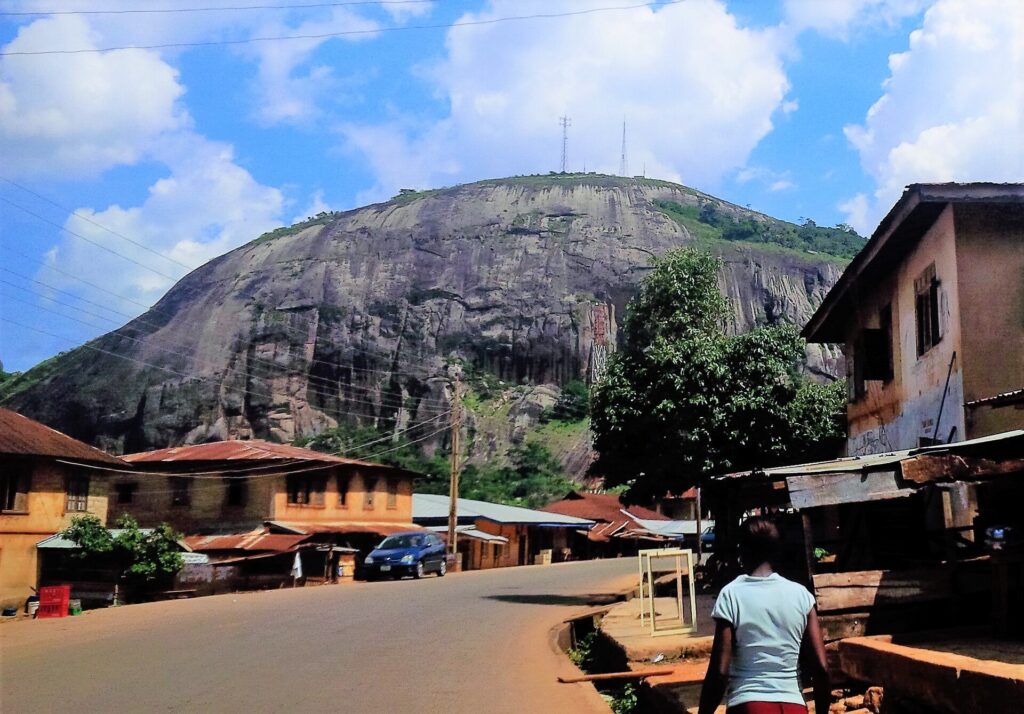
The Lore · West Africa · Lore Universe
Yoruba / Fon / Ewe
400+ Orishas, Ifa divination system, survival in diaspora (Candomblé, Santería, Vodou), mythology of extraordinary depth.
Why its stories are told
Stories are told to diagnose, to teach, to praise and to remember.
Among Yorùbá speakers the body of belief and practice is called Ìṣẹ̀ṣe (roughly 'what has been from the beginning', said ee-SHEH-sheh) or Ẹ̀sìn Òrìṣà, 'the worship of the òrìṣà'.
The Land · Geography
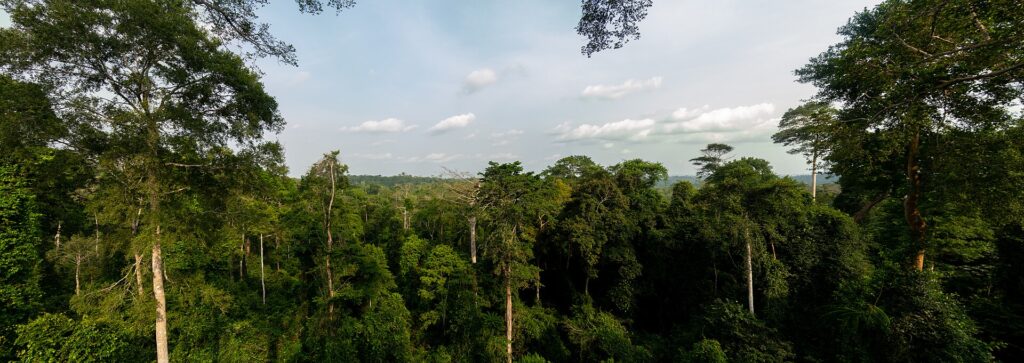
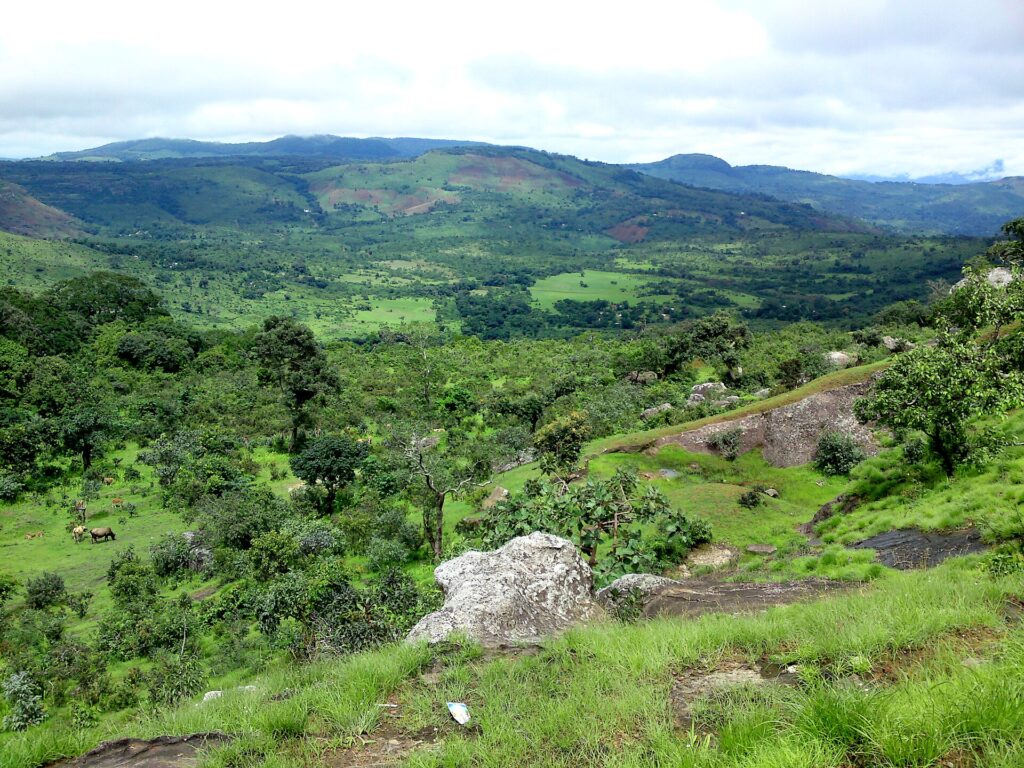
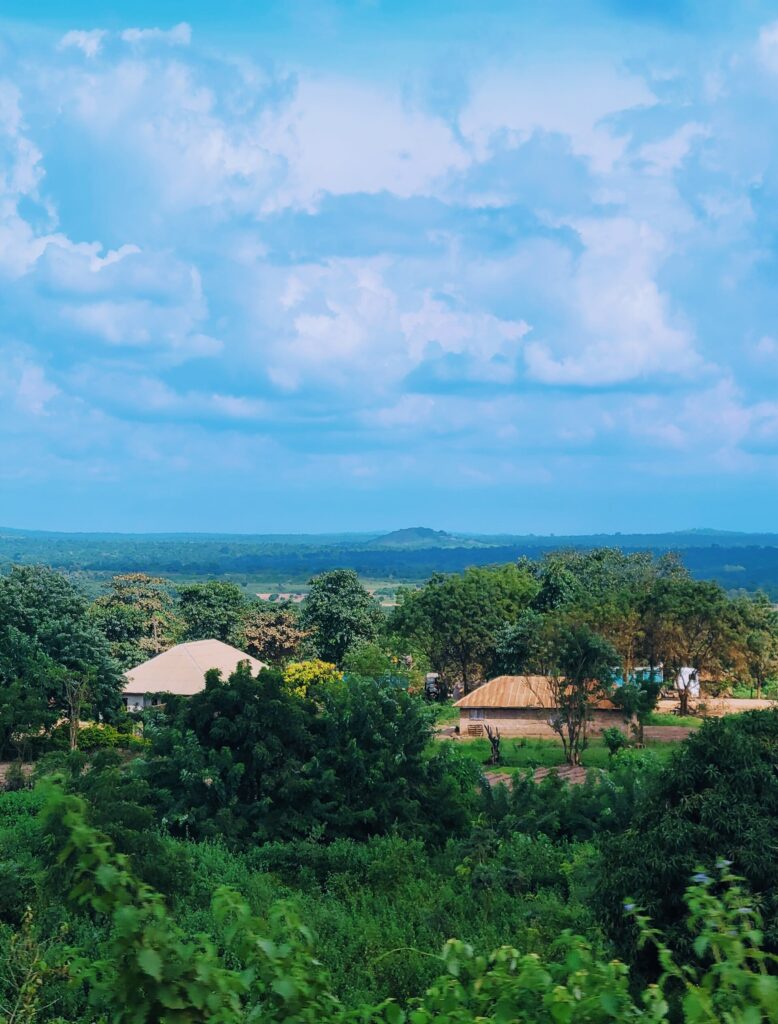
The tradition's lands run from the coastal lagoons of Lagos, Porto-Novo and Ouidah inland through rainforest to the savanna of the Ọ̀yọ́ plateau, and west across southern Benin and Togo to the Volta River. Rainfall is seasonal, with long rains and a dry season when the harmattan wind blows from the Sahara.
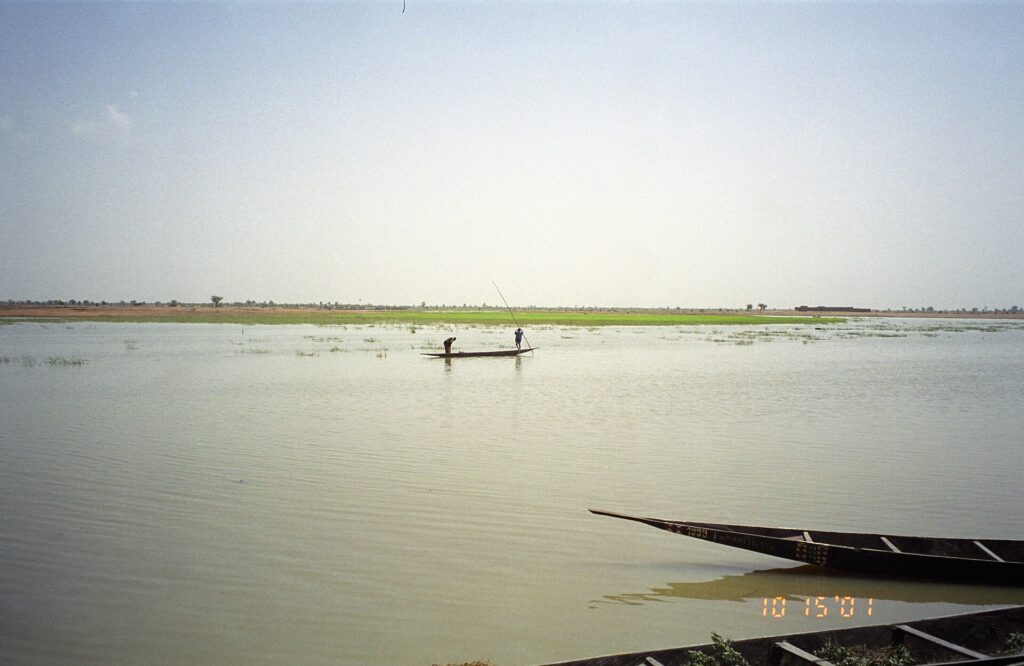
Rivers are central to the stories and to worship. The Ọ̀ṣun River flows through Òṣogbo; the Ògùn River gave its name to a state; the Niger, known in Yorùbá as Ọya's river, lies to the north; the Mono and Volta mark Ewe and Fon lands. Lagoons and the sea are linked to Yemọja and Olókun among the Yorùbá and Agbe among the Fon.
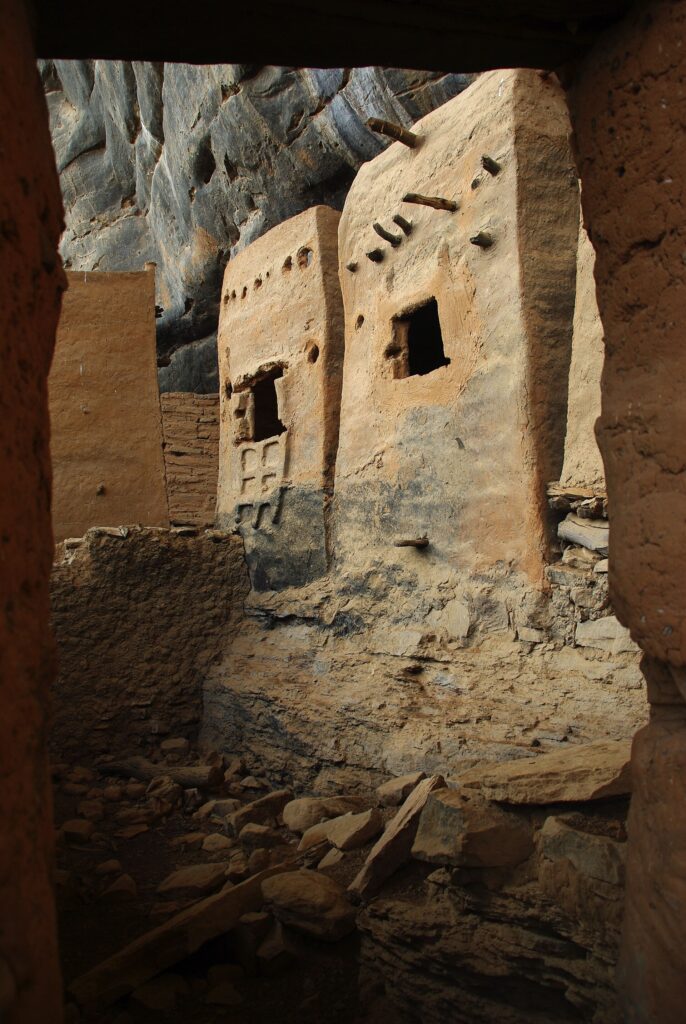
Forest is the realm of spirits, hunters and herbalists; the bush is outside the town's order. Hills and rocks such as Ọlọ́mọ̀ hill and the rock of Olúmọ at Abẹ́òkúta are sacred and protective.
The land is the gift of the òrìṣà and the ancestors, who are buried in it. Towns are founded where diviners or hunters find signs, and many town histories begin with a hunter finding water. The physical world in the stories is always also the spiritual one.
The People · Cultural Foundation · Society
The tradition belongs to three linked groups of peoples on the Bight of Benin. The Yorùbá live across south-western Nigeria (Ọ̀yọ́, Ọ̀ṣun, Ògùn, Ondo, Èkìtì and Lagos states, and parts of Kwara and Kogi) and into eastern Benin and Togo; their subgroups include the Ọ̀yọ́, Ifẹ̀, Ìjẹ̀ṣà, Ẹ̀gbá, Ìjẹ̀bú, Èkìtì, Ọ̀wọ̀ and Kétu. The Fon centre on the Abomey plateau of southern Benin, alongside related Aja, Gun and Ayizo communities. The Ewe live between the Volta River and the Mono River, with the Anlo on the Ghanaian coast as one well-documented branch.
Yorùbá tradition names Ilé-Ifẹ̀ as the place where the world was made and from which kingship spread; archaeology shows Ifẹ̀ as a major town by around 1000 CE. Ewe oral history traces an earlier home at Kétu, a Yorùbá town, before a stay at Notsé in present-day Togo and a dispersal westward. Fon and Ewe religion share deities and divination with the Yorùbá because these peoples traded, fought, married and moved among each other over many centuries; scholars do not agree on exact sequences of borrowing.
Five values run through the stories.
Ìwà pẹ̀lẹ́, gentle or good character, is the highest. An Ifá saying holds that character is what the gods accept; beauty, wealth and power fail without it.
Orí, the inner head or chosen destiny, is each person's own guiding power. A person must learn and honour their orí, often through divination.
Ẹbọ, offering, keeps exchange flowing between people, ancestors and òrìṣà. Stories repeatedly turn on whether a character makes the prescribed offering.
Respect for elders and seniority (àgbà) orders households and courts.
Àṣẹ, the power to make things happen, should be used for the good of the lineage and town.
The priority runs from community and lineage toward the person, but not by erasing the person: the individual's orí is sacred, and the community's task is to help it be fulfilled. Ancestors and the unborn are part of the community.
The resulting story logic can surprise Western readers. A hero may fail not from weakness but from refusing a small offering; a clever cheat may be honoured; a god may act unjustly and still be worshipped, because power and morality are not the same thing.
Gender in Yorùbá thought is a contested topic. Oyèrónkẹ́ Oyěwùmí argued (1997) that seniority rather than gender was the primary social category in pre-colonial Yorùbá society, and that Yorùbá pronouns and kinship terms do not mark gender. Other scholars accept part of this and dispute other parts. Readers should know the question is open.
In practice, women hold major religious and economic power. Ọ̀ṣun, Yemọja and Ọya are among the most powerful òrìṣà. Women dominate markets; the Ìyálọ́jà (head of market women) holds public authority. Women serve as priestesses of most òrìṣà, and as ìyánífá in some lineages, though most babaláwo have been men.
The idea of 'the mothers' recognises women's collective, ambivalent power, honoured in Gẹ̀lẹ̀dẹ́.
In possession and initiation gender is fluid: a male devotee of Ọ̀ṣun or a female devotee of Ṣàngó is the god's 'wife' and may wear clothing or hairstyles otherwise associated with the other gender. J. Lorand Matory's work on Ọ̀yọ́ and Brazil examines this.
Among the Fon, the royal women of Abomey held offices paired with male officers, and the kingdom's women soldiers (the agojie) are well documented. The Ewe trace inheritance mostly through fathers, but women hold priestly roles.
Seniority (àgbà) orders everyday life. Within a lineage, a person is senior or junior to every other person, and this decides who speaks first, who sits where and who is greeted with a bow or prostration. Yorùbá greeting forms and pronouns change according to whom one addresses. Seniority can be by birth, by entry into a household (a wife who joins later is junior to the lineage's children born before her arrival) or by initiation.
Elders (àgbàlagbà) hold judgement, history, oríkì, family secrets and ritual knowledge. A proverb says that what an elder sees sitting down, a youth cannot see standing on a tree. Councils of elders advise kings and settle disputes.
Youth carry energy and labour; age-grades in some Yorùbá towns organise young men and women for communal work and defence.
The oldest members of the lineage are close to the ancestors and become ancestors at death, which is the final step up in rank.
In stories, young people who ignore elders suffer, and elders who abuse their position are also judged. Àbíkú children, who come and go between worlds, invert the order, showing a child with power over parents.
Yorùbá society is ranked but not divided into castes. Kings (ọba), chiefs with titled offices, lineage heads, priests, and ordinary farmers, traders and craftspeople form overlapping hierarchies, and wealth and title could be gained. Historically there were also enslaved people and pawns, especially during the wars of the nineteenth century.
Kingship is the central hierarchy. Yorùbá kings who wear beaded crowns trace descent to Odùduwà at Ilé-Ifẹ̀; the Ọọ̀ni of Ifẹ̀ and the Aláàfin of Ọ̀yọ́ are among the most senior. In Dahomey the king stood at the top of a centralised state with a hierarchy of officials.
Storytellers hold varied positions. Babaláwo are respected specialists, often of high status. Royal bards and drummers are court officials, sometimes hereditary. Àlọ́ tellers are ordinary household members. Women singers of oríkì have their own standing.
Class appears in stories through kings and their councils, through the rich and poor, and through the orphan or poor person who rises. Stories question power as well as uphold it: Ṣàngó's fall, Ìjàpá's comeuppance after pretending to grandeur. Ifá verses frequently show a king consulting as a client, subject to the same demands as anyone else.
The basic unit is the lineage (ìdílé) living in a compound (agbo ilé), with shared ancestors, oríkì, taboos and often an òrìṣà. Descent among Yorùbá is primarily through the father's line, but ties to the mother's lineage are also important.
Lineages make up quarters, quarters make up towns, and towns are ruled by an ọba with a council of chiefs. Historically, towns were grouped into kingdoms, with Ọ̀yọ́ the largest state, ruling at its height a wide area of savanna and forest margin. Dahomey was organised as a centralised kingdom under the king at Abomey. Ewe communities were organised into many independent polities, such as Anlo, each with its own chiefs.
Cult groups (ẹgbẹ́ of an òrìṣà) and societies like Ògbóni cut across lineages and bind the town together.
Membership carries obligations: attending funerals and festivals, contributing to lineage affairs, keeping taboos, supporting kin. In return the lineage gives land, protection, a name, and a place among the ancestors.
Expulsion or exile is severe. A person outside the lineage has no one to bury them and no place as an ancestor. Stories of wanderers, exiles and founders of new towns turn on this loss and its remedy.
Through Time · History
By around 1000 CE Ilé-Ifẹ̀ was a substantial town, and between about the 12th and 15th centuries its artists made the naturalistic brass and terracotta heads now famous worldwide.
By the 16th century Ọ̀yọ́ was growing as a power in the northern savanna, and by the 17th century it dominated a wide region with cavalry, extending its reach toward the coast.
In the early 17th century the kingdom of Dahomey took shape on the Abomey plateau.
In 1724 and 1727 King Agaja of Dahomey conquered Allada and Ouidah, gaining access to the coast and the Atlantic trade.
In the 1730s and 1740s Dahomey became tributary to Ọ̀yọ́.
In 1817 a revolt at Ìlọrin opened the way for the Sokoto Caliphate's expansion south, and by about 1835 Old Ọ̀yọ́ was abandoned.
In 1835 Yorùbá-speaking Muslims led the Malê revolt in Salvador, Bahia.
In 1851 the British bombarded Lagos, annexing it in 1861.
Between 1892 and 1894 France conquered Dahomey and King Béhanzin surrendered.
By around 1000 CE Ilé-Ifẹ̀ was a substantial town, and between about the 12th and 15th centuries its artists made the naturalistic brass and terracotta heads now famous worldwide. By the 16th century Ọ̀yọ́ was growing as a power in the northern savanna, and by the 17th century it dominated a wide region with cavalry, extending its reach toward the coast. In the early 17th century the kingdom of Dahomey took shape on the Abomey plateau. In 1724 and 1727 King Agaja of Dahomey conquered Allada and Ouidah, gaining access to the coast and the Atlantic trade. In the 1730s and 1740s Dahomey became tributary to Ọ̀yọ́.
In 1817 a revolt at Ìlọrin opened the way for the Sokoto Caliphate's expansion south, and by about 1835 Old Ọ̀yọ́ was abandoned. In 1835 Yorùbá-speaking Muslims led the Malê revolt in Salvador, Bahia. In 1851 the British bombarded Lagos, annexing it in 1861. Between 1892 and 1894 France conquered Dahomey and King Béhanzin surrendered. In 1897 Samuel Johnson completed his History of the Yorubas. In 2005 the Ọ̀ṣun-Òṣogbo grove was inscribed as a World Heritage Site and Ifá was proclaimed a masterpiece of oral heritage by UNESCO, inscribed in 2008.
History lives inside the stories: Ṣàngó's reign is set in Ọ̀yọ́'s king list, and Moremi's in Ifẹ̀'s wars.
Yorùbá tradition is built around dispersal from Ilé-Ifẹ̀: the children or descendants of Odùduwà are said to have left to found the kingdoms of Ọ̀yọ́, Kétu, Benin, Ìjẹ̀ṣà, Ọ̀wọ̀ and others. Each kingdom's history begins with that departure, which ties all Yorùbá crowns to Ifẹ̀. The Ewe remember migrating from Kétu to Notsé, and then a dramatic escape from Notsé under the harsh King Agɔkɔli.
Exchange among Yorùbá, Fon and Ewe was constant. Ifá appears among the Fon as Fá and among the Ewe as Afa; Fon tradition credits diviners from Yorùbá lands with bringing it to Abomey. Deities moved too: Yorùbá Ṣọ̀pọ̀nná appears in Fon Sakpata, Ògún in Gu, and Èṣù in Legba. Scholars debate which way each was borrowed.
These stories exist because they explain why the world is as it is and how to act within it. A Yorùbá or Fon household meets illness, barrenness, a journey, a land dispute or a new king, and goes to a diviner; the diviner answers with stories of how gods and earlier people met the same trouble. Story is therefore working knowledge, not only entertainment. History shaped the tradition closely.
The Sacred · Deities and Spirits
Sends Ọbàtálá to make the earth in the creation at Ilé-Ifẹ̀; orders the Odù to honour Ọ̀ṣun.
The making of the earth at Ilé-Ifẹ̀ and the dispute with Odùduwà; Ọbàtálá's imprisonment at Ọ̀yọ́.
Witness at the choosing of heads in Ọ̀run; central speaker of the Ifá verses.
The two-coloured cap; Èṣù carrying offerings to Ọ̀run in Ifá verses.
Ògún clears the path for the òrìṣà; the slaughter at Ìrè and his descent into the earth.
Ṣàngó's reign and death at Kòso; his marriages to Ọya, Ọ̀ṣun and Ọbà.
Ọya as buffalo-woman who married a hunter; Ọya as Ṣàngó's wife who shares his fire.
Ọ̀ṣun and the sixteen Odù; the agreement with the founders of Òṣogbo.
Yemọja as a mother of òrìṣà in some versions; Yemọja's river at Abẹ́òkúta.
Ọbalúayé's covered body and dance; his exile and return in Ifá verses.
Mawu creates the world carried by Aido-Hwedo; the division of domains among her children.
Legba as the youngest child of Mawu who knows all languages; tales of Legba's tricks recorded in Dahomean Narrative.
Sacredness rests on àṣẹ, the force by which Olódùmarè made the world and by which things come to pass. Things become sacred when àṣẹ is concentrated in them through consecration, offering, praise speech and the presence of an òrìṣà.
Objects: each òrìṣà has its own vessels and emblems, such as river stones and brass for Ọ̀ṣun, iron for Ògún, the double-axe staff (ọ̀ṣẹ Ṣàngó) and thunderstones for Ṣàngó, white cloth and white chalk for Ọbàtálá. Ifá's sacred palm nuts (ikin), divining tray and chain are consecrated tools.
Places: groves, rivers, hills and shrines where an òrìṣà dwells or entered the earth, such as the Ọ̀ṣun grove at Òṣogbo or the sacred sites of Ilé-Ifẹ̀.
Words: oríkì (praise names), ọfọ̀ (incantations) and Ifá verses are words with power to act. Calling an òrìṣà's praise draws its attention.
Beings: òrìṣà, vodún, ancestors, and in Fon belief the python Dangbe at Ouidah, are sacred.
Substances: kola nut, palm oil, salt, honey, gin and blood in offerings carry and transfer àṣẹ. Each òrìṣà also has taboo substances. Some vessels and rites are restricted to initiates and belong to their keepers.
At the top is Olódùmarè, also called Olọ́run ('owner of the sky'), the supreme source of being and àṣẹ. Olódùmarè has no cult of the usual kind and few shrines; people approach through the òrìṣà.
The òrìṣà are many. A common traditional figure is 401 (irúnmọlẹ̀ or òrìṣà counted as four hundred plus one), a number meaning 'very many'; the brief's figure of 400 or more echoes this. Some are primordial (Ọbàtálá, Ọ̀rúnmìlà, Èṣù, Ògún), present at creation. Others were humans who became òrìṣà (Ṣàngó, Ọya, Odùduwà in some accounts). Many are local, worshipped in a single town.
The white òrìṣà (òrìṣà funfun), led by Ọbàtálá, are associated with coolness and creation; the 'hot' òrìṣà such as Ṣàngó, Ògún and Ọya with force and action. Èṣù stands apart as the messenger who carries offerings and must be honoured first.
Among the Fon, Mawu-Lisa is the creator pair, and their children divide the domains of the world: Sakpata the earth, Hevioso the sky and thunder, Agbe the sea, Gu iron, Legba the messenger. Ewe practice similarly places Mawu above many trɔ̃wo.
Humans relate to deities through devotion, initiation and exchange: each person may have a guardian òrìṣà identified by divination.
Ancestors (Yorùbá òkú ọ̀run, 'the dead in heaven', or ará ọ̀run, 'people of ọ̀run') remain members of the lineage. They are present, active and consulted. A good death after a full life, with proper burial by one's children, makes a person an ancestor; those who die young or badly may not attain that place.
Ancestors communicate through divination, through dreams, and through the birth of children in whom they return. In Yorùbá towns they appear publicly as Egúngún, masked figures fully covered in cloth who visit the community during their festival season, bless, judge and sometimes warn. The masquerade's inner workings belong to the Egúngún society.
Among the Fon the royal ancestors received great annual ceremonies in Abomey, and families keep asẹ́n, iron memorial altars, for their dead. Ewe families pour libations and honour lineage stools and ancestors at festivals.
Protocol is offering and remembrance: libations of water or gin, kola, food at the grave or family shrine, and speaking the names of the dead. Ancestors want to be remembered, to see the lineage continue and prosper, and to see their descendants behave well. Neglect can bring illness or misfortune, which divination identifies and offering corrects.
The basic division is between ayé, the visible world of the living, and ọ̀run, the unseen realm. Ọ̀run is where Olódùmarè dwells, where the òrìṣà have their homes, where ancestors live, and where each person chose their orí before birth. Some accounts describe ọ̀run with internal divisions, a good ọ̀run (ọ̀run rere) and a bad one (ọ̀run àpáàdì) for those whose lives were evil, though scholars note this division may have been sharpened by contact with Christianity and Islam.
The two realms are near. Ayé is spoken of as a market, ọ̀run as home, and much traffic passes between them.
From ọ̀run to ayé: òrìṣà descend during possession, ancestors appear as Egúngún, the unborn arrive with their chosen destinies, and àbíkú, children who are born to die and return, move back and forth.
From ayé to ọ̀run: offerings, carried by Èṣù; prayers; the dead; and messages through Ifá. Èṣù is the messenger and gatekeeper at the crossroads between realms.
The forest and the bush are a third zone, home to spirits and powers outside the town's order, as D. O. Fágúnwà's novels draw on. Fon belief similarly divides the world of the vodún, the dead and the living.
Ritual follows a recurring shape: divination identifies the need, an offering (ẹbọ) is made, Èṣù receives a portion so the message will be carried, the òrìṣà is praised and fed, and the result is watched for.
Transitions are marked throughout life. Ẹsẹ̀ntáyé ('stepping into the world') is a divination for a newborn, followed by naming on the seventh or ninth day. Marriage, the installation of a chief, the crowning of a king and burial each have rites, and the funeral of an elder includes the passage that makes them an ancestor.
Balance is restored through prescribed sacrifice, purification, and festival. Annual festivals renew the agreement between a town and its òrìṣà. Rites for àbíkú children seek to keep them in the world. Gẹ̀lẹ̀dẹ́ masquerades among western Yorùbá and Ègùn communities honour the mothers and their powers to secure harmony.
In stories, ritual is the frame and the resolution together. An Ifá verse is spoken inside a ritual of divination and itself tells of a ritual; the myth of a god ends with the rite that still honours them. Ritual is how a story is completed in the present.
Olódùmarè is the supreme being, distant from direct worship but the source of all àṣẹ.
Ọbàtálá (Òrìṣà-ńlá), the senior white òrìṣà, moulds human bodies; his symbols are white cloth and chalk, and his worship requires calm and coolness. Ọ̀rúnmìlà is the òrìṣà of wisdom and Ifá divination, witness to destiny. Èṣù is the messenger and guardian of the crossroads, who carries offerings and must be honoured first; he is not a devil, though missionaries described him so. Ògún is the òrìṣà of iron, hunting, war and the road; iron tools are his. Ṣàngó, the fourth king of Ọ̀yọ́ in tradition, is the òrìṣà of thunder and lightning; his emblem is the double axe and his colours are red and white. Ọya is the òrìṣà of wind, storm and the Niger, and wife of Ṣàngó. Ọ̀ṣun is the òrìṣà of the Ọ̀ṣun River, fertility, love and wealth; brass, honey and yellow are hers. Yemọja is a mother òrìṣà of the Ògùn River, and in the diaspora of the sea. Ọbalúayé (Ṣọ̀pọ̀nná) governs smallpox and illness and healing.
Among the Fon, Mawu-Lisa creates and Legba carries messages. Each deity has its own songs, drums, offerings and taboos; full protocols belong to their priests.
Ancestral spirits (ará ọ̀run, òkú ọ̀run) remain part of their lineages, appearing as Egúngún and through dreams and divination. They protect and correct.
Àbíkú are spirit children who are born only to die and return, bound by a pact with their companions in the otherworld. Parents give them special names and charms to keep them; Wole Soyinka's and J. P. Clark's poems 'Abiku' and Ben Okri's novel The Famished Road (1991) draw on this belief.
The mothers (àwọn ìyá wa) hold a collective power that can protect or harm; Gẹ̀lẹ̀dẹ́ honours them.
Nature spirits live in particular trees, rivers and hills. The ìrókò tree is often held to house a spirit, and certain trees are not cut. The forest of Fágúnwà's novels is full of such beings (iwin and ẹbọra), who test hunters.
Èṣù functions as the great messenger and trickster, though he is an òrìṣà, not a lesser spirit. Among the Fon, Legba holds this role; each house may have its Legba at the gate.
Rules of interaction: honour, offering and respect for place. One does not cut a sacred tree or bathe in a sacred pool without the right rite, and one greets spirits with care.
Ìjàpá the tortoise is the trickster of Yorùbá àlọ́. Greedy, cunning and often caught, he explains through his misadventures why the tortoise's shell is patterned and cracked.
The hen (or a five-toed hen) appears in the creation story, scratching the soil on the waters so it spread to form land at Ifẹ̀.
The chameleon appears in creation myths as a messenger who tested whether the land was firm.
The snail's shell held the soil, and snail's fluid is offered to Ọbàtálá as a cooling substance.
The buffalo is linked to Ọya, who in one story took off her buffalo skin to become a woman and married a hunter.
Aido-Hwedo, the Fon rainbow serpent, carried Mawu as she created the world, and coils around the earth to hold it together; its movements are said to make mountains. Dangbe, the python of Ouidah, is a living sacred being at the Temple of Pythons.
The vulture (Àkàlà, or gúnugún) carries offerings to ọ̀run in Ifá verses.
Birds of the night are associated with the power of 'the mothers'.
In Fágúnwà's forest stories, monstrous beings with many heads or eyes challenge heroes, mixing traditional beliefs with the author's invention.
Every òrìṣà has taboos (èèwọ̀), and devotees take them on. Ọbàtálá's followers avoid palm wine, because he made people with deformities while drunk on it, and they avoid palm oil and salt in his rites. Ṣàngó's devotees observe taboos linked to his story. Individuals receive personal taboos through divination at birth or initiation.
Social taboos protect order: incest, killing within the lineage, breaking a sworn oath, disrespecting elders, and revealing the secrets of a cult society to non-members. Women and uninitiated people are barred from seeing the inner workings of Orò and Egúngún; men are barred from some women's rites.
Consequences can be immediate (illness, lightning, which is understood as Ṣàngó's punishment), delayed (misfortune revealed by divination years later), or collective (drought, epidemic, war striking a whole town for one person's offence). Ṣọ̀pọ̀nná's anger was associated with smallpox, which made the name itself something to avoid speaking.
Some things cannot be undone. A sworn oath on Ògún's iron is binding, and Yorùbá courts have historically allowed oath-taking on iron. A broken trust between a town and its òrìṣà, as at Ìrè, leaves a permanent mark.
This part carries no pictures. Gods, spirits, the ancestors and ceremonies are named, with their roles, and drawn as marks only.
The Stories · Signature Stories
The creation of the world at Ilé-Ifẹ̀ is the foundational Yorùbá story, told in many versions. In the beginning there was ọ̀run above and water below. Olódùmarè gave Ọbàtálá the task of making firm land. Before going, Ọbàtálá was told to consult Ifá and make an offering.
And 2 more stories in the catalog below.
The Telling · Oral Tradition · Narrative Structure
The Figures · Survival and Diaspora
The diviner (babaláwo) is the guide who reveals hidden causes and prescribes remedy. Ancient diviners are named at the start of Ifá verses with playful praise names; their role is to listen and to be heeded.
The client is the person in trouble, often barren, poor or threatened, who either heeds or ignores the diviner. Their arc depends on their response.
The trickster is Èṣù at the level of the gods and Ìjàpá at the level of animals. Èṣù tests and exposes; Ìjàpá schemes, wins briefly and is caught.
The king appears as founder, ruler and sometimes tyrant. Ṣàngó is the archetype of a king whose power and temper bring both glory and downfall.
The neglected woman is a recurring figure, from Ọ̀ṣun overlooked by the male òrìṣà to the rejected co-wife who turns out to have the key to success.
The hunter (ọdẹ) explores the forest, finds new sites for towns and meets spirits; he is linked to Ògún and Ọ̀ṣọ́ọ̀sì.
The sacrificing heroine, like Moremi of Ifẹ̀, gives something precious to save the town.
The àbíkú child moves between worlds. Each archetype stands in relation to the community, either serving, testing or threatening it.
Survival and diaspora
Yes. The tradition is living and practised today. In Nigeria, Benin and Togo, practitioners of Ìṣẹ̀ṣe and Vodún number many, though most Yorùbá today are Christian or Muslim and many people combine practices. Babaláwo continue to consult; òrìṣà festivals are held in towns across Yorùbáland, including the Ọ̀ṣun festival at Òṣogbo, Ọ̀lọ́jọ́ in Ilé-Ifẹ̀ and Egúngún festivals.
Through the Middle Passage and enslavement, captives built new forms from what they carried. In Cuba, Lucumí (Regla de Ocha) and Ifá grew from Yorùbá practice. Practitioners organised into houses (ilé) with godparents and initiatory lineages. The cabildos, mutual-aid societies under colonial rule, were places where it took form.
Revival takes many forms. In Nigeria, Wándé Abímbọ́lá's scholarship and his role as Àwíṣẹ Awo Àgbáyé, spokesman for Ifá worldwide, helped present Ifá to a global audience, alongside the Ifá Heritage Institute and international Ifá congresses.
The Catalog · its places, peoples, practices and sources
The World Bible
For the reader who wants all of it: every section of Orisha Realms, in its eleven parts.
Among Yorùbá speakers the body of belief and practice is called Ìṣẹ̀ṣe (roughly 'what has been from the beginning', said ee-SHEH-sheh) or Ẹ̀sìn Òrìṣà, 'the worship of the òrìṣà'. The divine beings are òrìṣà (aw-REE-shah; in English often 'orisha'). The divination system and its literature are Ifá (ee-FAH), and the diviner is the babaláwo (bah-bah-LAH-woh), 'father of secrets'.
Among the Fon of the Republic of Benin the powers are vodún (voh-DOON), and the related divination is Fá. Among the Ewe of south-eastern Ghana and southern Togo the deities are trɔ̃wo (singular trɔ̃) or vodu, and divination is Afa.
In the Americas the same roots carry other names: Lucumí or Regla de Ocha (often called Santería) in Cuba, Candomblé in Brazil (with the Ketu, or Nagô, nation closest to Yorùbá practice and the Jeje nation closest to Fon and Ewe), and Vodou in Haiti. Spellings shift with language: Ọ̀ṣun becomes Oxum in Brazil and Ochún in Cuba; Èṣù becomes Exu and Elegguá; Fon Legba becomes Papa Legba in Haiti.
The tradition belongs to three linked groups of peoples on the Bight of Benin. The Yorùbá live across south-western Nigeria (Ọ̀yọ́, Ọ̀ṣun, Ògùn, Ondo, Èkìtì and Lagos states, and parts of Kwara and Kogi) and into eastern Benin and Togo; their subgroups include the Ọ̀yọ́, Ifẹ̀, Ìjẹ̀ṣà, Ẹ̀gbá, Ìjẹ̀bú, Èkìtì, Ọ̀wọ̀ and Kétu. The Fon centre on the Abomey plateau of southern Benin, alongside related Aja, Gun and Ayizo communities. The Ewe live between the Volta River and the Mono River, with the Anlo on the Ghanaian coast as one well-documented branch.
Yorùbá tradition names Ilé-Ifẹ̀ as the place where the world was made and from which kingship spread; archaeology shows Ifẹ̀ as a major town by around 1000 CE. Ewe oral history traces an earlier home at Kétu, a Yorùbá town, before a stay at Notsé in present-day Togo and a dispersal westward. Fon and Ewe religion share deities and divination with the Yorùbá because these peoples traded, fought, married and moved among each other over many centuries; scholars do not agree on exact sequences of borrowing.
These stories exist because they explain why the world is as it is and how to act within it. A Yorùbá or Fon household meets illness, barrenness, a journey, a land dispute or a new king, and goes to a diviner; the diviner answers with stories of how gods and earlier people met the same trouble. Story is therefore working knowledge, not only entertainment.
History shaped the tradition closely. The rise of Ọ̀yọ́ and Dahomey turned local cults into state cults; Ṣàngó, said to have been a king of Ọ̀yọ́, became the emblem of royal power. The Atlantic slave trade carried people and their òrìṣà to the Americas. Nineteenth-century wars, Christian missions, Islam and colonial rule changed who practised openly.
There are clear sacred and secular registers. Ifá verses (ẹsẹ Ifá) and the praise of òrìṣà are sacred speech, used in divination and worship. Àlọ́, the evening tales and riddles told to children and families, are secular, often featuring Ìjàpá the tortoise; they teach and amuse, and anyone can tell them. Some knowledge, such as the inner rites of Ifá, Orò and Egúngún societies, is restricted and belongs to its initiates.
The record is unusually rich because Yorùbá, Fon and Ewe scholars have written it down from inside. Wándé Abímbọ́lá, a Yorùbá scholar and initiated diviner, published the Ifá corpus in Yorùbá and English (1975, 1976). E. Bọ́lájí Ìdòwú wrote on Olódùmarè (1962). Samuel Johnson, a Yorùbá clergyman, completed The History of the Yorubas in 1897 (published 1921). Jacob K. Olúpọ̀nà studied Ilé-Ifẹ̀ (2011). Oyèrónkẹ́ Oyěwùmí reread gender in Yorùbá thought (1997). Karin Barber worked with women singers of oríkì in Òkukù (1991).
For the Fon, Melville and Frances Herskovits recorded narratives in Abomey in the 1930s, and Suzanne Preston Blier studied vodún art (1995). For the Ewe, D. E. K. Amenumey wrote on pre-colonial history and Kofi Awoonor translated Ewe dirges (1974). William Bascom's studies of Ifá (1969) and of sixteen-cowrie divination (1980) remain standard.
The living sources are babaláwo, ìyánífá, priests and priestesses of each òrìṣà, kings' courts and their bards, and the households who keep shrines. Readers should note that much published material passes through translation and through the interests of its recorders; where accounts differ, this holding says so.
Five values run through the stories.
Ìwà pẹ̀lẹ́, gentle or good character, is the highest. An Ifá saying holds that character is what the gods accept; beauty, wealth and power fail without it.
Orí, the inner head or chosen destiny, is each person's own guiding power. A person must learn and honour their orí, often through divination.
Ẹbọ, offering, keeps exchange flowing between people, ancestors and òrìṣà. Stories repeatedly turn on whether a character makes the prescribed offering.
Respect for elders and seniority (àgbà) orders households and courts.
Àṣẹ, the power to make things happen, should be used for the good of the lineage and town.
The priority runs from community and lineage toward the person, but not by erasing the person: the individual's orí is sacred, and the community's task is to help it be fulfilled. Ancestors and the unborn are part of the community.
The resulting story logic can surprise Western readers. A hero may fail not from weakness but from refusing a small offering; a clever cheat may be honoured; a god may act unjustly and still be worshipped, because power and morality are not the same thing.
Causation is layered. An event has a visible cause and an unseen one: a fever comes from a mosquito and also from an offended òrìṣà, a neglected ancestor, a person's own orí, or the hostile power of others. Divination exists to find which layer is speaking.
The person sits inside overlapping communities: the household, the lineage (ìdílé), the town, the cult group of their òrìṣà, and the ancestors. Each has claims, and a well-lived life honours them in balance.
Time runs in cycles of return. The dead may come back in their descendants; names such as Babátúndé ('father has returned') and Yétúndé ('mother has returned') say so directly. Festivals repeat the founding acts of the gods each year. Yet history also moves forward: kings fall, towns are founded and abandoned, and the stories record it.
Reality is double. Yorùbá speech often names it as ayé, the visible world, and ọ̀run, the unseen realm of Olódùmarè, the òrìṣà and the ancestors. A saying records that the world is a market and the otherworld is home. The two are close and constantly in contact.
Stories are told to diagnose, to teach, to praise and to remember.
In divination the babaláwo recites verses of the Odù that has been cast; each verse tells of an earlier client, their sacrifice and its result, and the present client finds their own case in it. In worship, priests and devotees sing the praises and deeds of the òrìṣà. At court, royal bards and drummers recite the lineage and praise names of the ruler; in Ọ̀yọ́ these were the arọ́kin. Hunters chant ìjálá to Ògún. In the home, àlọ́ are told at night by parents, grandparents and older children.
Timing matters. Àlọ́ belong to the evening, after work. Ifá verses are recited when someone consults. Festival chants come at their season, such as the yearly Ọ̀ṣun festival at Òṣogbo or the Egúngún season.
Power runs through the telling. The diviner controls access to Ifá's knowledge and must be trained for years. Bards can flatter or shame a king through what they choose to recite. Yet the audience also holds power: a story badly told is corrected, and the meaning of a verse for a client is worked out between diviner and consulter.
The clearest structural pattern is the Ifá verse, and it shapes much else. Scholars such as Abímbọ́lá describe its parts: it names the diviners who cast Ifá long ago; names their client and the client's trouble; gives the sacrifice prescribed; tells whether the client made it; and ends with the result, often in a song of joy or a lament. The verse then turns to the present: the client before the diviner is in the same position.
This gives a story that moves by consultation and consequence rather than by a single rising conflict. Each story is one among the verses of an Odù, and the 256 Odù together form a network of stories that can be entered at any point, depending on what is cast.
Myths of the òrìṣà often follow a related pattern: a god acts, a boundary is crossed, a disaster follows, and a ritual or shrine is founded to settle it. Àlọ́ tales are more episodic, built around a trickster or a choice, with songs inserted between episodes. Across all three, story movement is a return to balance through right action, frequently with a cost left visible.
Narrative tension usually comes from imbalance rather than from a hero's struggle against an enemy. Something is missing or wrong: a woman cannot conceive, rain does not fall, a town is raided, the òrìṣà have forgotten to honour one of their number. The story asks what has been neglected and what must be given.
Opposition exists, and can be fierce. Ṣàngó and Ògún contend, Ọya and Ọ̀ṣun are rivals as wives of Ṣàngó, and Odùduwà and Ọbàtálá dispute who made the earth. But even these quarrels tend to be settled by division of domains, by sacrifice, or by establishing a rite, rather than by destroying one side.
A second driver is disclosure. Divination reveals what was hidden, and many stories turn on a secret: Moremi learning the raiders' weakness, Èṣù's two-coloured cap revealing that friends see differently.
A third is the testing of character. Characters face a small, specific demand, such as an offering of a goat, cloth or kola, and their response shows their nature. The tension is less 'who will win' than 'who will listen'.
Protagonists are varied, and the tradition keeps several types in play.
In the myths, òrìṣà are the main actors: Ọbàtálá shaping bodies, Ògún clearing the road, Ṣàngó ruling and falling, Ọ̀ṣun defending her place. They behave with strong personal desire, and some were once human kings or heroes who became òrìṣà.
In Ifá verses the protagonist is often a client, sometimes named only by a praise name, sometimes an animal or a plant, sometimes an òrìṣà who consulted Ifá. The real subject is the relationship between client and diviner.
In historical legends such as those of Moremi of Ifẹ̀ or the founders of towns, the protagonist is a human who acts on behalf of the community and is remembered with festival and shrine.
In àlọ́ the central figure is often Ìjàpá the tortoise, whose cleverness and greed drive the plot, or an orphan, a co-wife or a hunter.
Across all of these the community is always present behind the protagonist. A personal destiny is fulfilled inside a lineage and a town, and its outcome is measured by what it brings to them.
The most common ending is restoration through offering. The Ifá verse closes with the client prospering because they made the sacrifice, or suffering because they refused; a song often celebrates the outcome, and the diviner applies it to the present.
Myths often end with foundation. After the conflict, a shrine is set up, a taboo established, a festival instituted, or an òrìṣà withdraws into the earth, a river or a hill and becomes a place of worship. Ògún sinks into the ground at Ìrè; Ọya's grief becomes the River Niger; Ṣàngó's death becomes his apotheosis. The ending turns a story into something still visited.
Another ending is division of power. Rivals are given separate domains, and the world is ordered by distributing authority rather than concentrating it.
Àlọ́ usually end with a moral or an explanation (why the tortoise's shell is cracked, why a creature lives where it does) and a closing formula.
A satisfying ending in this tradition is one in which balance between the visible and unseen worlds is set right and the community has a means to keep it so. Victory alone is not enough.
Narrative time is layered. An Ifá verse begins in the remote past (when the diviners of old cast for a client) and ends in the present moment of consultation. Past and present are laid on top of each other: what happened then is happening now. This is the core of the tradition's sense of time in story.
Festival time is cyclical. Each year the Ọ̀ṣun festival at Òṣogbo restates the agreement between the goddess and the town's founders; Egúngún masquerades bring the ancestors back each season; royal festivals reenact the deeds of founding kings.
Life time is circular and returning. A child may be recognised through divination as an ancestor come back. A person's orí was chosen in ọ̀run before birth, so a life unfolds a choice already made.
Historical time is also present and moves forward: king lists, the rise and fall of Ọ̀yọ́, the founding of Abẹ́òkúta in the 1830s. Stories often place a myth inside a real dynasty.
The shape that results is less a line or a circle than a set of repeating patterns visited again and again, each visit adding a new case to the old one.
Community is never simple background. Towns, lineages and cult groups appear as actors with their own interests: the people of Ìrè who fail to greet Ògún, the people of Ọ̀yọ́ who tire of Ṣàngó, the women of Ifẹ̀ who suffer the raids Moremi ends.
Individuals relate to community through obligation and exchange. A hero serves the town and is honoured by it; a person who acts against the town, however powerful, is checked by it. Ọ̀yọ́ history records that an Aláàfin who lost the confidence of the council of Ọ̀yọ́ Mèsì could be asked to take his own life, and stories of kings carry that memory.
The community expects a story to explain shared practice: why the town worships this òrìṣà, why this festival falls when it does, why a lineage has this taboo. Oríkì of towns and lineages hold these explanations in compressed form.
The community also holds the story. A diviner tells a verse, but its meaning is confirmed by the consulter's life and by what neighbours witness. A story that does not fit the town's experience is not accepted, and a story that does becomes part of the town's identity.
Morality is relational and practical rather than absolute. Right action keeps relationships in good order: honouring parents and elders, making offerings when told, keeping oaths, sharing, respecting the boundaries and taboos of each òrìṣà, and speaking truthfully in the right setting.
Condemnation falls on ingratitude, greed, arrogance, broken oaths and selfishness that harms the community. Ìjàpá the tortoise is endlessly greedy and is punished again and again, though he is also admired for wit. Gossip and witchcraft, understood as power used to harm others in secret, are strongly condemned.
Honour comes from good character, generosity, courage for the community and patience. Ọbàtálá is honoured for patience; his story of suffering imprisonment without anger is told as a model.
The òrìṣà are not models of perfect behaviour. They can be jealous, violent or vain, and the stories say so plainly. Their worship rests on power and relationship, not on moral perfection. This lets the stories teach moral logic by showing consequences: a god's anger has a cause, and a person's misfortune has a remedy. Stories teach by example, by proverb, and above all by showing what happens when an offering is refused.
Transformation is common and often the climax of a myth. Humans become òrìṣà: Ṣàngó, king of Ọ̀yọ́, becomes the god of thunder after his death; Ọya becomes a river; Ògún becomes a presence in the earth called upon by those who work iron. These are transformations of status, from person to power.
Some transformations are changes of shape. Ọya is told of as a buffalo who took off her skin to become a woman; such stories link deities to animals and to the power to cross between forms.
For human characters, the arc is usually a change in fortune that reveals or fulfils their orí. A barren woman bears children, a poor man prospers, an outcast is honoured. The change is a consequence of right action, not a goal pursued for its own sake.
The tradition celebrates transformations that bring life, children, rain and wealth into the community. It mourns transformations that come from disrespect and cannot be reversed: the slaughter at Ìrè, the town whose oath was broken. Initiation is itself a transformation in which the devotee becomes a vessel of an òrìṣà, a change the tradition treats as a new birth.
Sacredness rests on àṣẹ, the force by which Olódùmarè made the world and by which things come to pass. Things become sacred when àṣẹ is concentrated in them through consecration, offering, praise speech and the presence of an òrìṣà.
Objects: each òrìṣà has its own vessels and emblems, such as river stones and brass for Ọ̀ṣun, iron for Ògún, the double-axe staff (ọ̀ṣẹ Ṣàngó) and thunderstones for Ṣàngó, white cloth and white chalk for Ọbàtálá. Ifá's sacred palm nuts (ikin), divining tray and chain are consecrated tools.
Places: groves, rivers, hills and shrines where an òrìṣà dwells or entered the earth, such as the Ọ̀ṣun grove at Òṣogbo or the sacred sites of Ilé-Ifẹ̀.
Words: oríkì (praise names), ọfọ̀ (incantations) and Ifá verses are words with power to act. Calling an òrìṣà's praise draws its attention.
Beings: òrìṣà, vodún, ancestors, and in Fon belief the python Dangbe at Ouidah, are sacred.
Substances: kola nut, palm oil, salt, honey, gin and blood in offerings carry and transfer àṣẹ. Each òrìṣà also has taboo substances. Some vessels and rites are restricted to initiates and belong to their keepers.
Ancestors (Yorùbá òkú ọ̀run, 'the dead in heaven', or ará ọ̀run, 'people of ọ̀run') remain members of the lineage. They are present, active and consulted. A good death after a full life, with proper burial by one's children, makes a person an ancestor; those who die young or badly may not attain that place.
Ancestors communicate through divination, through dreams, and through the birth of children in whom they return. In Yorùbá towns they appear publicly as Egúngún, masked figures fully covered in cloth who visit the community during their festival season, bless, judge and sometimes warn. The masquerade's inner workings belong to the Egúngún society.
Among the Fon the royal ancestors received great annual ceremonies in Abomey, and families keep asẹ́n, iron memorial altars, for their dead. Ewe families pour libations and honour lineage stools and ancestors at festivals.
Protocol is offering and remembrance: libations of water or gin, kola, food at the grave or family shrine, and speaking the names of the dead. Ancestors want to be remembered, to see the lineage continue and prosper, and to see their descendants behave well. Neglect can bring illness or misfortune, which divination identifies and offering corrects.
The basic division is between ayé, the visible world of the living, and ọ̀run, the unseen realm. Ọ̀run is where Olódùmarè dwells, where the òrìṣà have their homes, where ancestors live, and where each person chose their orí before birth. Some accounts describe ọ̀run with internal divisions, a good ọ̀run (ọ̀run rere) and a bad one (ọ̀run àpáàdì) for those whose lives were evil, though scholars note this division may have been sharpened by contact with Christianity and Islam.
The two realms are near. Ayé is spoken of as a market, ọ̀run as home, and much traffic passes between them.
From ọ̀run to ayé: òrìṣà descend during possession, ancestors appear as Egúngún, the unborn arrive with their chosen destinies, and àbíkú, children who are born to die and return, move back and forth.
From ayé to ọ̀run: offerings, carried by Èṣù; prayers; the dead; and messages through Ifá. Èṣù is the messenger and gatekeeper at the crossroads between realms.
The forest and the bush are a third zone, home to spirits and powers outside the town's order, as D. O. Fágúnwà's novels draw on. Fon belief similarly divides the world of the vodún, the dead and the living.
Ritual follows a recurring shape: divination identifies the need, an offering (ẹbọ) is made, Èṣù receives a portion so the message will be carried, the òrìṣà is praised and fed, and the result is watched for.
Transitions are marked throughout life. Ẹsẹ̀ntáyé ('stepping into the world') is a divination for a newborn, followed by naming on the seventh or ninth day. Marriage, the installation of a chief, the crowning of a king and burial each have rites, and the funeral of an elder includes the passage that makes them an ancestor.
Balance is restored through prescribed sacrifice, purification, and festival. Annual festivals renew the agreement between a town and its òrìṣà. Rites for àbíkú children seek to keep them in the world. Gẹ̀lẹ̀dẹ́ masquerades among western Yorùbá and Ègùn communities honour the mothers and their powers to secure harmony.
In stories, ritual is the frame and the resolution together. An Ifá verse is spoken inside a ritual of divination and itself tells of a ritual; the myth of a god ends with the rite that still honours them. Ritual is how a story is completed in the present.
At the top is Olódùmarè, also called Olọ́run ('owner of the sky'), the supreme source of being and àṣẹ. Olódùmarè has no cult of the usual kind and few shrines; people approach through the òrìṣà.
The òrìṣà are many. A common traditional figure is 401 (irúnmọlẹ̀ or òrìṣà counted as four hundred plus one), a number meaning 'very many'; the brief's figure of 400 or more echoes this. Some are primordial (Ọbàtálá, Ọ̀rúnmìlà, Èṣù, Ògún), present at creation. Others were humans who became òrìṣà (Ṣàngó, Ọya, Odùduwà in some accounts). Many are local, worshipped in a single town.
The white òrìṣà (òrìṣà funfun), led by Ọbàtálá, are associated with coolness and creation; the 'hot' òrìṣà such as Ṣàngó, Ògún and Ọya with force and action. Èṣù stands apart as the messenger who carries offerings and must be honoured first.
Among the Fon, Mawu-Lisa is the creator pair, and their children divide the domains of the world: Sakpata the earth, Hevioso the sky and thunder, Agbe the sea, Gu iron, Legba the messenger. Ewe practice similarly places Mawu above many trɔ̃wo.
Humans relate to deities through devotion, initiation and exchange: each person may have a guardian òrìṣà identified by divination.
Yorùbá is a tonal language, and the tradition's oral art depends on tone. Puns, praise names and drum speech all play on tone, and a change of tone changes meaning.
Ifá verses are chanted in a distinctive recitative (ìyẹ̀rẹ̀ Ifá), with formulaic openings naming the ancient diviners, often in strings of parallel lines. Repetition and parallelism carry the verse: 'Ifá cast for X, Ifá cast for Y', with a sacrifice named and repeated.
Oríkì are dense, allusive praise epithets, chanted in rapid succession; one line may compress a whole history. Ìjálá, the hunters' chants for Ògún, have their own vocal style and are chanted at a high pitch. Ẹ̀sà or ìwì are the chants associated with Egúngún.
Àlọ́ follow formula. A common opening has the teller call 'Ààlọ́ o!' and the listeners reply 'Ààlọ̀!' before the tale begins. Songs interrupt the narrative and the audience joins the chorus.
Silence and restraint matter too. Some names are not spoken; some matters are said only in proverb. A skilled speaker uses proverbs (òwe) to carry meaning indirectly; a Yorùbá saying calls proverbs the horses of speech, which carry a speaker to the point.
Music and drum are central. Each òrìṣà has its rhythms, songs and drums: the bàtá drums for Ṣàngó and Egúngún, the dùndún 'talking drums' that can reproduce speech tones, the àgẹ̀rẹ̀ for Ògún among hunters, iron bells and rattles. Drummers speak praises directly through the drum.
Dance identifies the òrìṣà. Ṣàngó's dancers move with explosive energy and carry the double-axe staff; Ọya's dancers whirl like wind; Ọ̀ṣun's dancers move with flowing grace and carry a brass fan or mirror. In possession, a devotee's body becomes the òrìṣà's, and the community greets the god directly.
Masks and costume bring ancestors and powers among the living. Egúngún costumes are layered cloth that covers the whole person; Gẹ̀lẹ̀dẹ́ masks are carved headpieces worn in pairs, with dances praising and satirising; Fon and Ewe festivals use their own masquerades and regalia.
Objects anchor the event: the divining tray and chain, the shrine with its vessels, the offerings set out. In divination the diviner's hands mark the Odù in powder on the tray while the voice recites. The body is never still in the full performance; even listening involves clapping, swaying and responding.
Listeners are part of the performance. In àlọ́ the opening call and response sets the session; songs inside tales have refrains the audience sings; listeners may interrupt with a related song or correct a teller who goes astray. Riddles (àlọ́ àpamọ̀) are a contest in which the audience must answer.
In divination the client is an active participant. The client whispers their concern to the divining instruments, chooses between objects in later stages of the consultation, and recognises which verse speaks to their situation. The meaning is worked out together.
At festivals the crowd answers the drums, joins the chorus of songs, dances alongside devotees, and greets the òrìṣà or Egúngún as they pass. In Òṣogbo, crowds walk with the votary who carries Ọ̀ṣun's calabash to the river.
In oríkì performance, the person praised responds by dancing, rewarding the singer, or showing emotion; the praise is incomplete without that response. Karin Barber's study of Òkukù shows that women's oríkì chanting is a shared social act in which a whole lineage is addressed. An audience that does not respond leaves a story or a praise unfinished.
The Ifá system is itself a memory device. Its 256 Odù are arranged in fixed order, each with a name and a binary sign of marks, and each holds many verses. A diviner learns them through years of apprenticeship with a master, memorising verse by verse; Bascom and Abímbọ́lá both describe training that begins in childhood. The tray marks, the chain's fall and the names of Odù let a diviner find any verse.
Formula and parallelism make long texts easier to hold: repeated names of ancient diviners, repeated sacrifice lists, refrains.
Oríkì hold history in compressed form. A lineage's praise names can carry the memory of a migration, a war or an ancestor's deed in a phrase.
Visual and material forms encode memory. Carved doors and posts, Fon royal appliqué cloths and bas-relief panels on the palaces of Abomey record kings and their emblems. Shrines and sacred sites hold stories in the landscape.
Specialised keepers carry knowledge forward: babaláwo, priests of each òrìṣà, royal bards, drummers, and the elders of each lineage. Cult membership passes knowledge through families. What keeps memory alive is continuing use: verses recited because people still consult.
The defining power is àṣẹ, the force through which Olódùmarè made the world and by which things are made to happen. Òrìṣà possess it in great measure; people hold some of it through words, rank, initiation and knowledge.
The main means of working with it are divination, offering, praise, and medicine (oògùn), the knowledge of leaves, roots and preparations, overseen by the òrìṣà Ọ̀sanyìn. Incantations (ọfọ̀) set words into action. Fon and Ewe practice works through bo or gbo, empowered objects and preparations.
What can be done: healing, protection, fertility, success in travel and trade, finding causes, and settling disputes with the unseen. What cannot be done: changing one's orí entirely or overriding Olódùmarè. A verse holds that no òrìṣà can bless a person without the consent of their orí.
The unstated rules are those of exchange and character. Power used without offering or proper relationship fails. Power used against others in secret becomes àjẹ́, often translated 'witchcraft', a force associated in the tradition with 'the mothers' (àwọn ìyá wa), who are both feared and honoured; Gẹ̀lẹ̀dẹ́ addresses them. Using power carries obligations, and the stories show that every gift has its taboo.
Power comes first from Olódùmarè, as àṣẹ distributed through creation.
It also comes from the òrìṣà and vodún, who share it with devotees through initiation and possession. A devotee who carries an òrìṣà receives a measure of its power and its obligations.
It comes from ancestors, who protect and empower descendants who honour them.
It comes from nature: certain leaves, rivers, stones, animals and trees hold power that the knowledgeable can use. Ọ̀sanyìn's knowledge of leaves is said to be needed in every rite.
It is earned through training. Babaláwo spend years learning Ifá; herbalists apprentice; drummers learn from masters.
It is inherited. Certain lineages hold priesthoods, kingship or specific cults; a child may be born into an obligation.
It can be stolen or misused. Stories tell of those who seize power without right and pay for it: the story of Odùduwà taking Ọbàtálá's task while he was drunk is told in some versions as such a seizure.
The cost is relationship: lifelong taboos, regular offerings, service to the community, and for initiates a life shaped by their òrìṣà's demands.
Every òrìṣà has taboos (èèwọ̀), and devotees take them on. Ọbàtálá's followers avoid palm wine, because he made people with deformities while drunk on it, and they avoid palm oil and salt in his rites. Ṣàngó's devotees observe taboos linked to his story. Individuals receive personal taboos through divination at birth or initiation.
Social taboos protect order: incest, killing within the lineage, breaking a sworn oath, disrespecting elders, and revealing the secrets of a cult society to non-members. Women and uninitiated people are barred from seeing the inner workings of Orò and Egúngún; men are barred from some women's rites.
Consequences can be immediate (illness, lightning, which is understood as Ṣàngó's punishment), delayed (misfortune revealed by divination years later), or collective (drought, epidemic, war striking a whole town for one person's offence). Ṣọ̀pọ̀nná's anger was associated with smallpox, which made the name itself something to avoid speaking.
Some things cannot be undone. A sworn oath on Ògún's iron is binding, and Yorùbá courts have historically allowed oath-taking on iron. A broken trust between a town and its òrìṣà, as at Ìrè, leaves a permanent mark.
Initiation confers knowledge, power and status, and it belongs to its keepers. What follows is the public outline only.
Initiation into the cult of an òrìṣà typically begins with divination to confirm which òrìṣà claims the person. A period of seclusion follows, during which the initiate is washed, dressed, and taught songs, prayers and taboos; the head, seat of the orí, is central to the rite. The initiate emerges in public presentation as a new person, sometimes with a new name. In Candomblé and Lucumí practice the initiate is called a iyawo ('wife', a term used regardless of gender) during the year after initiation.
Ifá initiation for babaláwo is long and demanding, involving years of study before and after the rite. In Ifá, the person may also receive the consecrated palm nuts and learn the Odù of their initiation.
Society initiations, such as those of Ògbóni, Orò and Egúngún, are held by their members and their content is restricted.
What dies is the uninitiated self; what is born is a person bound to the òrìṣà. The rite is administered by senior priests and priestesses. It is understood as a new birth into a spiritual family with ritual parents and siblings.
Gender in Yorùbá thought is a contested topic. Oyèrónkẹ́ Oyěwùmí argued (1997) that seniority rather than gender was the primary social category in pre-colonial Yorùbá society, and that Yorùbá pronouns and kinship terms do not mark gender. Other scholars accept part of this and dispute other parts. Readers should know the question is open.
In practice, women hold major religious and economic power. Ọ̀ṣun, Yemọja and Ọya are among the most powerful òrìṣà. Women dominate markets; the Ìyálọ́jà (head of market women) holds public authority. Women serve as priestesses of most òrìṣà, and as ìyánífá in some lineages, though most babaláwo have been men.
The idea of 'the mothers' recognises women's collective, ambivalent power, honoured in Gẹ̀lẹ̀dẹ́.
In possession and initiation gender is fluid: a male devotee of Ọ̀ṣun or a female devotee of Ṣàngó is the god's 'wife' and may wear clothing or hairstyles otherwise associated with the other gender. J. Lorand Matory's work on Ọ̀yọ́ and Brazil examines this.
Among the Fon, the royal women of Abomey held offices paired with male officers, and the kingdom's women soldiers (the agojie) are well documented. The Ewe trace inheritance mostly through fathers, but women hold priestly roles.
Seniority (àgbà) orders everyday life. Within a lineage, a person is senior or junior to every other person, and this decides who speaks first, who sits where and who is greeted with a bow or prostration. Yorùbá greeting forms and pronouns change according to whom one addresses. Seniority can be by birth, by entry into a household (a wife who joins later is junior to the lineage's children born before her arrival) or by initiation.
Elders (àgbàlagbà) hold judgement, history, oríkì, family secrets and ritual knowledge. A proverb says that what an elder sees sitting down, a youth cannot see standing on a tree. Councils of elders advise kings and settle disputes.
Youth carry energy and labour; age-grades in some Yorùbá towns organise young men and women for communal work and defence.
The oldest members of the lineage are close to the ancestors and become ancestors at death, which is the final step up in rank.
In stories, young people who ignore elders suffer, and elders who abuse their position are also judged. Àbíkú children, who come and go between worlds, invert the order, showing a child with power over parents.
Yorùbá society is ranked but not divided into castes. Kings (ọba), chiefs with titled offices, lineage heads, priests, and ordinary farmers, traders and craftspeople form overlapping hierarchies, and wealth and title could be gained. Historically there were also enslaved people and pawns, especially during the wars of the nineteenth century.
Kingship is the central hierarchy. Yorùbá kings who wear beaded crowns trace descent to Odùduwà at Ilé-Ifẹ̀; the Ọọ̀ni of Ifẹ̀ and the Aláàfin of Ọ̀yọ́ are among the most senior. In Dahomey the king stood at the top of a centralised state with a hierarchy of officials.
Storytellers hold varied positions. Babaláwo are respected specialists, often of high status. Royal bards and drummers are court officials, sometimes hereditary. Àlọ́ tellers are ordinary household members. Women singers of oríkì have their own standing.
Class appears in stories through kings and their councils, through the rich and poor, and through the orphan or poor person who rises. Stories question power as well as uphold it: Ṣàngó's fall, Ìjàpá's comeuppance after pretending to grandeur. Ifá verses frequently show a king consulting as a client, subject to the same demands as anyone else.
The basic unit is the lineage (ìdílé) living in a compound (agbo ilé), with shared ancestors, oríkì, taboos and often an òrìṣà. Descent among Yorùbá is primarily through the father's line, but ties to the mother's lineage are also important.
Lineages make up quarters, quarters make up towns, and towns are ruled by an ọba with a council of chiefs. Historically, towns were grouped into kingdoms, with Ọ̀yọ́ the largest state, ruling at its height a wide area of savanna and forest margin. Dahomey was organised as a centralised kingdom under the king at Abomey. Ewe communities were organised into many independent polities, such as Anlo, each with its own chiefs.
Cult groups (ẹgbẹ́ of an òrìṣà) and societies like Ògbóni cut across lineages and bind the town together.
Membership carries obligations: attending funerals and festivals, contributing to lineage affairs, keeping taboos, supporting kin. In return the lineage gives land, protection, a name, and a place among the ancestors.
Expulsion or exile is severe. A person outside the lineage has no one to bury them and no place as an ancestor. Stories of wanderers, exiles and founders of new towns turn on this loss and its remedy.
The tradition's lands run from the coastal lagoons of Lagos, Porto-Novo and Ouidah inland through rainforest to the savanna of the Ọ̀yọ́ plateau, and west across southern Benin and Togo to the Volta River. Rainfall is seasonal, with long rains and a dry season when the harmattan wind blows from the Sahara.
Rivers are central to the stories and to worship. The Ọ̀ṣun River flows through Òṣogbo; the Ògùn River gave its name to a state; the Niger, known in Yorùbá as Ọya's river, lies to the north; the Mono and Volta mark Ewe and Fon lands. Lagoons and the sea are linked to Yemọja and Olókun among the Yorùbá and Agbe among the Fon.
Forest is the realm of spirits, hunters and herbalists; the bush is outside the town's order. Hills and rocks such as Ọlọ́mọ̀ hill and the rock of Olúmọ at Abẹ́òkúta are sacred and protective.
The land is the gift of the òrìṣà and the ancestors, who are buried in it. Towns are founded where diviners or hunters find signs, and many town histories begin with a hunter finding water. The physical world in the stories is always also the spiritual one.
Ilé-Ifẹ̀ is the sacred centre of Yorùbá tradition, where the earth was first made. Its many shrines, including those of Odùduwà, Ọbàtálá and Ọ̀rúnmìlà, and its annual cycle of festivals are described in Olúpọ̀nà's study. The Ọọ̀ni of Ifẹ̀ is its king.
The Ọ̀ṣun-Òṣogbo Sacred Grove, on the Ọ̀ṣun River, holds shrines, sculptures and forest. Tradition holds that the goddess agreed with the town's founders that she would protect them if they kept the grove. The annual Ọ̀ṣun Òṣogbo festival, held around August, draws large crowds, and the grove became a UNESCO World Heritage Site in 2005. The Austrian artist Susanne Wenger, who became a priestess, worked with local artists on the grove's modern sculptures from the 1950s.
Ọ̀yọ́-Ilé (Old Ọ̀yọ́), the ruined capital of the Ọ̀yọ́ empire, abandoned in the 1830s, is linked to Ṣàngó; Kòso is the place of his death in tradition.
In Benin, Ouidah has the Temple of Pythons sacred to Dangbe and the Kpasse sacred forest; Abomey's royal palaces are a UNESCO site (1985). Notsé in Togo is the remembered Ewe city of origin.
These sites act as destinations of pilgrimage, thresholds between realms and sources of renewal.
In Yorùbá tradition the cosmos is divided between ọ̀run above and ayé below, linked at creation by a chain let down from the sky. Ilé-Ifẹ̀ is the place where the first earth was spread on the primordial waters, and so the centre of the world.
The Ifá divination tray is often read as a map of the cosmos. Its carved border has Èṣù's face at the top, facing the diviner, and the tray is divided into directions and positions, with the centre as the meeting point; scholars including Robert Farris Thompson and Rowland Abíọ́dún discuss this. The crossroads, where four directions meet, is Èṣù's place and the point of exchange between realms.
Water is a passage. Rivers lead to the domains of Ọ̀ṣun and Yemọja; the sea belongs to Olókun. In Fon and Haitian belief, the dead cross beneath the waters, and the cosmos is pictured as a calabash: Fon tradition describes the world as two halves of a calabash joined at the horizon, with the serpent Aido-Hwedo coiled around it.
Movement between realms happens through birth and death, through possession, through divination, through offering carried by Èṣù or Legba, and through masks that bring ancestors forward. The forest is a liminal zone where these boundaries thin.
By around 1000 CE Ilé-Ifẹ̀ was a substantial town, and between about the 12th and 15th centuries its artists made the naturalistic brass and terracotta heads now famous worldwide. By the 16th century Ọ̀yọ́ was growing as a power in the northern savanna, and by the 17th century it dominated a wide region with cavalry, extending its reach toward the coast. In the early 17th century the kingdom of Dahomey took shape on the Abomey plateau. In 1724 and 1727 King Agaja of Dahomey conquered Allada and Ouidah, gaining access to the coast and the Atlantic trade. In the 1730s and 1740s Dahomey became tributary to Ọ̀yọ́.
In 1817 a revolt at Ìlọrin opened the way for the Sokoto Caliphate's expansion south, and by about 1835 Old Ọ̀yọ́ was abandoned. In 1835 Yorùbá-speaking Muslims led the Malê revolt in Salvador, Bahia. In 1851 the British bombarded Lagos, annexing it in 1861. Between 1892 and 1894 France conquered Dahomey and King Béhanzin surrendered. In 1897 Samuel Johnson completed his History of the Yorubas. In 2005 the Ọ̀ṣun-Òṣogbo grove was inscribed as a World Heritage Site and Ifá was proclaimed a masterpiece of oral heritage by UNESCO, inscribed in 2008.
History lives inside the stories: Ṣàngó's reign is set in Ọ̀yọ́'s king list, and Moremi's in Ifẹ̀'s wars.
Yorùbá tradition is built around dispersal from Ilé-Ifẹ̀: the children or descendants of Odùduwà are said to have left to found the kingdoms of Ọ̀yọ́, Kétu, Benin, Ìjẹ̀ṣà, Ọ̀wọ̀ and others. Each kingdom's history begins with that departure, which ties all Yorùbá crowns to Ifẹ̀.
The Ewe remember migrating from Kétu to Notsé, and then a dramatic escape from Notsé under the harsh King Agɔkɔli. Tradition tells that women softened a wall with water so it could be broken, and the people left walking backwards to confuse pursuers. The Anlo celebrate this escape every year in the Hogbetsotso festival.
Nineteenth-century wars drove large Yorùbá movements. After Old Ọ̀yọ́'s fall, refugees founded or enlarged Ìbàdàn, Ọ̀yọ́ (the new capital), Ìjàyè and Abẹ́òkúta.
The largest displacement was the Atlantic slave trade. Captives from Yorùbá, Fon and Ewe lands, many taken in wars of the 18th and 19th centuries, were carried to Brazil, Cuba, Haiti, Trinidad and elsewhere. They carried their òrìṣà, divination, songs and drums. What was lost was land, lineage and sacred site; what was kept was transferred into new houses of worship, new kinship of initiation, and new sacred geographies.
Exchange among Yorùbá, Fon and Ewe was constant. Ifá appears among the Fon as Fá and among the Ewe as Afa; Fon tradition credits diviners from Yorùbá lands with bringing it to Abomey. Deities moved too: Yorùbá Ṣọ̀pọ̀nná appears in Fon Sakpata, Ògún in Gu, and Èṣù in Legba. Scholars debate which way each was borrowed.
Islam entered Yorùbá lands from the north through trade, and by the 19th century many Yorùbá were Muslim. Ifá verses mention Muslims and Islamic practices, and Ifá developed Odù connected to them, showing absorption rather than rejection.
Christianity arrived with missions in the 1840s; Samuel Ajayi Crowther, himself Yorùbá and once enslaved, became a bishop and translated the Bible into Yorùbá. Christian and Muslim teaching reshaped how many described Olódùmarè and the afterlife. Aládùúrà churches combined Christian worship with Yorùbá ideas of prayer and power.
In the Americas, the tradition met Catholicism. In Cuba, Brazil and Haiti, òrìṣà and vodún were linked to Catholic saints, a parallelism that practitioners describe in varied ways. Integrity was held by keeping core practices (divination, offerings, drum, initiation) and Yorùbá or Fon language in liturgy, while adapting outward forms.
Yes. The tradition is living and practised today. In Nigeria, Benin and Togo, practitioners of Ìṣẹ̀ṣe and Vodún number many, though most Yorùbá today are Christian or Muslim and many people combine practices. Babaláwo continue to consult; òrìṣà festivals are held in towns across Yorùbáland, including the Ọ̀ṣun festival at Òṣogbo, Ọ̀lọ́jọ́ in Ilé-Ifẹ̀ and Egúngún festivals. Kings retain ceremonial and ritual roles.
In Benin, Vodún has a national holiday on 10 January, with major ceremonies at Ouidah. Ewe communities hold festivals such as Hogbetsotso, and trɔ̃ shrines continue in Ewe towns.
In the Americas, Candomblé, Lucumí and Vodou have large followings and their own institutions.
What has changed: practice is often more private, urban and mixed with other religions; colonial and missionary pressure reduced open worship; some local cults have ended with their last priests. Shrines face pressure from development and religious hostility.
What continues: Ifá's corpus, the major òrìṣà, divination, festivals, praise poetry and drum languages. Contemporary practitioners include traditional priests and priestesses, kings and their courts, artists, scholars, and a growing number of young people who embrace the tradition openly.
Through the Middle Passage and enslavement, captives built new forms from what they carried.
In Cuba, Lucumí (Regla de Ocha) and Ifá grew from Yorùbá practice. Practitioners organised into houses (ilé) with godparents and initiatory lineages. The cabildos, mutual-aid societies under colonial rule, were places where it took form. Bàtá drumming continued, and Lucumí retains a liturgical Yorùbá.
In Brazil, Candomblé formed in Salvador, Bahia, in the 19th century, with houses (terreiros) such as Casa Branca do Engenho Velho, whose founding date is debated. Its nations include Ketu, linked to Yorùbá, and Jeje, linked to Fon and Ewe.
In Haiti, Vodou drew from Fon, Ewe, Yorùbá, Kongo and other traditions. Its lwa include Papa Legba, Ogou and Ezili. Haitian tradition holds that a ceremony at Bois Caïman in 1791 began the revolution, though historians debate the details. A 2003 decree recognised Vodou as a religion.
In Trinidad, Ọ̀ṣun and Ṣàngó worship continued in the Orisha religion (formerly called Shango).
Diaspora communities kept the structure of initiation and divination while creating new sacred spaces, new linkages with Catholic saints, and new forms of music. In many places they also kept Yorùbá words long after daily Yorùbá was lost.
Revival takes many forms. In Nigeria, Wándé Abímbọ́lá's scholarship and his role as Àwíṣẹ Awo Àgbáyé, spokesman for Ifá worldwide, helped present Ifá to a global audience, alongside the Ifá Heritage Institute and international Ifá congresses. Groups of practitioners have pressed for legal and public respect for Ìṣẹ̀ṣe, and Ìṣẹ̀ṣe Day (20 August) has been observed and recognised in some Nigerian states.
In Òṣogbo, the New Sacred Art movement associated with Susanne Wenger and local artists renewed the grove's shrines from the 1950s; its listing by UNESCO in 2005 confirmed its standing.
In Benin, the national Vodún holiday (from the 1990s) and festivals in Ouidah have brought practitioners and visitors from the diaspora.
In the United States, Oyotunji African Village in South Carolina, founded in 1970 by Adefunmi I, sought to rebuild Yorùbá religion directly from African models. In Brazil and Cuba, some houses have sought to reconnect with Nigeria and remove Catholic elements.
What has been recovered includes Yorùbá language in liturgy, Ifá verses, drum knowledge and festivals. What remains lost includes many local cults, specific songs, and the full corpus once known by masters who died without successors.
Olódùmarè is the supreme being, distant from direct worship but the source of all àṣẹ.
Ọbàtálá (Òrìṣà-ńlá), the senior white òrìṣà, moulds human bodies; his symbols are white cloth and chalk, and his worship requires calm and coolness. Ọ̀rúnmìlà is the òrìṣà of wisdom and Ifá divination, witness to destiny. Èṣù is the messenger and guardian of the crossroads, who carries offerings and must be honoured first; he is not a devil, though missionaries described him so. Ògún is the òrìṣà of iron, hunting, war and the road; iron tools are his. Ṣàngó, the fourth king of Ọ̀yọ́ in tradition, is the òrìṣà of thunder and lightning; his emblem is the double axe and his colours are red and white. Ọya is the òrìṣà of wind, storm and the Niger, and wife of Ṣàngó. Ọ̀ṣun is the òrìṣà of the Ọ̀ṣun River, fertility, love and wealth; brass, honey and yellow are hers. Yemọja is a mother òrìṣà of the Ògùn River, and in the diaspora of the sea. Ọbalúayé (Ṣọ̀pọ̀nná) governs smallpox and illness and healing.
Among the Fon, Mawu-Lisa creates and Legba carries messages. Each deity has its own songs, drums, offerings and taboos; full protocols belong to their priests.
Ancestral spirits (ará ọ̀run, òkú ọ̀run) remain part of their lineages, appearing as Egúngún and through dreams and divination. They protect and correct.
Àbíkú are spirit children who are born only to die and return, bound by a pact with their companions in the otherworld. Parents give them special names and charms to keep them; Wole Soyinka's and J. P. Clark's poems 'Abiku' and Ben Okri's novel The Famished Road (1991) draw on this belief.
The mothers (àwọn ìyá wa) hold a collective power that can protect or harm; Gẹ̀lẹ̀dẹ́ honours them.
Nature spirits live in particular trees, rivers and hills. The ìrókò tree is often held to house a spirit, and certain trees are not cut. The forest of Fágúnwà's novels is full of such beings (iwin and ẹbọra), who test hunters.
Èṣù functions as the great messenger and trickster, though he is an òrìṣà, not a lesser spirit. Among the Fon, Legba holds this role; each house may have its Legba at the gate.
Rules of interaction: honour, offering and respect for place. One does not cut a sacred tree or bathe in a sacred pool without the right rite, and one greets spirits with care.
Ìjàpá the tortoise is the trickster of Yorùbá àlọ́. Greedy, cunning and often caught, he explains through his misadventures why the tortoise's shell is patterned and cracked.
The hen (or a five-toed hen) appears in the creation story, scratching the soil on the waters so it spread to form land at Ifẹ̀.
The chameleon appears in creation myths as a messenger who tested whether the land was firm.
The snail's shell held the soil, and snail's fluid is offered to Ọbàtálá as a cooling substance.
The buffalo is linked to Ọya, who in one story took off her buffalo skin to become a woman and married a hunter.
Aido-Hwedo, the Fon rainbow serpent, carried Mawu as she created the world, and coils around the earth to hold it together; its movements are said to make mountains. Dangbe, the python of Ouidah, is a living sacred being at the Temple of Pythons.
The vulture (Àkàlà, or gúnugún) carries offerings to ọ̀run in Ifá verses.
Birds of the night are associated with the power of 'the mothers'.
In Fágúnwà's forest stories, monstrous beings with many heads or eyes challenge heroes, mixing traditional beliefs with the author's invention.
The creation of the world at Ilé-Ifẹ̀ is the foundational Yorùbá story, told in many versions.
In the beginning there was ọ̀run above and water below. Olódùmarè gave Ọbàtálá the task of making firm land. Before going, Ọbàtálá was told to consult Ifá and make an offering. He was given a snail shell of soil, a hen (often five-toed) and sometimes a chameleon, and a chain was let down from ọ̀run to the water.
On the way, in many versions, Ọbàtálá stopped at a gathering, drank palm wine and fell asleep. Odùduwà, his junior, took the materials, descended the chain and poured the soil on the water. The hen scratched it, spreading the land; the chameleon tested it and found it firm. The place became Ilé-Ifẹ̀. When Ọbàtálá woke, the two disputed the work. Olódùmarè gave Odùduwà rule over the earth, and gave Ọbàtálá the task of shaping human bodies, which Olódùmarè would bring to life. While drunk again, Ọbàtálá made people with disabilities; he swore off palm wine and became their protector.
The story shows the value of offering and sobriety, the sharing of power between rivals, the founding of kingship at Ifẹ̀, and the reason for a living taboo. It also shows Ifẹ̀'s place as the centre from which kingdoms derive their legitimacy.
The diviner (babaláwo) is the guide who reveals hidden causes and prescribes remedy. Ancient diviners are named at the start of Ifá verses with playful praise names; their role is to listen and to be heeded.
The client is the person in trouble, often barren, poor or threatened, who either heeds or ignores the diviner. Their arc depends on their response.
The trickster is Èṣù at the level of the gods and Ìjàpá at the level of animals. Èṣù tests and exposes; Ìjàpá schemes, wins briefly and is caught.
The king appears as founder, ruler and sometimes tyrant. Ṣàngó is the archetype of a king whose power and temper bring both glory and downfall.
The neglected woman is a recurring figure, from Ọ̀ṣun overlooked by the male òrìṣà to the rejected co-wife who turns out to have the key to success.
The hunter (ọdẹ) explores the forest, finds new sites for towns and meets spirits; he is linked to Ògún and Ọ̀ṣọ́ọ̀sì.
The sacrificing heroine, like Moremi of Ifẹ̀, gives something precious to save the town.
The àbíkú child moves between worlds. Each archetype stands in relation to the community, either serving, testing or threatening it.
Ọ̀ṣun and the sixteen Odù. In an Ifá verse, the male òrìṣà came to earth to set it in order but ignored Ọ̀ṣun, the only woman among them. Nothing they did worked. They returned to Olódùmarè, who asked where Ọ̀ṣun was and told them to honour her. They did, and their work succeeded. Ọ̀ṣun gave birth to a son, often named Ọ̀ṣẹ́tùá, who joined the Odù. Structurally the story shows imbalance from neglect, consultation, offering and restoration, and affirms women's essential power.
Ògún at Ìrè. Ògún returned from war to Ìrè, where he was king. The people were observing a ritual of silence and did not greet him. In fury he killed many before learning why. In remorse he planted his sword in the ground and sank into the earth, promising to come when called. The structure moves from a broken greeting to catastrophe to transformation into a presence and a shrine.
Èṣù's two-coloured cap. Two friends farmed on either side of a path. Èṣù walked between them wearing a cap of one colour on one side and another on the other. They quarrelled over its colour until Èṣù revealed the trick. The story shows that perspective shapes truth and warns against forgetting Èṣù; it moves from friendship to discord to revelation.
Titles: Olọ́run (owner of the sky), Ẹlẹ́dàá (creator)
Domain: Supreme being, source of àṣẹ and of life
In the stories: Sends Ọbàtálá to make the earth in the creation at Ilé-Ifẹ̀; orders the Odù to honour Ọ̀ṣun.
Notes: Olódùmarè has no shrines in the usual sense and is approached through the òrìṣà. Ìdòwú's study (1962) is the standard account. Scholars discuss how much Christian and Muslim ideas shaped modern descriptions.
Titles: Òrìṣà-ńlá, Ọbàtálá Òṣẹ̀ẹ̀rẹ̀màgbò, king of the white cloth
Domain: Creation of human bodies, purity, coolness, patience
In the stories: The making of the earth at Ilé-Ifẹ̀ and the dispute with Odùduwà; Ọbàtálá's imprisonment at Ọ̀yọ́.
Notes: He is the senior white òrìṣà; his devotees wear white and avoid palm wine. He protects people with disabilities, whom he shaped while drunk. In Brazil he is Oxalá.
Titles: Ifá, Ẹlẹ́rìí Ìpín (witness of destiny), Àgbọnnìrègún
Domain: Wisdom, divination, knowledge of destiny
In the stories: Witness at the choosing of heads in Ọ̀run; central speaker of the Ifá verses.
Notes: Ọ̀rúnmìlà is both an òrìṣà and the name of the divination system. Babaláwo serve him. He is known among the Fon as Fá and among the Ewe as Afa.
Titles: Ẹlẹ́gbára, Láàróyè, Èṣù-Ẹlẹ́gbá; Legba among the Fon
Domain: Messenger, crossroads, offerings, trickery and testing
In the stories: The two-coloured cap; Èṣù carrying offerings to Ọ̀run in Ifá verses.
Notes: Èṣù must be honoured first in rites so that offerings reach their destination. Missionary translations wrongly equated him with the devil. In the diaspora he is Exu and Elegguá.
Titles: Ògún Onírè (Ògún of Ìrè), lord of iron
Domain: Iron, metalwork, hunting, war, the road, technology
In the stories: Ògún clears the path for the òrìṣà; the slaughter at Ìrè and his descent into the earth.
Notes: Ìjálá chants honour him among hunters; oaths are sworn on iron in his name. Sandra Barnes edited a major study, Africa's Ogun (1989). Among the Fon he corresponds to Gu.
Titles: Jàkúta (thrower of stones), Ọba Kòso (the king did not hang), Olúkòso
Domain: Thunder, lightning, kingship, justice
In the stories: Ṣàngó's reign and death at Kòso; his marriages to Ọya, Ọ̀ṣun and Ọbà.
Notes: Tradition names him the fourth Aláàfin of Ọ̀yọ́; his cult was a pillar of Ọ̀yọ́ royal power. His emblem is the double-axe staff. Fon Hevioso holds a related domain.
Titles: Ìyá Mẹ́sàn-án (mother of nine), Ọya Ọ̀rìrì
Domain: Wind, storm, the River Niger, change, the cemetery
In the stories: Ọya as buffalo-woman who married a hunter; Ọya as Ṣàngó's wife who shares his fire.
Notes: Her river is the Niger (Odò Ọya). Judith Gleason's study (1987) gathers her praise poetry. In Brazil she is Iansã.
Titles: Ọ̀ṣun Ṣẹ̀ẹ̀gẹ̀sí, Yèyé Ọ̀ṣun, Ọ̀ṣun Òṣogbo
Domain: The Ọ̀ṣun River, fertility, love, wealth, healing
In the stories: Ọ̀ṣun and the sixteen Odù; the agreement with the founders of Òṣogbo.
Notes: Her grove at Òṣogbo is a World Heritage Site and her festival there is held yearly. Diedre Bádéjọ wrote a study of her (1996). In Cuba she is Ochún.
Titles: Yeyé ọmọ ẹja (mother whose children are fish)
Domain: Motherhood, the Ògùn River; in the diaspora, the sea
In the stories: Yemọja as a mother of òrìṣà in some versions; Yemọja's river at Abẹ́òkúta.
Notes: In Yorùbáland her worship centres on the Ògùn River, especially among the Ẹ̀gbá. In Brazil and Cuba she became a goddess of the ocean, widely celebrated. Versions of her relationships to other òrìṣà vary.
Titles: Ṣọ̀pọ̀nná, Olúwayé (lord of the earth); Sakpata among the Fon
Domain: Smallpox and infectious disease, the earth, healing
In the stories: Ọbalúayé's covered body and dance; his exile and return in Ifá verses.
Notes: His name was spoken with care because of fear of smallpox; praise names were used instead. His priests once held authority over the dead of smallpox. In Brazil he is Omolu and Obaluaiê.
Titles: Mawu (moon, female) and Lisa (sun, male), the creator pair
Domain: Creation, the ordering of the world (Fon and Ewe)
In the stories: Mawu creates the world carried by Aido-Hwedo; the division of domains among her children.
Notes: Fon accounts recorded by Herskovits describe Mawu-Lisa as twins or as a single dual being. Among the Ewe, Mawu is the high god. Accounts differ in detail.
Titles: Papa Legba in Haiti
Domain: Messenger, gatekeeper, language, crossroads (Fon)
In the stories: Legba as the youngest child of Mawu who knows all languages; tales of Legba's tricks recorded in Dahomean Narrative.
Notes: Legba guards gateways and households, often as a mound figure. He is closely related to Yorùbá Èṣù. In Haitian Vodou he opens every ceremony.
Also in West Africa