The descent of the Golden Stool
Okomfo Anokye calls the Golden Stool down from the sky to Osei Tutu, uniting Asante.
Source: R. S. Rattray, Ashanti, 1923 (to check)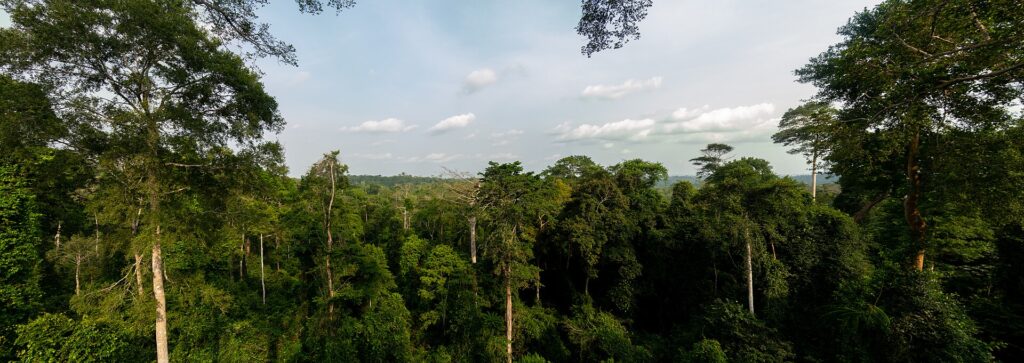
The Lore · West Africa · Lore Universe
Akan / Ashanti
Golden Stool, Anansi trickster tradition, matrilineal succession, Adinkra symbols, Kente cloth cosmology.
Why its stories are told
Stories are told to entertain, instruct, legitimise and remember. Anansesɛm are told by ordinary people, adults and children, in the evening after work. Rattray recorded that these tales were told at night.
The peoples call themselves Akan (ah-KAHN), and their language family is also Akan, with Twi (chwee) and Fante (FAHN-teh) as its main forms.
The Land · Geography
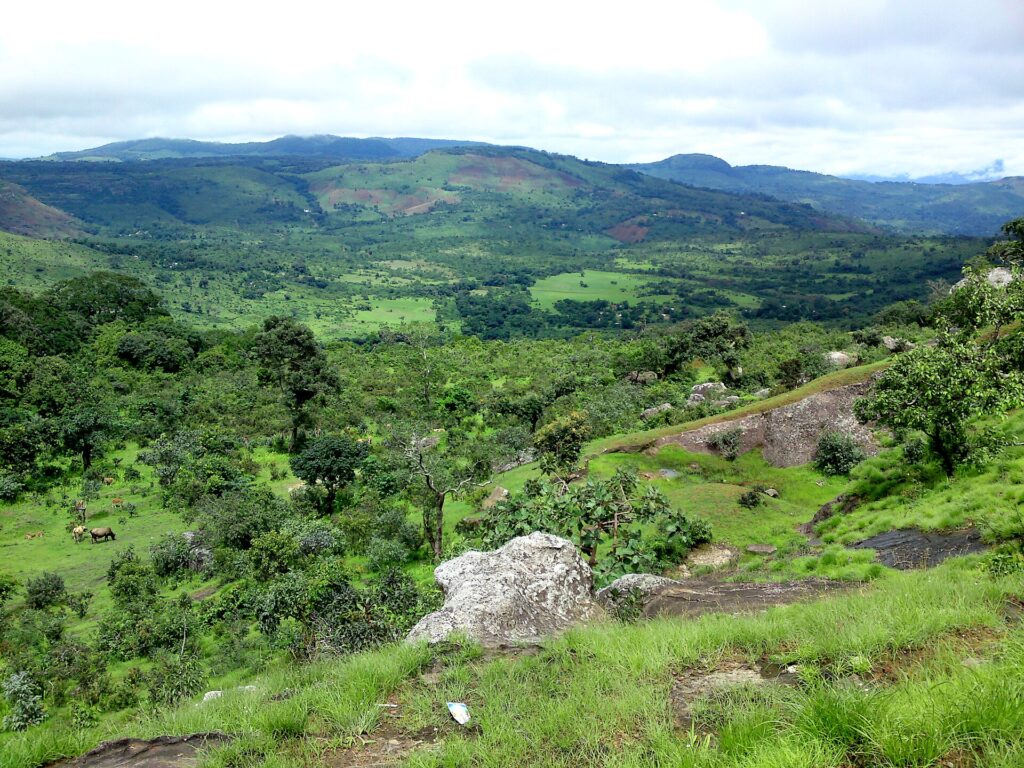
The Akan homeland is the forest belt of southern and central Ghana and south-eastern Côte d'Ivoire, with forest-savanna borderlands to the north around Techiman and the coastal plains and lagoons to the south. Rainfall comes in two wet seasons in much of the forest. The harmattan brings a dry season from the north.
The forest yields gold, kola, timber and food crops; its gold made Akan states wealthy and drew traders from the Sahel and later from Europe. Forest clearing for farms was hard work, and stories honour the founders who cut farms and towns from forest. The forest is also the home of mmoatia, sasabonsam and wild animals, and stories of hunters venture there.
Rivers such as the Tano, Ofin, Pra and Bia, and the crater lake Bosomtwe, are homes of abosom. The coast, with its castles built by Europeans at Elmina and Cape Coast, is a place of trade and of the memory of the Atlantic slave trade.
The land belongs to the ancestors and the stool, held in trust for the unborn. A proverb attributed to Akan tradition says land belongs to a vast family of whom many are dead, few are living and countless are yet unborn. In stories, the land is never just scenery: it is kin.
The People · Cultural Foundation · Society
The Akan live across southern and central Ghana and the south-east of Côte d'Ivoire. Their nations include the Asante around Kumasi; the Bono (Brong) of the Techiman and Wenchi area to the north; the Akyem, Akuapem and Kwahu to the east; the Fante along the central coast; the Wassa, Twifo, Assin and Denkyira of the forest; and, in Côte d'Ivoire, the Baoulé and Anyi.
The tradition took shape in the forest and forest-savanna borderlands between the Black Volta and the coast. Many historians place early Akan state formation in Bonoman, the Bono kingdom centred on Bono Manso near Techiman, which oral tradition and archaeology date from around the 13th to 15th centuries; this dating is debated. Gold from the forest drew traders from the Mande world through towns such as Begho.
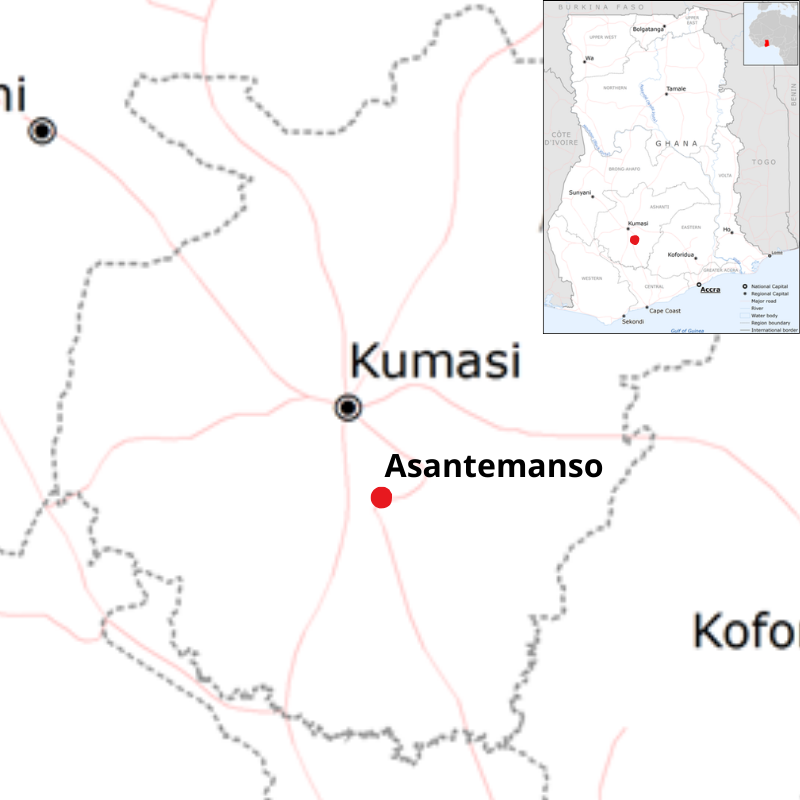
Movement shaped the stories. Asante lineage histories speak of ancestors emerging from the earth at Asantemanso, near Esase, and of clans moving north into the Kumasi area in the 17th century. Coastal Fante traditions speak of a migration from the north under leaders whose names remain in their histories. Baoulé tradition recalls a westward crossing under Queen Abla Pokou in the 18th century. Each version ties a people to land, lineage and stool.
Five values shape the narratives.
Abusua, the matrilineage, comes first. A person belongs to their mother's lineage, inherits through it, and is buried by it. A proverb says that the abusua is like a forest: from outside it looks dense, but inside each tree stands on its own.
Respect for elders and ancestors (nananom) orders society. The living hold the land in trust from the dead.
Wisdom (nyansa) is prized, especially the wisdom carried in proverbs. Akan speech values the indirect; a proverb says that one speaks a proverb to the wise, not the plain word.
Unity and the nation (ɔman) matter above personal ambition. The Golden Stool holds the spirit of the whole Asante people.
Honour and dignity, including generosity and the avoidance of disgrace (animguase), guide conduct.
The priority runs from ancestors and lineage to the living person. The individual is honoured, but always as a member. Unfamiliar story logic follows: a trickster who outwits the sky god may be admired even when wrong, because cleverness is a value in itself; a chief may be removed (destooled) by those who chose him; the heir to a man's office is not his son but his sister's son.
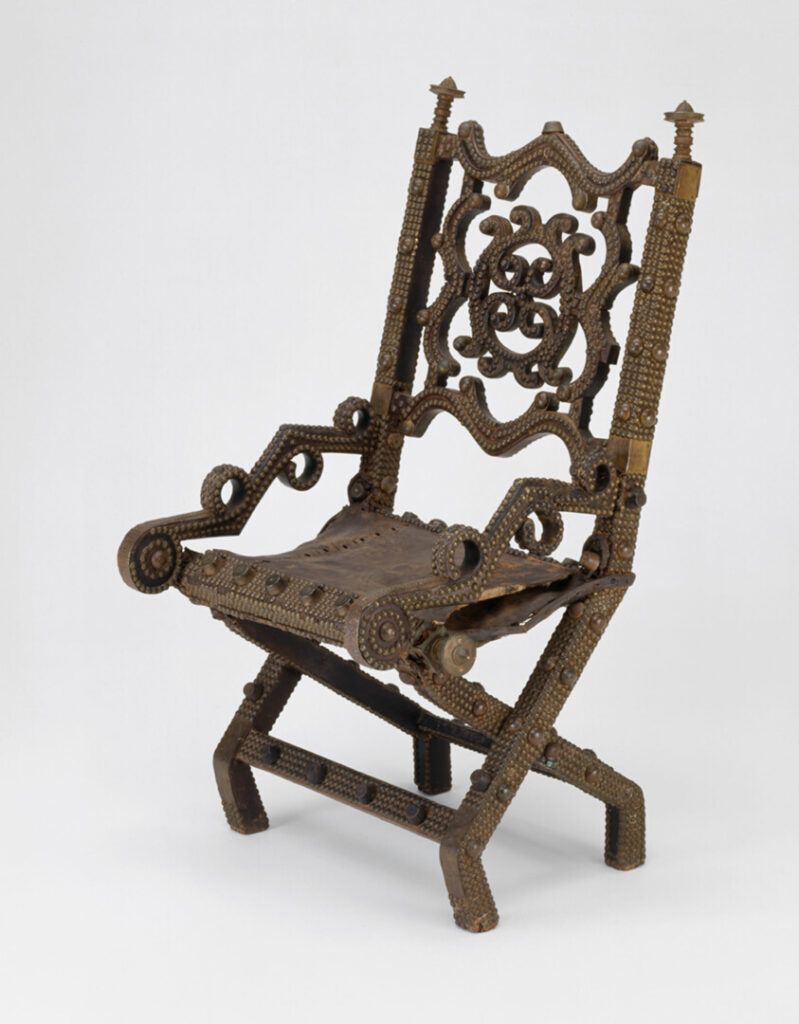
Akan gender logic rests on matrilineal descent. Blood (mogya) comes from the mother, so lineage membership, inheritance and the right to office pass through women. A man's heir is traditionally his sister's son.
The ɔhemmaa (queen mother) is a central office. She is the senior woman of the royal lineage, and she nominates the candidate for chief when a stool is vacant, advises him, and can rebuke him. She has her own stool and court. Yaa Asantewaa, queen mother of Ejisu, led the war of 1900, and her name is honoured.
Women dominate markets and much trade. They sing funeral dirges, lead adowa dance, and carry much of the oral history. Many akɔmfo are women.
Men hold most chiefships and the warrior roles; the asafo companies (especially among the Fante) were male. Men weave kente and make adinkra stamps.
Fathers have strong spiritual bonds with children through ntɔrɔ, and fathers' obligations to children are real, even as inheritance passes to sisters' sons.
The balance has shifted. Colonial law, Christian marriage and Ghana's 1985 Intestate Succession Law have strengthened the rights of wives and children. Akan stories reflect both women's power and the tensions in marriage between two lineages.
Age orders Akan life. Elders (mpanimfoɔ) hold authority in the lineage, the council and the court. They speak in proverbs, pour libation, settle disputes, and keep the lineage's history. A proverb says that a child who washes their hands may eat with elders, acknowledging both hierarchy and the possibility of rising.
The lineage head (abusuapanyin) manages lineage land, funerals and disputes. Elders advise the chief and approve his nomination.
Young adults provide labour and defence. Historically, the young men's groups (nkwankwaa among the Asante; asafo among the Fante) had their own leaders and could voice grievances, even pressing for a chief's removal.
Children learn through stories, proverbs and observation. Anansesɛm are told to them and by them.
The oldest people are close to the ancestors and hold knowledge that others do not, including family histories, land boundaries, and the names of the dead. At death, an elder becomes an ancestor, and their funeral is a major event.
In stories, children who disobey elders suffer, and elders who abuse their positions also suffer. Ananse is often depicted as an older man whose cleverness is undercut by his son Ntikuma, who shows the young can see what the old miss.
Akan society is ranked but has no caste system. At the top are royal lineages, from which chiefs and queen mothers are drawn. Below them are titled office-holders, elders and lineage heads. Ordinary free members (nkurɔfoɔ) farm and trade. Historically, there were also people in servitude: pawns (awowa) held as security for debts, and enslaved people (nkoa, a term also used for subjects generally, and odonkɔ for people of northern origin bought as slaves). Akan law protected their descendants' place in the household to a degree, and it was forbidden to disclose a person's origin in public.
Wealth could raise status. The ɔbirɛmpɔn, a man of great wealth, could earn special titles and honours.
Storytellers hold varied positions. Anansesɛm tellers are ordinary people. Royal drummers, horn-blowers and akyeame are court officials with high standing, often hereditary. Akɔmfo hold respect but can also be feared.
Class appears in stories through kings and chiefs, the wealthy and the poor, the trickster who challenges authority, and the poor person whose kindness is rewarded. Anansesɛm frequently mock pride and greed among the powerful; Ananse's dealings with Onyankopɔn are a model of the clever small figure who bargains with the great.
The basic unit is the abusua, the matrilineage, traced back to a founding ancestress. Lineages belong to larger matriclans (also called abusua) found across Akan states; eight are commonly named: Oyoko, Bretuo, Agona, Asakyiri, Asenie, Aduana, Asona and Ekuona. The Golden Stool belongs to the Oyoko. Members of the same clan anywhere owe each other hospitality and cannot marry each other.
Lineages make up towns, each with a chief (ɔhene) and queen mother. Towns are grouped into divisions under paramount chiefs (amanhene). The Asante confederacy united these divisions under the Asantehene in Kumasi, with the Golden Stool as their bond. Fante states formed their own confederations.
Membership carries obligations: contributing to funerals, supporting kin, keeping lineage taboos, attending festivals, and respecting the stool. In return, the lineage gives land, protection, a place at funerals, and a position as an ancestor after death.
Expulsion from the lineage, or the loss of one's lineage through slavery or exile, is a profound loss: one would have no one to bury them and no place among the ancestors. Stories of orphans, captives and wanderers carry that weight, and stories of return carry the hope of restoration.
Through Time · History
By the 14th and 15th centuries, Akan gold was reaching Saharan trade networks through Mande traders and towns such as Begho, and Bonoman around Bono Manso was a leading state.
In 1471 Portuguese ships reached the Gold Coast, and in 1482 they built the castle of São Jorge da Mina at Elmina.
By the late 17th century Denkyira dominated the forest states, and Asante paid it tribute.
In 1701, Asante under Osei Tutu, with the priest Okomfo Anokye, defeated Denkyira at the battle of Feyiase; tradition places the descent of the Golden Stool around this time.
In 1817, the British envoy Thomas Bowdich visited Kumasi and described the court.
In 1824, Asante forces defeated the British at Nsamankow, where Governor Charles MacCarthy was killed.
In 1874, British forces burned Kumasi.
In 1896, the British occupied Kumasi and exiled the Asantehene Prempeh I.
In 1900, after Governor Hodgson demanded the Golden Stool, Yaa Asantewaa led the war to defend it; Asante was annexed in 1901.
By the 14th and 15th centuries, Akan gold was reaching Saharan trade networks through Mande traders and towns such as Begho, and Bonoman around Bono Manso was a leading state. In 1471 Portuguese ships reached the Gold Coast, and in 1482 they built the castle of São Jorge da Mina at Elmina. By the late 17th century Denkyira dominated the forest states, and Asante paid it tribute. In 1701, Asante under Osei Tutu, with the priest Okomfo Anokye, defeated Denkyira at the battle of Feyiase; tradition places the descent of the Golden Stool around this time. In 1817, the British envoy Thomas Bowdich visited Kumasi and described the court.
In 1824, Asante forces defeated the British at Nsamankow, where Governor Charles MacCarthy was killed. In 1874, British forces burned Kumasi. In 1896, the British occupied Kumasi and exiled the Asantehene Prempeh I. In 1900, after Governor Hodgson demanded the Golden Stool, Yaa Asantewaa led the war to defend it; Asante was annexed in 1901. In 1921, road workers found and stripped the hidden stool. In 1924 Prempeh returned, and in 1935 the Asante confederacy was restored. In 1957 Ghana became independent. In 1999 Otumfuo Osei Tutu II was enthroned as Asantehene.
History lives in stool histories, drum texts, kente names and adinkra symbols.
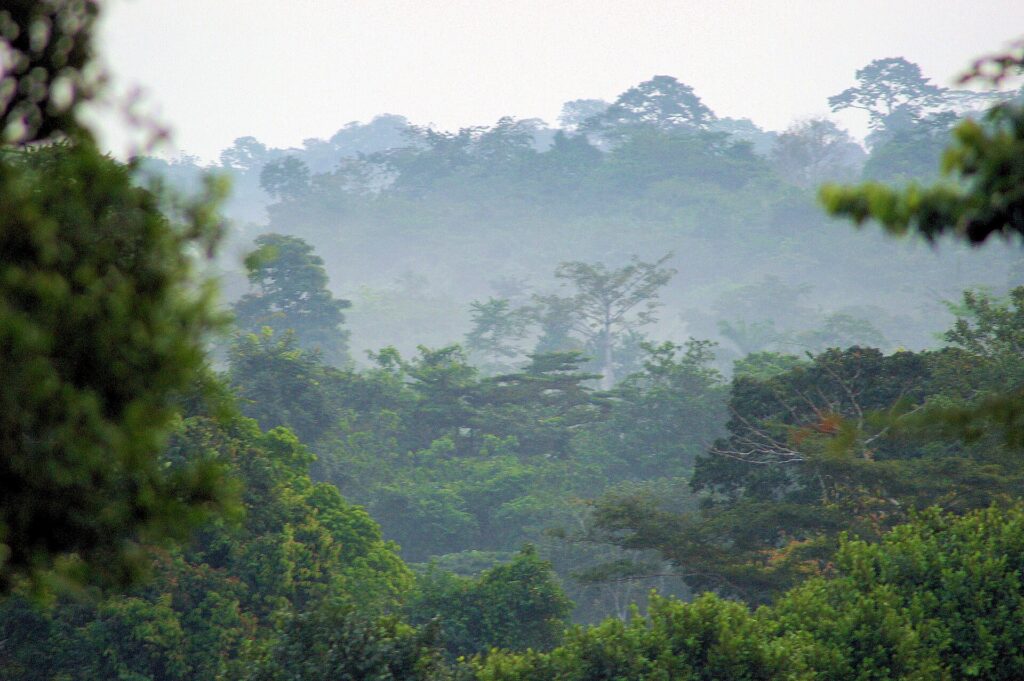
Akan tradition records many movements, varying by people and town. Many Akan histories recall origins in the north, around Bonoman, and dispersal southward into the forest. Asante clans recall emergence at Asantemanso and movement north to the Kumasi area in the 17th century. Coastal Fante traditions remember migration from the north to the coast.
The Akan traded with Mande and Hausa merchants from the north for centuries. Islam reached Kumasi through these traders, and Muslim scholars served at the Asante court in the 19th century, providing literacy and amulets. Wilks documents these Muslim communities. Northern textiles, weights and terms entered Akan culture. The Akan exchanged with neighbouring peoples.
These stories exist because a nation joined from many lineages needed shared memory. The Asante confederacy was built around 1700 by Osei Tutu and the priest Okomfo Anokye, and the story of the Golden Stool descending from the sky is the charter of that union. Stool histories, recited at court and at festivals, record who has the right to rule and why.
The Sacred · Deities and Spirits
Why the sky is far away (the old woman's pestle); Ananse buys the sky god's stories.
Libation prayers addressing earth after the sky; farming rest days kept for her.
Tano and Bia, the brothers who divided the land; Tano's shrine at Tanoboase.
Tano and Bia, in which Tano by disguise receives the inheritance meant for Bia.
The hunter and the antelope at the founding of the lake; the dead's farewell at the lake.
Ananse buys the sky god's stories; Ananse and the pot of wisdom.
Ananse captures Mmoatia with a gum doll to buy the sky god's stories.
Hunters' tales of the being in the trees.
Stool histories and the Adae ceremonies.
Sacredness comes from the presence of spirit. A thing becomes sacred when a spirit dwells in it, when it is consecrated through rites, or when it has been used by an ancestor and blackened in their honour.
Stools are the clearest case. A person's stool takes in their sunsum through use. When an important chief dies, his stool may be blackened and placed in the stool house, where it becomes a shrine of the ancestor. The Golden Stool contains the sunsum of the Asante nation and is never sat upon. These objects and their rites belong to their keepers.
The earth, Asase Yaa, is sacred; in many Akan areas farming is avoided on her day. Rivers, lakes and forests are homes of abosom, including the Tano River and Lake Bosomtwe.
Words are sacred: oaths, prayers, libation speeches, the drum language of the atumpan.
Objects consecrated as asuman (charms) hold protective or other power. Shrines of abosom are kept by akɔmfo.
Some trees hold spirit: the nyame dua (God's tree), a forked post holding a vessel of offerings, once stood at many Asante houses.
Gold carries the sunsum of the sun and of kingship. Sacredness is guarded by taboos, by specialist keepers, and by rites of purification.
At the head is Onyankopɔn, also Nyame and Onyame, the supreme being, with Odomankoma naming the creator aspect. Onyankopɔn is honoured with praise names and in libation first, and once at the nyame dua shrines, but has few priests. Some writers, including Danquah, treat Nyame, Onyankopɔn and Odomankoma as aspects of a single being; others see differences in emphasis.
Asase Yaa, the earth, is next, honoured second in libation. She has no priests of the usual kind and is honoured through farming taboos and offerings.
The abosom are the gods who act in the world. Many are associated with water: Tano (Ta Kora) of the Tano River, regarded as one of the greatest; Bia of the Bia River; Twe of Lake Bosomtwe; and others whose names vary by town. Akan tradition describes them as children of Onyame. Their number is large and local; new abosom have been introduced over time.
Asuman, consecrated charms, are below the abosom and serve specific purposes.
The ancestors stand alongside these powers as guardians of the lineage.
Humans relate to the divine through priests and priestesses (akɔmfo), libation, offering, and observance of taboo. Their relationship is reciprocal: the gods serve those who honour them.
The ancestors (nsamanfo) are the most constant spiritual presence. They are members of the lineage who have died after a good life, received proper funeral rites, and been accepted into the world of the dead (asamando). They watch over the lineage, uphold morality and protect the land.
Ancestors are present and active. They communicate through dreams, through illness or misfortune that akɔmfo interpret, and through the success or failure of the living. They are fed and addressed at the blackened stools during the Adae every forty-two days and at the Odwira. Libation is poured to them at almost every important event, with the speaker calling the names of the dead.
The protocol is respect, remembrance and offering. One pours drink to the ground, speaks to the ancestors in order of seniority, and asks for blessing and protection. Funerals are major obligations; a lineage that buries its dead poorly is shamed.
What ancestors want is continuity: that the lineage endures, that children are born, that land is kept, that taboos and customs are maintained, and that they are remembered. A proverb holds that when a person dies, they are not gone; they go home. The living are in debt to the dead, and pay it through care for the line.
The Akan spirit world is close to the living world and in constant contact with it. At its head is Onyankopɔn, the supreme being, who withdrew from close contact with humans, as the story of the old woman's pestle explains. Below Onyankopɔn are the abosom, powers drawn from him who dwell in rivers, lakes, rocks and forests and act through their priests. Asase Yaa is the earth.
Asamando is the land of the dead, where ancestors live. Akan accounts describe it as like the world of the living, with lineage and rank continuing.
The forest is a realm of other beings: mmoatia, little forest people; sasabonsam, a dangerous forest being; and spirits of trees and animals.
Movement across the boundary happens in several directions. The ɔkra comes from Onyame at birth and returns at death. The ancestors come to the living through dreams and festival; the living reach them through libation and offering. Abosom descend into akɔmfo in possession dances. Witches (abayifo) are said to travel at night in spirit form.
The conditions are ritual. Entering a sacred grove, approaching a shrine, or crossing into ancestral space requires rites of purification and observance of taboos.
Ritual follows a common pattern: libation and prayer to Onyankopɔn, Asase Yaa, the abosom and ancestors, in that order or in the order a town keeps; the offering of drink, food, or an animal; and a request for blessing.
Life transitions are marked. A child is outdoored and named on the eighth day, receiving a day name and a family name. Girls once passed through bragoro at puberty; Sarpong documented this rite, now rare. Marriage is an agreement between lineages, marked by drink offered to the bride's family. Funerals are the most elaborate rites, with mourning, dirges, drumming, a burial, and later commemorations.
The Adae every forty-two days, held at the stool house, feeds the ancestral stools. The yearly Odwira festival historically gathered the chiefs of Asante in Kumasi to purify the nation, mourn the dead of the year, eat the new yam and renew allegiance. Other Akan festivals do similar work, such as the Apoo of Techiman and Wenchi, and the Fante Fetu Afahye of Cape Coast.
In stories, ritual frames action and resolves it. A stool history ends with a festival or oath; a wrongdoing is resolved by purification; a reign begins with installation. Ritual is how a story becomes part of public life.
Onyankopɔn (also Nyame, Onyame; Odomankoma as creator) is the supreme being, associated with the sky. He has praise names such as Ɔtumfoɔ ('the powerful one') and Tweduampɔn ('the dependable one'). He withdrew from human contact in myth. Ritual protocol: libation first; historically the nyame dua shrine at houses held offerings for him.
Asase Yaa is the earth, second in libation. She is honoured through a day of rest from farming, and through offerings before digging graves or farming. She receives the dead.
Tano (Ta Kora) is the ɔbosom of the Tano River, regarded as among the most powerful abosom, associated with Tanoboase and with war and protection. His shrine is served by akɔmfo.
Bia is the ɔbosom of the Bia River, in tradition Tano's elder brother.
Twe is the ɔbosom of Lake Bosomtwe.
Kwaku Ananse is not a god but the great trickster who deals with Onyankopɔn directly and owns all stories.
The abosom are often described as children of Onyame. They have no images of the deity's appearance in the Western sense; they are present in their shrines, often in brass pans containing sacred materials, and in the priests they possess. Each has days, taboos and offerings; full protocols belong to their akɔmfo.
Nsamanfo, the ancestors, are the closest spirits. They protect the lineage, uphold morality and receive offerings at the stools and at the Adae.
Abosom are the gods drawn from Onyame, who act through akɔmfo. They give help in exchange for service and offerings.
Asuman are consecrated charms and objects with spiritual power. They are prepared by specialists for protection, healing or other purposes.
Mmoatia are small forest beings, described as having backward-pointing feet and speaking in whistles. Rattray records that they teach knowledge of herbs to akɔmfo and healers; they can also play tricks.
Sasabonsam is a forest being described as hairy, with long legs that dangle from trees and hooks for feet, who catches hunters. It is often linked to abayifo, witches.
Abayifo are witches, people who use spiritual power to harm, especially within their own lineage. They are said to work at night. Anti-witchcraft shrines and rites address them.
Saman, an unsettled spirit or ghost, is the spirit of someone who did not receive proper rites.
The rules of interaction are respect, offering, and observance of taboos. One does not offend the abosom or ignore the ancestors; one protects oneself from witches and forest beings through charms and rites.
Kwaku Ananse, the spider, is the central figure of Anansesɛm: clever, greedy, boastful, sometimes generous, always scheming. He lives in the time of tales with his wife Aso and son Ntikuma. Through his deeds, stories, wisdom and some of the features of animals come into the world.
Onini the python, Osebo the leopard, Mmoboro the hornets, and Mmoatia, the forest being, are the creatures Ananse captured to buy the sky god's stories.
The tortoise, the hare and other animals appear in tales as rivals or victims of Ananse.
Sasabonsam is the forest's dangerous being, hunting those who enter.
The crocodile appears in the adinkra symbol of two crocodiles sharing one stomach, representing unity.
The Sankofa bird, looking back to fetch an egg, is a symbol rather than a creature of tales, but it is widely used in Akan visual culture.
The antelope (twe) appears in the founding story of Lake Bosomtwe.
The porcupine (kɔtɔkɔ) is the emblem of the Asante army and nation, chosen for the many quills it can throw: if you kill a thousand, a thousand more will come. Kumasi's football club Asante Kotoko carries this name.
These creatures connect humans, the forest and the gods.
Taboos (akyiwadeɛ) bind people to their lineage, ntɔrɔ, abosom and stools.
Asase Yaa's day is a day of rest from farming in many Akan areas; working the land on that day offends the earth.
Each ntɔrɔ group and abusua has its own food and behavioural taboos. Each ɔbosom has its taboos, which its priests and devotees observe.
The Golden Stool must never touch the bare ground and must never be sat on. When the British governor Frederick Hodgson demanded to sit on it in 1900, the demand was a grave offence that led to war.
Chiefs observe many taboos: historically, they did not walk barefoot or let their buttocks touch the ground, and a chief who breaks a stool's taboos may be destooled.
Lake Bosomtwe has taboos, including on the use of certain kinds of boats; fishermen there use planks (padua).
Uttering the great oath (Ntam Kɛseɛ) falsely or casually is forbidden; it recalls national calamity.
Consequences can be immediate, such as illness; delayed, revealed through divination; or collective, striking a town or the nation. Some violations, like desecrating a stool, require major purification. The 1921 stripping of the Golden Stool's ornaments was judged by the Asante as an unforgivable act.
This part carries no pictures. Gods, spirits, the ancestors and ceremonies are named, with their roles, and drawn as marks only.
The Stories · Signature Stories
The descent of the Golden Stool is the founding story of Asanteman. Around 1700 the Asante were a group of separate states paying tribute to Denkyira. Osei Tutu, ruler of Kumasi, and Okomfo Anokye, a priest from Awukugua in Akuapem, worked to unite them.
And 2 more stories in the catalog below.
The Telling · Oral Tradition · Narrative Structure
The Figures · Survival and Diaspora
The trickster is Kwaku Ananse. He bargains, schemes and outwits the powerful; he also overreaches and is humiliated. His arc does not change from story to story, but he tests the limits of rules and reveals what the community values. He belongs to everyone; all tales are his.
The sky god, Onyankopɔn, is the distant and powerful figure who sets tasks and owns the world's goods. In tales he is often outwitted by Ananse but never removed.
The wise son is Ntikuma, Ananse's son, who sometimes sees what his father misses.
The priest-founder, embodied by Okomfo Anokye, brings spiritual power to political purpose and gives laws.
The founding king, embodied by Osei Tutu, unites the nation.
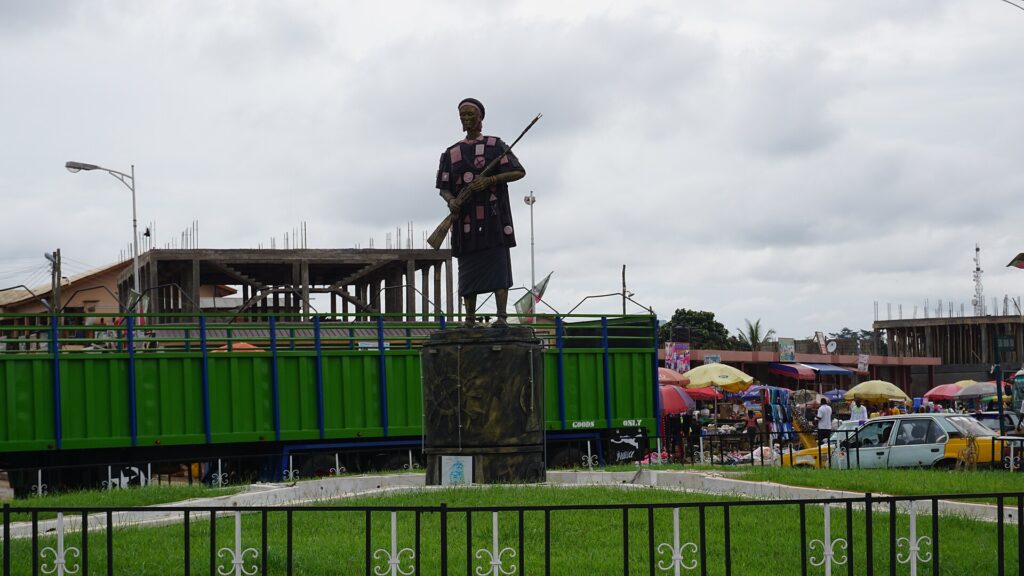
The queen mother and warrior woman, embodied by Yaa Asantewaa, defends the nation when men hesitate. Akan accounts record her speech challenging the men to fight.
The headstrong daughter, like Anowa of Fante legend, refuses the husbands chosen for her and marries a stranger, with consequences.
The hunter enters the forest and finds sites, lakes and knowledge.
The orphan or poor person is mistreated but rewarded for kindness.
Each archetype stands in relation to lineage and nation: founding, defending, testing, or reminding them.
Survival and diaspora
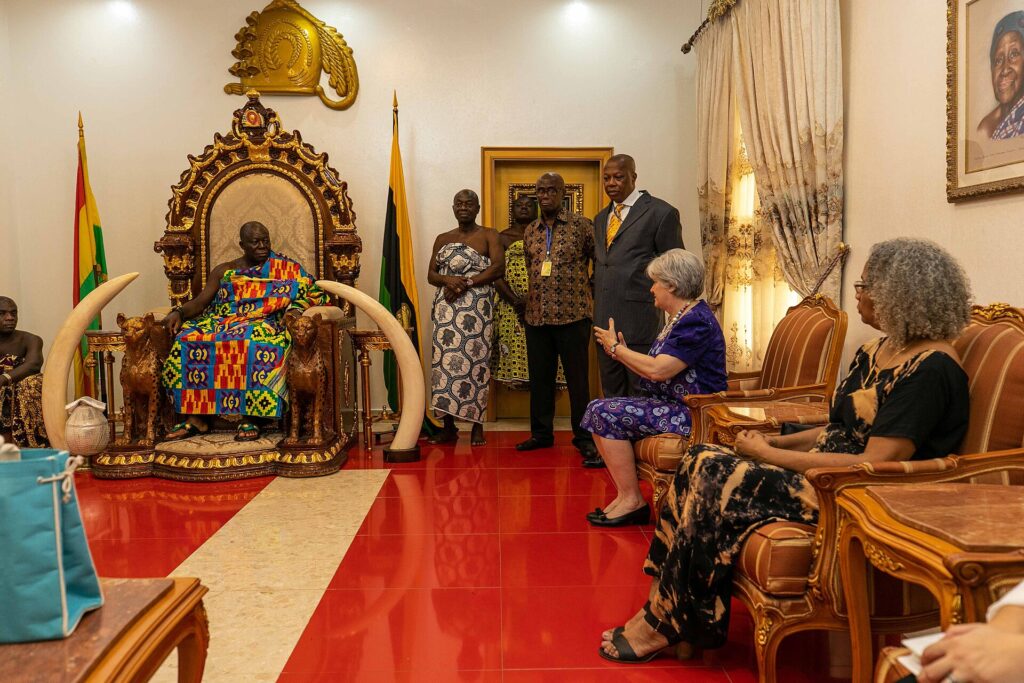
Yes. The tradition is living. The Asantehene, Otumfuo Osei Tutu II, reigns from Manhyia Palace, and the Golden Stool is kept and appears at major occasions. Chieftaincy is recognised in Ghana's constitution, and the National House of Chiefs and regional houses play roles in public life. Akwasidae and other festivals continue in Kumasi and across Akan towns.
Akan captives in the Americas built new forms from what they carried. In Jamaica, Akan influence was strong. Anansi stories became central to Jamaican folklore. Akan day names (Cudjoe from Kwadwo, Quaco from Kwaku, Cuffee from Kofi, Quashie from Kwasi, Quamina from Kwame) were common among the enslaved. Akan-led revolts, including Tacky's revolt of 1760, shook the island.
Revival takes institutional, artistic and religious forms. After independence in 1957, Kwame Nkrumah's government promoted Akan and wider Ghanaian culture: kente as national dress, drum and dance in national ensembles, and the use of chiefly symbols in state ceremony. The Institute of African Studies at the University of Ghana, where J. H.
The Catalog · its places, peoples, practices and sources

The World Bible
For the reader who wants all of it: every section of Golden Throne, in its eleven parts.
The peoples call themselves Akan (ah-KAHN), and their language family is also Akan, with Twi (chwee) and Fante (FAHN-teh) as its main forms. The kingdom at the centre of this holding is Asanteman (ah-SAHN-teh-mahn), 'the Asante nation'; English writers spelled it Ashanti. Its king is the Asantehene (ah-sahn-teh-HEH-neh), and its sacred centre is Sika Dwa Kofi (SEE-kah JWAH KOH-fee), 'the Golden Stool born on Friday'.
There is no single Akan word that names the religion as a separate system; belief and practice run through kingship, lineage and daily life. The supreme being is Onyankopɔn (oh-nyahn-koh-PAWN), also Nyame or Onyame, and in the aspect of creator Odomankoma. The earth is Asase Yaa (ah-SAH-seh YAH); among Fante she is often Asase Efua. The gods are abosom (ah-BOH-sohm; singular ɔbosom); the ancestors are nsamanfo (n-sah-MAHN-foh).
Spider stories are Anansesɛm (ah-nahn-seh-SEM), named for Kwaku Ananse, the spider; in the Caribbean he became Anansi or Annancy, and in the American South, Aunt Nancy. Adinkra (ah-DEEN-krah) symbols and kente (KEN-teh) cloth carry their own Twi names, one for each design.
The Akan live across southern and central Ghana and the south-east of Côte d'Ivoire. Their nations include the Asante around Kumasi; the Bono (Brong) of the Techiman and Wenchi area to the north; the Akyem, Akuapem and Kwahu to the east; the Fante along the central coast; the Wassa, Twifo, Assin and Denkyira of the forest; and, in Côte d'Ivoire, the Baoulé and Anyi.
The tradition took shape in the forest and forest-savanna borderlands between the Black Volta and the coast. Many historians place early Akan state formation in Bonoman, the Bono kingdom centred on Bono Manso near Techiman, which oral tradition and archaeology date from around the 13th to 15th centuries; this dating is debated. Gold from the forest drew traders from the Mande world through towns such as Begho.
Movement shaped the stories. Asante lineage histories speak of ancestors emerging from the earth at Asantemanso, near Esase, and of clans moving north into the Kumasi area in the 17th century. Coastal Fante traditions speak of a migration from the north under leaders whose names remain in their histories. Baoulé tradition recalls a westward crossing under Queen Abla Pokou in the 18th century. Each version ties a people to land, lineage and stool.
These stories exist because a nation joined from many lineages needed shared memory. The Asante confederacy was built around 1700 by Osei Tutu and the priest Okomfo Anokye, and the story of the Golden Stool descending from the sky is the charter of that union. Stool histories, recited at court and at festivals, record who has the right to rule and why.
History pressed on the tradition: wars with Denkyira, the Fante and the British, the gold and slave trades on the coast, the exile of the Asantehene Prempeh I in 1896, and the war of 1900 to protect the Golden Stool. Each became story and song.
The stories serve several social functions. Stool histories legitimise office. Proverbs settle disputes. Funeral dirges honour the dead and hold lineage history. Anansesɛm teach and entertain, and also let a community laugh at greed, pride and power in safety.
Sacred and secular registers are distinct. Rites for stools, abosom and ancestors, and the knowledge held by akɔmfo (priests and priestesses) and stool-keepers, are sacred, and much of it is restricted to its keepers. Anansesɛm are secular, told in the evening by anyone with skill, and open with a formula that disclaims literal truth.
Akan scholars have written much of the record. J. B. Danquah set out Akan ideas of God in The Akan Doctrine of God (1944). Kwame Gyekye analysed Akan concepts of person and destiny (1987). Peter Kwasi Sarpong, later Catholic Archbishop of Kumasi, wrote on stools (1971) and girls' nubility rites (1977). J. H. Kwabena Nketia studied funeral dirges (1955) and drumming (1963). Kwesi Yankah studied the okyeame, the royal spokesperson (1995). Kofi Antubam wrote on Ghanaian art and symbols (1963). Kwasi Konadu has written on Bono medicine and the Akan diaspora.
Among outside scholars, R. S. Rattray, a British colonial anthropologist, recorded Asante religion, law and folktales in the 1920s with named Asante informants; his work is detailed and widely used but carries colonial assumptions. Ivor Wilks wrote the standard political history of nineteenth-century Asante (1975). T. E. Bowdich described Kumasi in 1817 (1819).
Living sources include the Asantehene's court at Manhyia, queen mothers, chiefs and their akyeame, stool-keepers, akɔmfo, drummers, weavers at Bonwire and adinkra makers at Ntonso. The Institute of African Studies at the University of Ghana and the Centre for National Culture in Kumasi are long-standing institutions in this work. Where Akan accounts differ by town and lineage, this holding notes it.
Five values shape the narratives.
Abusua, the matrilineage, comes first. A person belongs to their mother's lineage, inherits through it, and is buried by it. A proverb says that the abusua is like a forest: from outside it looks dense, but inside each tree stands on its own.
Respect for elders and ancestors (nananom) orders society. The living hold the land in trust from the dead.
Wisdom (nyansa) is prized, especially the wisdom carried in proverbs. Akan speech values the indirect; a proverb says that one speaks a proverb to the wise, not the plain word.
Unity and the nation (ɔman) matter above personal ambition. The Golden Stool holds the spirit of the whole Asante people.
Honour and dignity, including generosity and the avoidance of disgrace (animguase), guide conduct.
The priority runs from ancestors and lineage to the living person. The individual is honoured, but always as a member. Unfamiliar story logic follows: a trickster who outwits the sky god may be admired even when wrong, because cleverness is a value in itself; a chief may be removed (destooled) by those who chose him; the heir to a man's office is not his son but his sister's son.
Causation has seen and unseen layers. Misfortune may come from the natural world, from an offended ɔbosom, from ancestors who have been neglected, from a broken taboo, from witchcraft (bayi) worked by others, or from a person's own destiny. Akɔmfo and diviners find which.
Akan thought describes the person as composite. Kwame Gyekye and others give the parts as: ɔkra, the soul given by Onyame, which carries one's destiny (nkrabea); sunsum, the personal spirit or character; mogya, blood, inherited from the mother and the basis of abusua membership; ntɔrɔ, a spiritual bond inherited from the father; and honam, the body. Accounts vary, and scholars debate how these parts relate.
The individual is therefore bound in two directions: by blood to the mother's lineage and by ntɔrɔ to the father's. Community is built into the self.
Time is cyclical and calendrical. The Akan calendar combines a seven-day and a six-day week to make a forty-two-day cycle (adaduanan), around which the Adae ceremonies turn. Seasons and festivals return. Yet stool histories also run forward through generations.
Reality is single but layered: the visible world of the living, and the world of Onyame, the abosom and the ancestors, which is close and interwoven with it.
Stories are told to entertain, instruct, legitimise and remember.
Anansesɛm are told by ordinary people, adults and children, in the evening after work. Rattray recorded that these tales were told at night. They teach through laughter, explain why things are as they are, and allow criticism of the powerful in a frame that claims not to be true.
Stool histories and royal genealogies are recited by specialists: court historians, drummers on the talking drums, horn-blowers and the okyeame, the royal spokesperson who speaks on behalf of the chief. These are told at installations, festivals, funerals and court hearings.
Funeral dirges (nsubɔ), sung mostly by women, recall the dead and their lineage and are part of every major funeral.
Proverbs (mmɛ) are used by everyone in disputes and teaching, and the elders' skill with them is a measure of authority.
Power runs through the telling. At court, no one addresses the chief directly; speech passes through the okyeame, who may reshape and polish it. Stool histories may be guarded because they decide claims to office and land. But Anansesɛm hand a kind of power back to ordinary tellers, and the Apoo festival of the Bono allowed open ridicule of rulers in song.
Anansesɛm have a recognisable shape. They open with a formula disclaiming truth; Rattray recorded one meaning 'we do not really mean, we do not really mean (that what we are going to say is true)'. The tale then unfolds in episodes, often a series of tasks, tricks or encounters, with songs (mmoguo) set between them. It usually ends with an explanation of how something came to be (why the spider lives in corners, why stories belong to Ananse) and a closing formula that hands the story back to the listeners.
The movement is often a bargain or test followed by a trick, a reversal and a consequence. Ananse sets out to gain something through cleverness; he succeeds, or he overreaches and is exposed.
Stool histories have a different shape: a genealogy of rulers, punctuated by migrations, wars, founding acts and the creation of stools and oaths. Each reign is an episode, and the whole is a chain linking the present ruler to founders.
Festival narratives, such as the Odwira, reenact purification and renewal in an annual cycle. Funeral dirges move from address to the dead, to recital of lineage, to lament.
Across forms, story moves through relationships and obligations, not toward a single climax but toward the restored order of lineage, stool and community.
Tension usually comes from rivalry, desire and the testing of limits rather than from pure good against evil.
In Anansesɛm the driver is desire, usually Ananse's: for food, for status, for a wife, for the sky god's stories. He tests the rules of the world and the patience of others. The tension is between cleverness and greed, and the audience waits to see whether wit will carry him or trip him.
In stool histories the conflict is political: between states (Asante against Denkyira), between lineages contending for a stool, between a ruler and his people, and between Asante and the British. These are real conflicts, often violent, and the stories record losses as well as victories.
In stories of abosom and ancestors, the tension is imbalance. A taboo has been broken, an offering neglected, a chief has failed in his duties, and the land or people suffer until it is put right.
In moral tales the conflict is often between family members: a jealous co-wife, an ungrateful child, a daughter who refuses the husbands chosen for her, as in the Fante legend of Anowa. The resolution shows the cost of the choice. The driving force throughout is relationship under strain.
The tradition has several protagonist types.
Kwaku Ananse, the spider, is the most famous: a clever, greedy, boastful and resourceful trickster who bargains with Onyankopɔn himself. He is not a model of virtue but a figure through whom the community explores intelligence, appetite and the limits of rules. His wife Aso and son Ntikuma often appear beside him.
The founder or ruler is the protagonist of stool histories: Osei Tutu, Okomfo Anokye, and the queen mothers and chiefs who led migrations. These are individuals, but they act for the nation, and their deeds become the property of the stool.
The heroine who defends the nation is embodied in Yaa Asantewaa, queen mother of Ejisu, who led the resistance of 1900; her story is told in song as well as history.
The ordinary person facing a test appears in moral tales: an orphan, a hunter, a girl choosing a husband, a man tempted by the forest's beings.
The nation itself is a protagonist in the Golden Stool story: the stool holds the sunsum of all Asante, and the drama of 1900 was the nation defending its own soul.
In all types, the individual's actions are measured by what they bring to lineage and nation.
Anansesɛm commonly end with an explanation of origin (how stories came to the world, why the spider is bald or thin-waisted, why wisdom is spread among all people) followed by a closing formula. Rattray recorded one which says, in substance, that this is the teller's story, and whether it is sweet or not sweet, listeners may take some elsewhere and let some come back. The ending opens the story to circulation rather than closing it.
Trickster tales may end in Ananse's success or his humiliation, and the audience enjoys both. The world is not always made fair, but it is explained.
Stool histories resolve with the establishment of something lasting: a stool, an oath, a festival, a law, or a boundary. The Golden Stool story ends with Asante united and with laws given by Okomfo Anokye.
Stories of offence and punishment end with restoration through offering, purification or the removal of an unworthy ruler.
Historical narratives of loss, such as Prempeh's exile, end with return: Prempeh came back in 1924, and the confederacy was restored in 1935.
A satisfying ending in this tradition is one where the line continues, the stool remains, and the community knows why things are as they are.
Several kinds of time run together.
Genealogical time is the spine of stool histories: a chain of rulers back to founders, each linked to the last. Time moves forward, but the past is kept present through the stools of the dead, which are honoured in the Adae.
Ritual time is cyclical. The forty-two-day adaduanan cycle brings Akwasidae (on a Sunday) and Awukudae (on a Wednesday), when ancestors are fed and remembered. The yearly Odwira purifies the nation and renews the bond with ancestors and the stool. Funerals repeat at set intervals after death.
Mythic time, as in Anansesɛm, is set 'long ago' when the sky was close and animals and people spoke together. It explains present conditions and is kept apart from historical time by the opening formula.
Life time is shaped by the day of one's birth. Every Akan person carries a day name (kra din), linking them to the day's qualities and to others born on that day.
The result is layered: a forward-moving history of stools, a returning calendar of rites, and a timeless past of tales, each available in story. Sankofa, the adinkra symbol of a bird looking back, captures the idea that the past is fetched to guide the present.
Community is central, and often the true subject. The Golden Stool contains the sunsum of the Asante nation, and its stories are about the people as a whole. The abusua is the unit that inherits, mourns, and keeps the ancestors.
Individuals relate to community through office and obligation. A chief is chosen from eligible members of the royal lineage, nominated by the queen mother, approved by elders, and can be destooled. An individual's success is the lineage's honour; their disgrace is the lineage's shame.
In Anansesɛm, the animal community often turns against Ananse, or is tricked by him; the community is a character, judging and responding.
Community organisation appears in stories through councils, queen mothers, akyeame and asafo (the companies of young men, especially among the Fante).
The community expects stories to explain shared rites and rights: why a lineage holds a stool, why a town keeps a taboo, why the Odwira is held. It also expects stories to entertain, to let it laugh at itself, and to remind it of values. At funerals, the community expects dirges that recall the lineage. A story that harms the community's standing or reveals restricted history may be challenged by its keepers.
Morality is relational and grounded in lineage, community and the ancestors. Right action supports the abusua and the ɔman: caring for kin, respecting elders, keeping taboos, honouring oaths, giving generously, speaking wisely, and burying the dead properly.
Condemnation falls on greed, selfishness, disrespect of elders, theft, adultery, witchcraft, breaking a great oath, and pride. Ananse is condemned for greed and pride even while admired for wit; stories of his downfall are as numerous as stories of his success.
Honour comes from bravery for the nation, wisdom, generosity, and patience. Yaa Asantewaa's courage, Okomfo Anokye's wisdom and Osei Tutu's leadership are honoured.
Morality is enforced by ancestors and abosom as well as people. A great oath, such as the Asantehene's Ntam Kɛseɛ, invokes a past calamity, and swearing it brings a case before the king. A chief who breaks the rules of his office may be destooled.
Stories teach moral logic by showing consequences, by proverbs that compress the lesson, and by the trickster's mixed career, which lets listeners see that cleverness without care is dangerous. The lesson is often given as a proverb at the end, for listeners to take away.
Transformation is more often a consequence than a goal.
In Anansesɛm, the world is transformed by Ananse's actions: stories become his property and then everyone's; wisdom, which he tried to hoard, is scattered so all people have some; animals gain their present features. The trickster himself rarely changes; he is the same schemer in each tale. The world changes around him.
In stool histories, the transformation is of the community: separate lineages become the Asante nation when the Golden Stool descends; a defeated people become independent; an exiled king returns. These are celebrated transformations.
In the life of a person, transformation comes through rites: naming makes a newborn a person, the puberty rite (bragoro) made a girl a woman ready for marriage, installation makes a royal into a chief whose old name is set aside, death makes a person an ancestor. A chief once enstooled is a sacred person.
The tradition mourns transformations that come from disgrace or loss: a lineage that dies out, a stool that is captured, the 1921 desecration of the Golden Stool's ornaments, the loss of regalia taken in British raids. Some such losses are answered by renewal; others remain open.
Sacredness comes from the presence of spirit. A thing becomes sacred when a spirit dwells in it, when it is consecrated through rites, or when it has been used by an ancestor and blackened in their honour.
Stools are the clearest case. A person's stool takes in their sunsum through use. When an important chief dies, his stool may be blackened and placed in the stool house, where it becomes a shrine of the ancestor. The Golden Stool contains the sunsum of the Asante nation and is never sat upon. These objects and their rites belong to their keepers.
The earth, Asase Yaa, is sacred; in many Akan areas farming is avoided on her day. Rivers, lakes and forests are homes of abosom, including the Tano River and Lake Bosomtwe.
Words are sacred: oaths, prayers, libation speeches, the drum language of the atumpan.
Objects consecrated as asuman (charms) hold protective or other power. Shrines of abosom are kept by akɔmfo.
Some trees hold spirit: the nyame dua (God's tree), a forked post holding a vessel of offerings, once stood at many Asante houses.
Gold carries the sunsum of the sun and of kingship. Sacredness is guarded by taboos, by specialist keepers, and by rites of purification.
The ancestors (nsamanfo) are the most constant spiritual presence. They are members of the lineage who have died after a good life, received proper funeral rites, and been accepted into the world of the dead (asamando). They watch over the lineage, uphold morality and protect the land.
Ancestors are present and active. They communicate through dreams, through illness or misfortune that akɔmfo interpret, and through the success or failure of the living. They are fed and addressed at the blackened stools during the Adae every forty-two days and at the Odwira. Libation is poured to them at almost every important event, with the speaker calling the names of the dead.
The protocol is respect, remembrance and offering. One pours drink to the ground, speaks to the ancestors in order of seniority, and asks for blessing and protection. Funerals are major obligations; a lineage that buries its dead poorly is shamed.
What ancestors want is continuity: that the lineage endures, that children are born, that land is kept, that taboos and customs are maintained, and that they are remembered. A proverb holds that when a person dies, they are not gone; they go home. The living are in debt to the dead, and pay it through care for the line.
The Akan spirit world is close to the living world and in constant contact with it. At its head is Onyankopɔn, the supreme being, who withdrew from close contact with humans, as the story of the old woman's pestle explains. Below Onyankopɔn are the abosom, powers drawn from him who dwell in rivers, lakes, rocks and forests and act through their priests. Asase Yaa is the earth.
Asamando is the land of the dead, where ancestors live. Akan accounts describe it as like the world of the living, with lineage and rank continuing.
The forest is a realm of other beings: mmoatia, little forest people; sasabonsam, a dangerous forest being; and spirits of trees and animals.
Movement across the boundary happens in several directions. The ɔkra comes from Onyame at birth and returns at death. The ancestors come to the living through dreams and festival; the living reach them through libation and offering. Abosom descend into akɔmfo in possession dances. Witches (abayifo) are said to travel at night in spirit form.
The conditions are ritual. Entering a sacred grove, approaching a shrine, or crossing into ancestral space requires rites of purification and observance of taboos.
Ritual follows a common pattern: libation and prayer to Onyankopɔn, Asase Yaa, the abosom and ancestors, in that order or in the order a town keeps; the offering of drink, food, or an animal; and a request for blessing.
Life transitions are marked. A child is outdoored and named on the eighth day, receiving a day name and a family name. Girls once passed through bragoro at puberty; Sarpong documented this rite, now rare. Marriage is an agreement between lineages, marked by drink offered to the bride's family. Funerals are the most elaborate rites, with mourning, dirges, drumming, a burial, and later commemorations.
The Adae every forty-two days, held at the stool house, feeds the ancestral stools. The yearly Odwira festival historically gathered the chiefs of Asante in Kumasi to purify the nation, mourn the dead of the year, eat the new yam and renew allegiance. Other Akan festivals do similar work, such as the Apoo of Techiman and Wenchi, and the Fante Fetu Afahye of Cape Coast.
In stories, ritual frames action and resolves it. A stool history ends with a festival or oath; a wrongdoing is resolved by purification; a reign begins with installation. Ritual is how a story becomes part of public life.
At the head is Onyankopɔn, also Nyame and Onyame, the supreme being, with Odomankoma naming the creator aspect. Onyankopɔn is honoured with praise names and in libation first, and once at the nyame dua shrines, but has few priests. Some writers, including Danquah, treat Nyame, Onyankopɔn and Odomankoma as aspects of a single being; others see differences in emphasis.
Asase Yaa, the earth, is next, honoured second in libation. She has no priests of the usual kind and is honoured through farming taboos and offerings.
The abosom are the gods who act in the world. Many are associated with water: Tano (Ta Kora) of the Tano River, regarded as one of the greatest; Bia of the Bia River; Twe of Lake Bosomtwe; and others whose names vary by town. Akan tradition describes them as children of Onyame. Their number is large and local; new abosom have been introduced over time.
Asuman, consecrated charms, are below the abosom and serve specific purposes.
The ancestors stand alongside these powers as guardians of the lineage.
Humans relate to the divine through priests and priestesses (akɔmfo), libation, offering, and observance of taboo. Their relationship is reciprocal: the gods serve those who honour them.
Akan is a tonal language, and its tone allows speech to be transmitted on drums and horns, a practice central to court life.
Anansesɛm are performed with vivid voices. Tellers give Ananse a nasal, lisping voice in many communities, a feature noted by researchers. The opening and closing formulas frame the tale. Songs interrupt the narrative, and pauses invite audience response.
Proverbs (mmɛ) are used constantly and compressed into short lines. Speakers often begin, 'Our elders say...' and leave the listener to draw the meaning. Indirect speech is valued; plain speech can be rude.
Court speech passes through the okyeame, who adds proverbs, polishes the chief's words, and controls their delivery. Kwesi Yankah's study shows how this mediation works as art and as politics.
Drum language on the atumpan, a pair of talking drums, recites praise, history, and proverbs in tonal patterns. Drum texts often begin with formal invocations, such as the drummer addressing the materials of the drum itself.
Funeral dirges are sung in a crying style with recitation of names, places and praise.
Silence also carries meaning. Some names are not spoken; some histories are not told in public. A chief's words are not always repeated outside court.
Music and drum underpin performance. The fɔntɔmfrɔm is a royal drum ensemble with large drums played at court and festivals. The atumpan talking drums speak in tone. Horns (mmɛntia, mmɛnsɛn) made of elephant tusk play praise phrases. Adowa is a dance and music form associated with funerals and celebrations, with women prominent. Kete is a royal court music and dance.
Dance carries meaning: gestures can express proverbs, praise or sorrow. Chiefs dance at festivals with gestures that communicate their bravery and status.
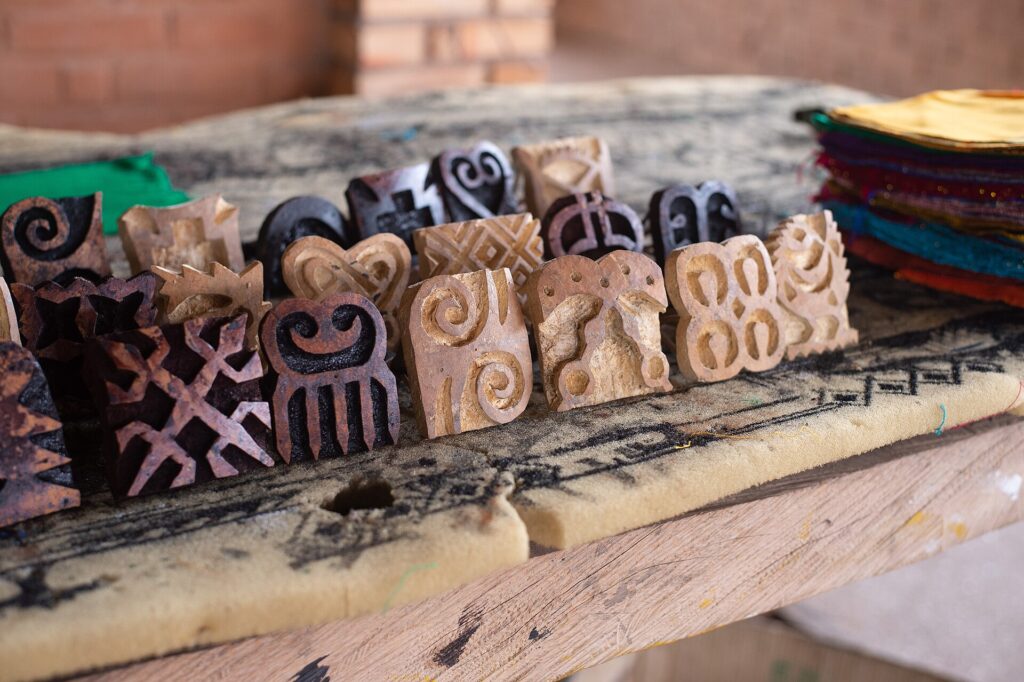
Costume and objects matter greatly. Kente cloth, woven in narrow strips at Bonwire and elsewhere, carries named patterns that can express status and proverbs. Adinkra cloth, stamped with symbols, was traditionally worn at funerals; colours like dark red and black mark mourning. Gold ornaments, umbrellas and stools display the chief's office. The okyeame's staff is topped with a carved figure illustrating a proverb.
In Anansesɛm performance, the teller acts out characters with gesture and voice. Akan masks are rare; performance centres on dress, regalia and the body.
In akɔm, the possession dance of akɔmfo, the body of the priest becomes the vessel of the ɔbosom, accompanied by drums and songs; its inner content belongs to the akɔmfo.
Listeners are part of every performance.
In Anansesɛm, the audience answers the opening formula, joins the songs between episodes, and may interrupt to add songs of their own. Rattray and later researchers recorded the practice of a listener breaking in with a song (mmoguo), which the teller allows. The closing formula invites others to tell the next story, so a session passes from teller to teller.
At court, the audience responds to the okyeame and the chief's words with affirmations. Drummers address the audience and the chief directly. When praise is recited, the person praised may rise, dance, or reward the singer.
At funerals, mourners join dirges, wail, dance adowa and contribute gifts that are publicly announced. Participation is a social duty.
At festivals, the crowd follows the chief's procession, dances, and responds to drums. The Apoo festival of Techiman and Wenchi was a time when ordinary people could openly sing criticisms of chiefs and neighbours without punishment, and Rattray recorded this as a release that kept society healthy.
Proverbs depend on the listener: they must complete the meaning. A speaker who must explain a proverb has lost the audience; a listener who completes it shows wisdom.
The Akan keep memory through several specialised forms.
Stools hold memory materially. Each blackened stool is a named ancestor, and the stool house is a record of a lineage's rulers.
Drum language holds history. Court drummers learn long drum texts reciting the names, deeds and praise of past rulers; their office is often hereditary.
Adinkra symbols encode proverbs and values visually: Gye Nyame ('except God'), Sankofa ('go back and fetch it'), Dwennimmen ('ram's horns', humility with strength), Funtunfunefu Denkyemfunefu (the shared-stomach crocodiles, unity in diversity). Each symbol recalls a saying.
Kente patterns carry names linked to events, people and proverbs, so a cloth can be read by those who know it.
Gold weights (mmrammuo), small brass figures once used to weigh gold dust, often depict proverbs and stories.
The okyeame's staff finial depicts a proverb.
Formulaic speech (proverbs, libation prayers, praise names) gives fixed forms that are easy to hold.
Keepers include court historians, drummers, akyeame, queen mothers, elders, akɔmfo and weavers. Memory continues because these offices continue and because the forms are in daily use.
Power works through spirit (sunsum), which is present in people, objects and places. It is accessed through relationships with Onyankopɔn, Asase Yaa, the abosom, the ancestors, and through asuman, consecrated objects prepared by specialists.
What can be done: healing with herbal and spiritual knowledge, protection against harm, finding the cause of illness or misfortune through divination and possession, detecting witchcraft, protecting a town or a war party, and ensuring fertility and success. The abosom, speaking through akɔmfo, give guidance and protection.
What cannot be done: overturning one's nkrabea, the destiny the ɔkra received from Onyame before birth, though some accounts allow that a bad destiny can be modified through rites. One cannot command Onyankopɔn.
Rules stated: taboos must be kept, offerings made, and the power of an ɔbosom or suman respected through its specific requirements. Rules unstated: power belongs to those who serve the community; power used selfishly, especially bayi (witchcraft), is condemned and brings punishment.
Akan societies developed anti-witchcraft shrines, especially in the early twentieth century, such as the Tigare movement, and Akan stories show witches as threats to the lineage from within. The rules of the tradition bind both priest and client.
Power comes from Onyankopɔn as the ultimate source of life and of the ɔkra.
It comes from the earth, Asase Yaa, which provides land and crops and receives the dead.
It comes from the abosom, who give power to their akɔmfo and to those who serve them. An ɔkɔmfo is often called by the ɔbosom through illness or possession, and then trains for years under a senior priest.
It comes from the ancestors, who protect the lineage and empower the chief who sits on their stool.
It comes through office. A chief, once enstooled, holds the power of the stool; the Golden Stool's power belongs to the nation.
It comes from knowledge of herbs, roots and preparations held by healers (adunsifo).
It is inherited: royal lineages provide chiefs, and certain families hold priestly and drumming offices.
It can be misused. Bayi is power used to harm, said to come from within the lineage itself.
The cost of accessing power is obligation. An ɔkɔmfo keeps taboos and serves for life. A chief gives up much of his private life and must keep the taboos of the stool. Those who misuse power risk punishment by ancestors, gods and community.
Taboos (akyiwadeɛ) bind people to their lineage, ntɔrɔ, abosom and stools.
Asase Yaa's day is a day of rest from farming in many Akan areas; working the land on that day offends the earth.
Each ntɔrɔ group and abusua has its own food and behavioural taboos. Each ɔbosom has its taboos, which its priests and devotees observe.
The Golden Stool must never touch the bare ground and must never be sat on. When the British governor Frederick Hodgson demanded to sit on it in 1900, the demand was a grave offence that led to war.
Chiefs observe many taboos: historically, they did not walk barefoot or let their buttocks touch the ground, and a chief who breaks a stool's taboos may be destooled.
Lake Bosomtwe has taboos, including on the use of certain kinds of boats; fishermen there use planks (padua).
Uttering the great oath (Ntam Kɛseɛ) falsely or casually is forbidden; it recalls national calamity.
Consequences can be immediate, such as illness; delayed, revealed through divination; or collective, striking a town or the nation. Some violations, like desecrating a stool, require major purification. The 1921 stripping of the Golden Stool's ornaments was judged by the Asante as an unforgivable act.
Initiation in Akan tradition confers office and spiritual power. Its inner content belongs to its keepers; what follows is public outline.
Akɔmfo (priests and priestesses) are usually called by an ɔbosom through possession or illness. The person then trains under a senior ɔkɔmfo for a period often recorded as about three years, learning songs, dances, herbal knowledge, taboos and the ways of the ɔbosom. Training ends with a public outdooring, after which the new ɔkɔmfo can serve clients.
Chiefs undergo installation. The candidate is nominated by the queen mother from the royal lineage, accepted by the elders, and then confined and instructed in the duties and taboos of the stool. At enstoolment he is lowered onto the blackened stool of his ancestors, a rite kept by the stool-keepers, and receives a stool name. He takes oaths to the people and the people take oaths to him.
Bragoro, the puberty rite of girls, involved seclusion, instruction and public celebration; it is now rare.
What dies is the old personal status; what is born is a person bound to office. The rites are administered by senior priests, elders and stool-keepers, and the initiate becomes part of a lineage of office-holders.
Akan gender logic rests on matrilineal descent. Blood (mogya) comes from the mother, so lineage membership, inheritance and the right to office pass through women. A man's heir is traditionally his sister's son.
The ɔhemmaa (queen mother) is a central office. She is the senior woman of the royal lineage, and she nominates the candidate for chief when a stool is vacant, advises him, and can rebuke him. She has her own stool and court. Yaa Asantewaa, queen mother of Ejisu, led the war of 1900, and her name is honoured.
Women dominate markets and much trade. They sing funeral dirges, lead adowa dance, and carry much of the oral history. Many akɔmfo are women.
Men hold most chiefships and the warrior roles; the asafo companies (especially among the Fante) were male. Men weave kente and make adinkra stamps.
Fathers have strong spiritual bonds with children through ntɔrɔ, and fathers' obligations to children are real, even as inheritance passes to sisters' sons.
The balance has shifted. Colonial law, Christian marriage and Ghana's 1985 Intestate Succession Law have strengthened the rights of wives and children. Akan stories reflect both women's power and the tensions in marriage between two lineages.
Age orders Akan life. Elders (mpanimfoɔ) hold authority in the lineage, the council and the court. They speak in proverbs, pour libation, settle disputes, and keep the lineage's history. A proverb says that a child who washes their hands may eat with elders, acknowledging both hierarchy and the possibility of rising.
The lineage head (abusuapanyin) manages lineage land, funerals and disputes. Elders advise the chief and approve his nomination.
Young adults provide labour and defence. Historically, the young men's groups (nkwankwaa among the Asante; asafo among the Fante) had their own leaders and could voice grievances, even pressing for a chief's removal.
Children learn through stories, proverbs and observation. Anansesɛm are told to them and by them.
The oldest people are close to the ancestors and hold knowledge that others do not, including family histories, land boundaries, and the names of the dead. At death, an elder becomes an ancestor, and their funeral is a major event.
In stories, children who disobey elders suffer, and elders who abuse their positions also suffer. Ananse is often depicted as an older man whose cleverness is undercut by his son Ntikuma, who shows the young can see what the old miss.
Akan society is ranked but has no caste system. At the top are royal lineages, from which chiefs and queen mothers are drawn. Below them are titled office-holders, elders and lineage heads. Ordinary free members (nkurɔfoɔ) farm and trade. Historically, there were also people in servitude: pawns (awowa) held as security for debts, and enslaved people (nkoa, a term also used for subjects generally, and odonkɔ for people of northern origin bought as slaves). Akan law protected their descendants' place in the household to a degree, and it was forbidden to disclose a person's origin in public.
Wealth could raise status. The ɔbirɛmpɔn, a man of great wealth, could earn special titles and honours.
Storytellers hold varied positions. Anansesɛm tellers are ordinary people. Royal drummers, horn-blowers and akyeame are court officials with high standing, often hereditary. Akɔmfo hold respect but can also be feared.
Class appears in stories through kings and chiefs, the wealthy and the poor, the trickster who challenges authority, and the poor person whose kindness is rewarded. Anansesɛm frequently mock pride and greed among the powerful; Ananse's dealings with Onyankopɔn are a model of the clever small figure who bargains with the great.
The basic unit is the abusua, the matrilineage, traced back to a founding ancestress. Lineages belong to larger matriclans (also called abusua) found across Akan states; eight are commonly named: Oyoko, Bretuo, Agona, Asakyiri, Asenie, Aduana, Asona and Ekuona. The Golden Stool belongs to the Oyoko. Members of the same clan anywhere owe each other hospitality and cannot marry each other.
Lineages make up towns, each with a chief (ɔhene) and queen mother. Towns are grouped into divisions under paramount chiefs (amanhene). The Asante confederacy united these divisions under the Asantehene in Kumasi, with the Golden Stool as their bond. Fante states formed their own confederations.
Membership carries obligations: contributing to funerals, supporting kin, keeping lineage taboos, attending festivals, and respecting the stool. In return, the lineage gives land, protection, a place at funerals, and a position as an ancestor after death.
Expulsion from the lineage, or the loss of one's lineage through slavery or exile, is a profound loss: one would have no one to bury them and no place among the ancestors. Stories of orphans, captives and wanderers carry that weight, and stories of return carry the hope of restoration.
The Akan homeland is the forest belt of southern and central Ghana and south-eastern Côte d'Ivoire, with forest-savanna borderlands to the north around Techiman and the coastal plains and lagoons to the south. Rainfall comes in two wet seasons in much of the forest. The harmattan brings a dry season from the north.
The forest yields gold, kola, timber and food crops; its gold made Akan states wealthy and drew traders from the Sahel and later from Europe. Forest clearing for farms was hard work, and stories honour the founders who cut farms and towns from forest. The forest is also the home of mmoatia, sasabonsam and wild animals, and stories of hunters venture there.
Rivers such as the Tano, Ofin, Pra and Bia, and the crater lake Bosomtwe, are homes of abosom. The coast, with its castles built by Europeans at Elmina and Cape Coast, is a place of trade and of the memory of the Atlantic slave trade.
The land belongs to the ancestors and the stool, held in trust for the unborn. A proverb attributed to Akan tradition says land belongs to a vast family of whom many are dead, few are living and countless are yet unborn. In stories, the land is never just scenery: it is kin.
Kumasi is the capital of Asanteman and the seat of the Golden Stool. Manhyia Palace is the Asantehene's residence and court, with a museum opened in 1995. The Okomfo Anokye sword site, now within the grounds of Komfo Anokye Teaching Hospital, is held by tradition to mark where the priest drove a sword into the ground that cannot be pulled out; tradition says that if it is withdrawn, Asante will fall.
Asantemanso, near Esase south of Kumasi, is remembered in Asante tradition as the place where ancestors of several clans emerged from the earth.
Lake Bosomtwe, a crater lake south-east of Kumasi, is the home of the ɔbosom Twe. Tradition holds that the lake was found by a hunter pursuing an antelope that disappeared into the water. The souls of the dead are said in tradition to come to the lake to bid farewell.
Tanoboase, near Techiman, is associated with the ɔbosom Tano and with Bono history; its sacred grove is a place of the Tano shrine.
Ejisu is the town of Yaa Asantewaa.
The stool houses where blackened stools rest are sacred and restricted to keepers.
These sites act as sources of power, places of oath and memory, and thresholds to the ancestors.
The Akan cosmos has Onyankopɔn in the sky (ɔsoro), the earth (Asase Yaa) below, and the land of the dead (asamando) beneath or beyond. In the beginning, Akan stories say, the sky was close to the earth, and people could almost touch Onyankopɔn; he moved away after being struck repeatedly by an old woman's pestle as she pounded fufu. The distance between sky and earth is a story about human behaviour.
The sky, earth and the abosom of water are linked in libation: drink is poured first to Onyankopɔn, then to Asase Yaa, then to the abosom and ancestors, mapping the cosmos in order.
The stool links the living world and the ancestral. The Golden Stool came down from the sky, linking Onyankopɔn with the nation. Blackened stools link lineage and ancestors.
The forest is a separate zone at the edge of town and order, where spirits live and where hunters and healers gain knowledge.
Water bodies are thresholds to the abosom.
Movement between realms happens through birth (the ɔkra leaving Onyame), death (the passage to asamando, aided by funeral rites), possession (abosom entering akɔmfo), libation and dreams. Rites ensure the passage is correct; improper burial leaves a spirit unsettled.
By the 14th and 15th centuries, Akan gold was reaching Saharan trade networks through Mande traders and towns such as Begho, and Bonoman around Bono Manso was a leading state. In 1471 Portuguese ships reached the Gold Coast, and in 1482 they built the castle of São Jorge da Mina at Elmina. By the late 17th century Denkyira dominated the forest states, and Asante paid it tribute. In 1701, Asante under Osei Tutu, with the priest Okomfo Anokye, defeated Denkyira at the battle of Feyiase; tradition places the descent of the Golden Stool around this time. In 1817, the British envoy Thomas Bowdich visited Kumasi and described the court.
In 1824, Asante forces defeated the British at Nsamankow, where Governor Charles MacCarthy was killed. In 1874, British forces burned Kumasi. In 1896, the British occupied Kumasi and exiled the Asantehene Prempeh I. In 1900, after Governor Hodgson demanded the Golden Stool, Yaa Asantewaa led the war to defend it; Asante was annexed in 1901. In 1921, road workers found and stripped the hidden stool. In 1924 Prempeh returned, and in 1935 the Asante confederacy was restored. In 1957 Ghana became independent. In 1999 Otumfuo Osei Tutu II was enthroned as Asantehene.
History lives in stool histories, drum texts, kente names and adinkra symbols.
Akan tradition records many movements, varying by people and town.
Many Akan histories recall origins in the north, around Bonoman, and dispersal southward into the forest. Asante clans recall emergence at Asantemanso and movement north to the Kumasi area in the 17th century. Coastal Fante traditions remember migration from the north to the coast. Baoulé tradition remembers Queen Abla Pokou leading her people west into what is now Côte d'Ivoire in the 18th century, crossing the Comoé River; tradition holds that she sacrificed her child to cross, and that the name Baoulé derives from this. Scholars note that these accounts compress long processes.
What was carried: clan identities, stools, abosom, and the matrilineal system. Akan matriclans exist across states because people carried them as they moved.
The Atlantic slave trade was the largest forced movement. Akan captives, called Coromantee or Kromanti in English sources after the coastal fort of Kormantse, were carried to Jamaica, Antigua, Suriname, the Danish West Indies and elsewhere. What was lost was land and lineage; what was carried included Anansi stories, day names, and religious and military practices. In Jamaica, Maroon communities kept an Akan-derived language in their Kromanti ceremonies. Diaspora transformed the tradition into new forms adapted to new places.
The Akan traded with Mande and Hausa merchants from the north for centuries. Islam reached Kumasi through these traders, and Muslim scholars served at the Asante court in the 19th century, providing literacy and amulets. Wilks documents these Muslim communities. Northern textiles, weights and terms entered Akan culture.
The Akan exchanged with neighbouring peoples. Ewe weavers also make kente, and the two traditions influenced each other; the origins of kente are debated between Asante and Ewe accounts. The Ga, Guan, Dagomba and others shared practices with the Akan, and some abosom were brought from the north, especially in anti-witchcraft movements.
European contact began in 1471. The Portuguese, Dutch, British and Danes built forts on the coast for gold and slaves. European goods, especially cloth and firearms, entered Akan life. Silk unravelled from imported cloth was used in kente.
Christian missions, especially the Basel Mission from the 1820s and the Methodists, spread Christianity, schools, and written Twi. Many Akan are now Christian.
The tradition maintained its integrity by keeping the core: the stool, the matrilineage, libation, the ancestors and the festivals. Christian churches have often adapted Akan practices, such as libation and drumming, into worship, while debating their place.
Yes. The tradition is living. The Asantehene, Otumfuo Osei Tutu II, reigns from Manhyia Palace, and the Golden Stool is kept and appears at major occasions. Chieftaincy is recognised in Ghana's constitution, and the National House of Chiefs and regional houses play roles in public life. Akwasidae and other festivals continue in Kumasi and across Akan towns.
Funerals remain central and elaborate. Libation is poured at state and family events. Day names are universal. Kente is woven at Bonwire, Adanwomase and elsewhere; adinkra is stamped at Ntonso. Adinkra symbols appear on cloth, buildings, logos and currency. Anansesɛm are still told, now also in books, radio, theatre and film.
What has changed: most Akan today are Christian, with a Muslim minority; traditional religion is practised by fewer people, often alongside other faiths. Akɔmfo continue but in smaller numbers. Colonial and missionary pressure ended some practices, such as bragoro in many places. Urbanisation has changed the setting of storytelling.
What has been lost includes some local rites, specific stool histories whose keepers died, and regalia taken by the British in 1874 and 1896, some held in museums abroad.
Contemporary practitioners include chiefs and queen mothers, akɔmfo, drummers, weavers, writers and scholars.
Akan captives in the Americas built new forms from what they carried.
In Jamaica, Akan influence was strong. Anansi stories became central to Jamaican folklore. Akan day names (Cudjoe from Kwadwo, Quaco from Kwaku, Cuffee from Kofi, Quashie from Kwasi, Quamina from Kwame) were common among the enslaved. Akan-led revolts, including Tacky's revolt of 1760, shook the island. Maroon communities preserved Kromanti ceremonies and an Akan-derived language; Nanny of the Maroons, remembered as a leader of the Windward Maroons in the 18th century, is a national hero of Jamaica.
In Suriname, Maroon peoples such as the Ndyuka retain Akan-derived words and practices, and Anansi tales (Anansitori) are a major genre.
In the Caribbean more widely, Anansi spread through Antigua, Barbados, the Bahamas, Trinidad and Belize. In the United States, Aunt Nancy stories were told in the South and the Sea Islands.
In the 20th century, kente and adinkra became symbols of African heritage for African Americans; Doran Ross's study documents kente's adoption in America. Sankofa became a widely used symbol of reclaiming the past, and the Ethiopian director Haile Gerima titled his 1993 film Sankofa.
Diaspora communities created new tales, new music and new identities from fragments, keeping Anansi as their shared hero.
Revival takes institutional, artistic and religious forms.
After independence in 1957, Kwame Nkrumah's government promoted Akan and wider Ghanaian culture: kente as national dress, drum and dance in national ensembles, and the use of chiefly symbols in state ceremony. The Institute of African Studies at the University of Ghana, where J. H. Kwabena Nketia worked, became a centre for research on music and oral literature. The Ghana Dance Ensemble was founded there.
Efua Sutherland, a playwright, developed anansegoro, a theatre form based on Anansesɛm, and built a story house (Kodzidan) at Atwia in the Central Region. Her play The Marriage of Anansewa (1975) is the best-known example.
In 1982, Kwabena Damuah founded the Afrikania Mission, which seeks to reform and promote traditional African religion in Ghana.
The Manhyia Palace Museum (1995) and the Yaa Asantewaa Museum at Ejisu (2000, damaged by fire in 2004) present Asante history. The centenary of the 1900 war was marked in 2000.
Ghana's Year of Return in 2019 invited diaspora Africans to visit, often with kente and Sankofa as symbols.
What has been recovered includes stool histories, symbols, festivals and some regalia returned on loan from British museums in 2024. What remains lost includes restricted rites and much of the knowledge of akɔmfo who died without successors.
Onyankopɔn (also Nyame, Onyame; Odomankoma as creator) is the supreme being, associated with the sky. He has praise names such as Ɔtumfoɔ ('the powerful one') and Tweduampɔn ('the dependable one'). He withdrew from human contact in myth. Ritual protocol: libation first; historically the nyame dua shrine at houses held offerings for him.
Asase Yaa is the earth, second in libation. She is honoured through a day of rest from farming, and through offerings before digging graves or farming. She receives the dead.
Tano (Ta Kora) is the ɔbosom of the Tano River, regarded as among the most powerful abosom, associated with Tanoboase and with war and protection. His shrine is served by akɔmfo.
Bia is the ɔbosom of the Bia River, in tradition Tano's elder brother.
Twe is the ɔbosom of Lake Bosomtwe.
Kwaku Ananse is not a god but the great trickster who deals with Onyankopɔn directly and owns all stories.
The abosom are often described as children of Onyame. They have no images of the deity's appearance in the Western sense; they are present in their shrines, often in brass pans containing sacred materials, and in the priests they possess. Each has days, taboos and offerings; full protocols belong to their akɔmfo.
Nsamanfo, the ancestors, are the closest spirits. They protect the lineage, uphold morality and receive offerings at the stools and at the Adae.
Abosom are the gods drawn from Onyame, who act through akɔmfo. They give help in exchange for service and offerings.
Asuman are consecrated charms and objects with spiritual power. They are prepared by specialists for protection, healing or other purposes.
Mmoatia are small forest beings, described as having backward-pointing feet and speaking in whistles. Rattray records that they teach knowledge of herbs to akɔmfo and healers; they can also play tricks.
Sasabonsam is a forest being described as hairy, with long legs that dangle from trees and hooks for feet, who catches hunters. It is often linked to abayifo, witches.
Abayifo are witches, people who use spiritual power to harm, especially within their own lineage. They are said to work at night. Anti-witchcraft shrines and rites address them.
Saman, an unsettled spirit or ghost, is the spirit of someone who did not receive proper rites.
The rules of interaction are respect, offering, and observance of taboos. One does not offend the abosom or ignore the ancestors; one protects oneself from witches and forest beings through charms and rites.
Kwaku Ananse, the spider, is the central figure of Anansesɛm: clever, greedy, boastful, sometimes generous, always scheming. He lives in the time of tales with his wife Aso and son Ntikuma. Through his deeds, stories, wisdom and some of the features of animals come into the world.
Onini the python, Osebo the leopard, Mmoboro the hornets, and Mmoatia, the forest being, are the creatures Ananse captured to buy the sky god's stories.
The tortoise, the hare and other animals appear in tales as rivals or victims of Ananse.
Sasabonsam is the forest's dangerous being, hunting those who enter.
The crocodile appears in the adinkra symbol of two crocodiles sharing one stomach, representing unity.
The Sankofa bird, looking back to fetch an egg, is a symbol rather than a creature of tales, but it is widely used in Akan visual culture.
The antelope (twe) appears in the founding story of Lake Bosomtwe.
The porcupine (kɔtɔkɔ) is the emblem of the Asante army and nation, chosen for the many quills it can throw: if you kill a thousand, a thousand more will come. Kumasi's football club Asante Kotoko carries this name.
These creatures connect humans, the forest and the gods.
The descent of the Golden Stool is the founding story of Asanteman.
Around 1700 the Asante were a group of separate states paying tribute to Denkyira. Osei Tutu, ruler of Kumasi, and Okomfo Anokye, a priest from Awukugua in Akuapem, worked to unite them. At a great gathering in Kumasi, tradition tells, Okomfo Anokye called down from the sky, amid thunder and darkness, a stool covered in gold, which descended slowly and came to rest on Osei Tutu's knees. It was declared to contain the sunsum, the spirit, of all Asante: their power, honour and welfare depended on it. It was named Sika Dwa Kofi, the Golden Stool born on Friday.
The chiefs of the separate states bound themselves to the stool. Okomfo Anokye gave laws and taboos for it: it must never touch the ground, never be sat upon, and must be protected. Asante then defeated Denkyira at Feyiase in 1701.
The story's power was shown in 1900, when Governor Hodgson demanded to sit on it, and Yaa Asantewaa led the war to protect it. The stool was hidden and never captured.
The story shows Asante values: the nation is greater than any one ruler, unity is sacred, and power descends from Onyankopɔn through priest and king to the people.
The trickster is Kwaku Ananse. He bargains, schemes and outwits the powerful; he also overreaches and is humiliated. His arc does not change from story to story, but he tests the limits of rules and reveals what the community values. He belongs to everyone; all tales are his.
The sky god, Onyankopɔn, is the distant and powerful figure who sets tasks and owns the world's goods. In tales he is often outwitted by Ananse but never removed.
The wise son is Ntikuma, Ananse's son, who sometimes sees what his father misses.
The priest-founder, embodied by Okomfo Anokye, brings spiritual power to political purpose and gives laws.
The founding king, embodied by Osei Tutu, unites the nation.
The queen mother and warrior woman, embodied by Yaa Asantewaa, defends the nation when men hesitate. Akan accounts record her speech challenging the men to fight.
The headstrong daughter, like Anowa of Fante legend, refuses the husbands chosen for her and marries a stranger, with consequences.
The hunter enters the forest and finds sites, lakes and knowledge.
The orphan or poor person is mistreated but rewarded for kindness.
Each archetype stands in relation to lineage and nation: founding, defending, testing, or reminding them.
How Ananse bought the sky god's stories. Ananse asked Onyankopɔn for his stories. The price was the python Onini, the leopard Osebo, the hornets Mmoboro and the forest being Mmoatia. Ananse caught each by a trick: he flattered the python into lying along a pole, trapped the leopard in a pit, tricked the hornets into a gourd with water, and caught the forest being with a gum-covered doll. Onyankopɔn gave him the stories, which are now called Anansesɛm. Structurally, it is a series of four tasks, each solved by wit, ending with an explanation of origin. It shows that small creatures win through intelligence.
Ananse and the pot of wisdom. Ananse gathered all wisdom into a pot to keep for himself and tried to climb a tree to hide it, tying the pot to his front. He could not climb. His son Ntikuma told him to tie it on his back. Angry that a child had wisdom he lacked, Ananse threw the pot down, and wisdom was scattered so all people have some. The structure moves from hoarding to failure to scattering, and teaches that no one owns all wisdom.
Why the sky is far away. An old woman pounding fufu kept striking Onyankopɔn with her pestle, and he moved the sky away. In some versions people stacked mortars to reach him and fell. The story explains distance as the consequence of human behaviour.
Titles: Nyame, Onyame, Odomankoma (creator), Ɔtumfoɔ, Tweduampɔn
Domain: Supreme being, the sky, giver of the ɔkra and destiny
In the stories: Why the sky is far away (the old woman's pestle); Ananse buys the sky god's stories.
Notes: Onyankopɔn receives the first libation and once had nyame dua shrines at Asante homes. Danquah (1944) and Gyekye (1987) discuss his names and aspects. Scholars debate whether the names mark distinct aspects.
Titles: Asase Afua (among the Fante), Mother Earth
Domain: The earth, fertility of land, receiver of the dead
In the stories: Libation prayers addressing earth after the sky; farming rest days kept for her.
Notes: She has no priests in the usual sense and is honoured through taboos and offerings before digging. Her name links her to the day of her rest. Rattray recorded her honour in Asante farming.
Titles: Ta Kora, Taa Kora
Domain: The Tano River, war, protection
In the stories: Tano and Bia, the brothers who divided the land; Tano's shrine at Tanoboase.
Notes: Tano is among the greatest abosom and has shrines across Akan lands. Tradition associates him with Bono history and Techiman. Many lesser abosom are said to derive from him.
Titles: Elder brother of Tano
Domain: The Bia River
In the stories: Tano and Bia, in which Tano by disguise receives the inheritance meant for Bia.
Notes: Rattray recorded the story of the two brothers dividing the land. The Bia flows through western Ghana and Côte d'Ivoire. Versions differ in detail.
Titles: Bosomtwe, Twe Adodo
Domain: Lake Bosomtwe and its fish
In the stories: The hunter and the antelope at the founding of the lake; the dead's farewell at the lake.
Notes: Tradition holds that the souls of the dead come to the lake. Fishing taboos govern the lake. The lake is south-east of Kumasi.
Titles: Ananse, Anansi, Annancy, Aunt Nancy
Domain: Trickster; owner of all stories
In the stories: Ananse buys the sky god's stories; Ananse and the pot of wisdom.
Notes: Ananse is not worshipped but is the most famous figure in Akan story. His wife is Aso and his son Ntikuma. His tales spread throughout the Caribbean and the Americas.
Titles: Little forest people
Domain: Forest, herbal knowledge
In the stories: Ananse captures Mmoatia with a gum doll to buy the sky god's stories.
Notes: Rattray records them as small beings with backward feet who teach herbs to healers. They are both helpful and mischievous. They speak in whistles.
Titles: Forest monster
Domain: The deep forest, danger to hunters
In the stories: Hunters' tales of the being in the trees.
Notes: It is described as hanging from trees and catching passers-by. It is often linked with witches. Rattray illustrates carved figures of it.
Titles: Nananom, the ancestors
Domain: The lineage, morality, protection of land
In the stories: Stool histories and the Adae ceremonies.
Notes: Ancestors are honoured at the blackened stools every forty-two days. They punish neglect and reward care. They are the guardians of the abusua.
Also in West Africa