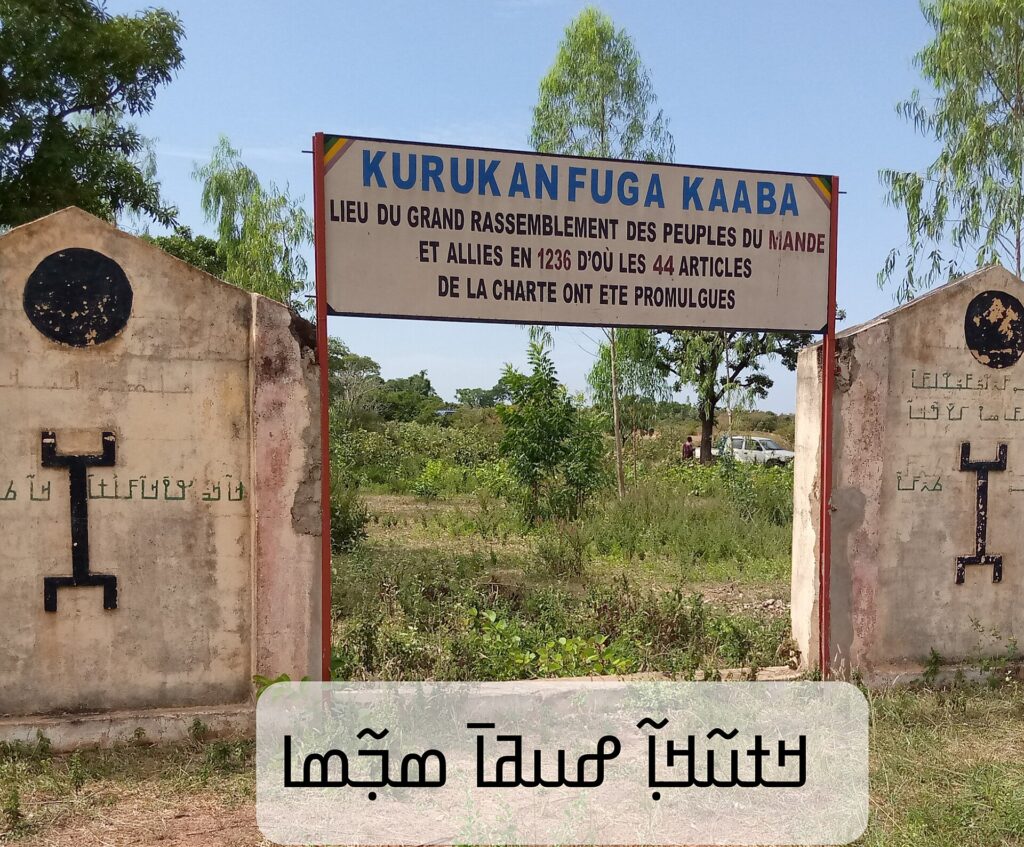
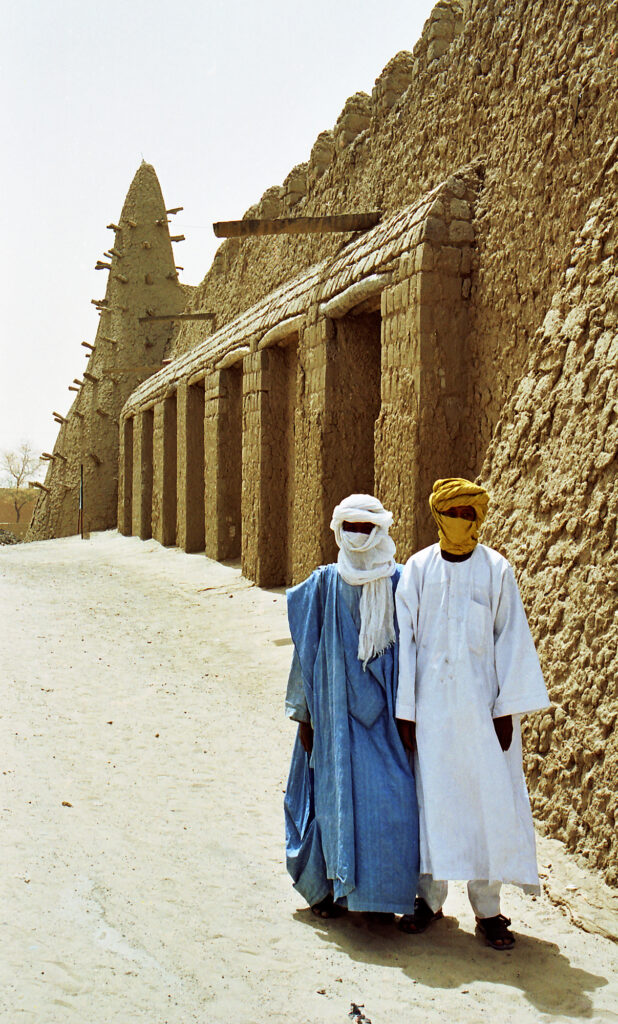
The tradition belongs to the Mande-speaking peoples: the Maninka (Malinké) of the upper Niger in Guinea and Mali, the Bamana (Bambara) of the middle Niger around Segu and Bamako, the Mandinka of the Gambia River and Casamance, the Soninke (Sarakole) of the Sahel between the Senegal River and Nioro, and the Dyula (Jula) traders of Côte d'Ivoire and Burkina Faso. Alongside them stand the Songhai and Zarma of the Niger Bend, from Timbuktu and Gao down to Niamey, whose language most linguists place outside the Mande family, and whose empire succeeded Mali.
The Soninke kingdom of Wagadu, which Arabic writers called Ghana, flourished in the Sahel by the 8th century. The Maninka state of Mali grew from the Manden heartland around Kangaba and Niani in the 13th century. Songhai, centred on Gao, became the leading power in the late 15th century.
Movement shaped the stories: Soninke dispersal after Wagadu's decline, Maninka expansion west to the Gambia and Kaabu, and Dyula trading diasporas carried the jeli's repertoire across the savanna.
Cultural Values
Five values shape the narratives.
First, lineage and its obligations: a person acts as the descendant of named ancestors, and the jeli's praise reminds them what those ancestors did.
Second, the tension of fadenya and badenya, as Charles Bird and Martha Kendall named it. Fadenya (father-childness) is rivalry among half-siblings of one father, the drive to surpass and to make a name. Badenya (mother-childness) is the solidarity of children of one mother, cooperation and loyalty. Heroes need fadenya; communities need badenya.
Third, nyama, the energy released by every action, which makes deeds and words dangerous and powerful.
Fourth, the word itself: kuma, speech, is weighty, and the jeli handles it on behalf of the noble who must not speak too freely.
Fifth, destiny: a hero's greatness is foretold, and the story shows how it was fulfilled.
Unlike much Western narrative, the hero's achievement is not purely individual. Sunjata wins because of his mother, his sister, his jeli, his allies and his ancestors. A story that would seem to a Western reader to be about one man is, to a Mande listener, about a web of families.