The chameleon and the lizard
Zulu origin of death: uNkulunkulu's messenger of life is overtaken by the messenger of death.
Source: Henry Callaway, The Religious System of the Amazulu (1870) (to check)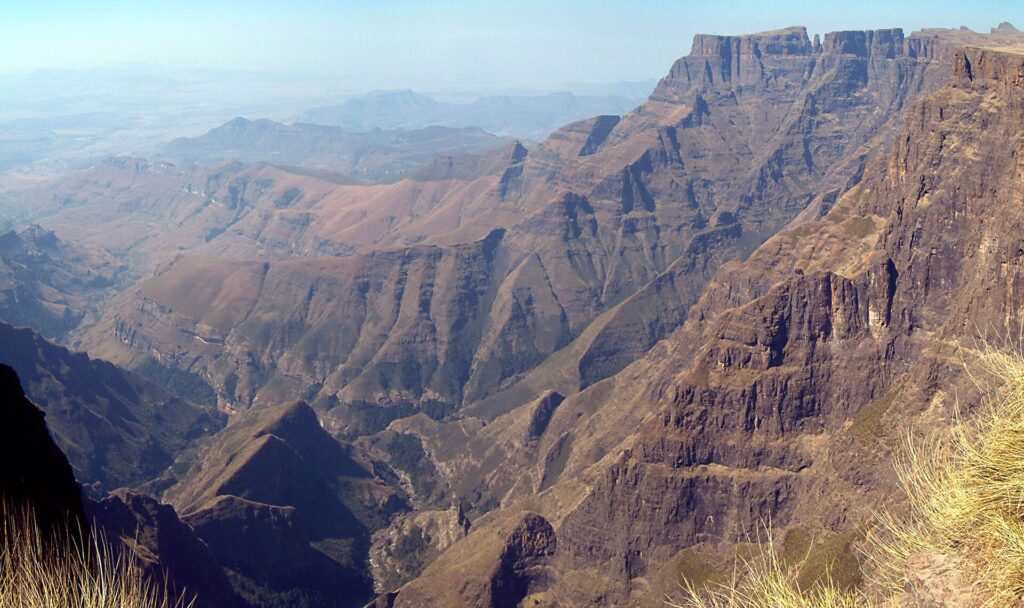
The Lore · Southern Africa · Lore Universe
Southern African kingdoms (Zulu, Xhosa, Ndebele)
Zulu military state (Shaka), Xhosa ubuntu philosophy, Ndebele mural art, Mfecane diaspora, Xhosa click language, Zulu oral praise poetry (izibongo).
Why its stories are told
Stories are told to teach, to praise, to criticise, to remember and to call the ancestors. Folktales, iintsomi and izinganekwane, are told mainly by women, especially grandmothers, to children at night.
Nguni (NGOO-nee) is a name scholars use for a family of closely related peoples and languages; the peoples themselves speak first of their nations: amaZulu (ah-mah-ZOO-loo), amaXhosa (ah-mah-KHO-sah,…
The Land · Geography
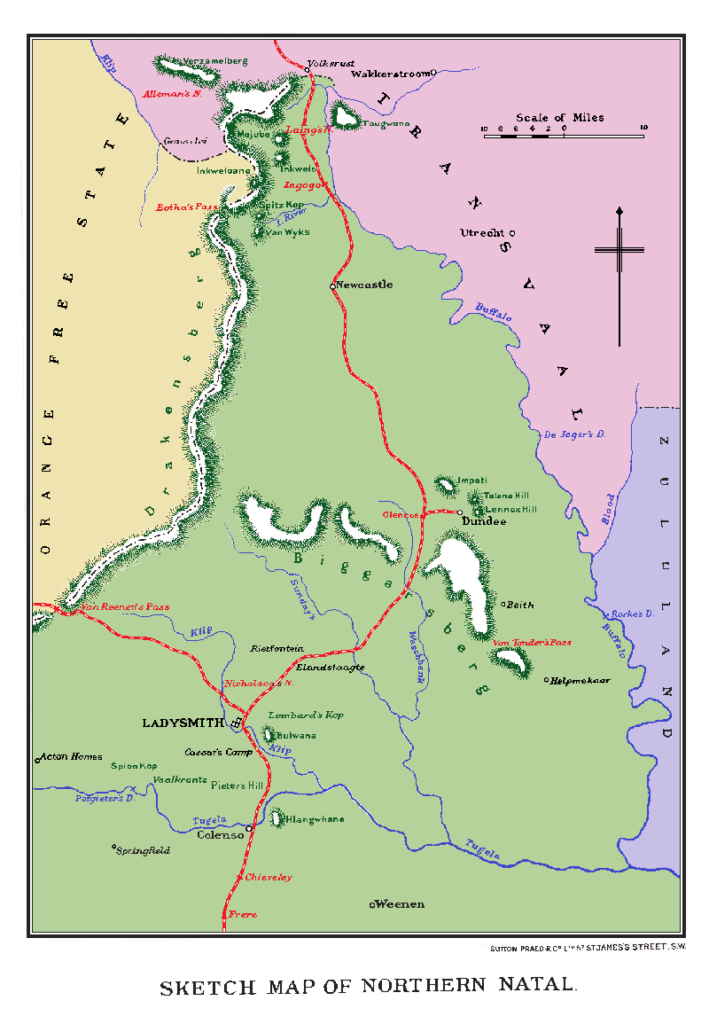
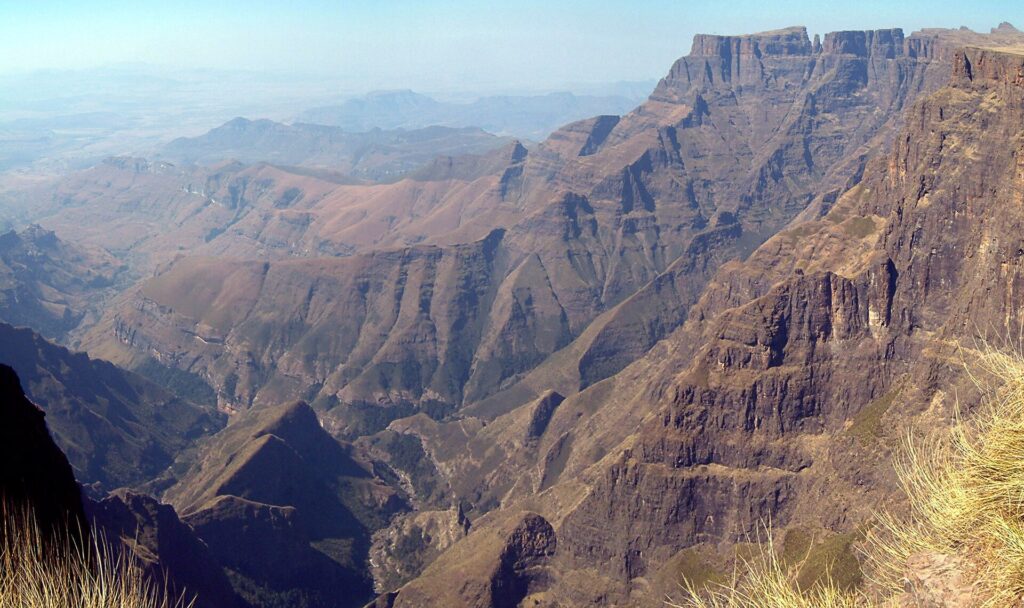
The Nguni homeland lies between the Drakensberg (uKhahlamba, 'barrier of spears') and the Indian Ocean: a land of rolling hills, river valleys and grassland, cut by rivers that run east to the sea: the Thukela, the Mfolozi, the Mzimvubu, the Kei and the Fish. Summer rains, often with violent thunderstorms, are followed by dry winters. The coast is warm and humid; the uplands are cooler.
This land shaped the stories in clear ways. Cattle could be grazed widely, so cattle became the measure of wealth and the bond with ancestors. Thunderstorms and lightning, among the most frequent in the world in parts of the region, made iNkosi yeZulu and the sky doctors central. Rivers and deep pools are homes of spirits and serpents.
The Southern Ndebele live on the highveld of Mpumalanga, and the Zimbabwean Ndebele on the granite country around Bulawayo and the Matobo Hills, a different land whose shrines they came to share with the Kalanga.
Land means home, ancestors and nation. The loss of land in the colonial and apartheid eras is one of the deepest wounds in modern Nguni stories, and the graves of ancestors bind people to places they may no longer own.
The People · Cultural Foundation · Society
This tradition belongs to the Nguni-speaking peoples of the south-eastern lowlands and coast of Southern Africa, between the Drakensberg (uKhahlamba) and the Indian Ocean.
The amaXhosa live in the Eastern Cape, divided historically into houses descended from the ancestor Phalo, the Gcaleka and the Rharhabe, with the abaThembu, amaMpondo and amaMfengu as related neighbouring nations. The amaZulu are centred in KwaZulu-Natal, where the Zulu clan rose to found a kingdom under Shaka in the early 19th century. The amaNdebele are two peoples: the Southern Ndebele of Mpumalanga and Gauteng (Ndzundza and Manala), who separated centuries ago, and the Ndebele of south-western Zimbabwe, founded by Mzilikazi, who left Shaka in the 1820s. The emaSwati of Eswatini and the Ngoni of Malawi, Zambia and Tanzania are kin.
Nguni speakers were settled in the south-east by at least the 16th century, when Portuguese shipwreck survivors recorded them; how much earlier is debated by archaeologists and linguists. The great movements of the early 19th century, called the Mfecane in isiZulu-derived usage and Difaqane in Sesotho, scattered Nguni communities across the subcontinent and shaped many of their stories.
1. Ubuntu: personhood achieved through relations with others; generosity, hospitality and recognition of others' dignity.
2. Ukuhlonipha: respect, shown in speech, posture and avoidance, especially toward elders, in-laws and the ancestors. Married women in some communities avoid saying their in-laws' names and use a respect vocabulary (isihlonipho).
3. Loyalty to lineage and nation: the clan name and its praises, and loyalty to the chief or king.
4. Cattle as the bond between people and ancestors: cattle are wealth, bridewealth (ilobolo), and the medium of sacrifice.
5. Courage and honour, especially in praise poetry, set beside the duty to rule justly.
The priority runs from ancestors and lineage to the living group and then to the individual. Western stories often treat the self-made individual as the hero; in Nguni praise poetry even the greatest king is praised and criticised in the same breath, because he is answerable to his people. A reader may find unfamiliar the way a story judges a hero not by success but by right relation, and the way the dead are treated as parties to present decisions.
The Nguni nations are patrilineal and patrilocal: descent passes through men, and a woman usually moves to her husband's family. Cattle, the medium of ancestral contact, are handled by men, and men lead sacrifice in the cattle byre.
Yet women hold great power within this frame. Senior wives and royal women held real authority: in the Zulu kingdom, women of the royal house such as Shaka's mother Nandi and his aunt Mkabayi held influence and military households of their own. Among the emaSwati, the queen mother (Ndlovukati) shares rule with the king.
Women are prominent as izangoma; in many regions, most diviners are women, and the calling gives them authority, including over men. Women are the main tellers of folktales, and Xhosa women's iintsomi performances are among the great oral arts recorded.
Nomkhubulwane is honoured by girls and women, and her rites are their own.
Southern Ndebele women are the painters of homestead murals and makers of beadwork, which carry identity.
In stories, women appear as daring girls, wise sisters, cruel co-wives and mothers who protect children. A young woman's courage is a central theme of the tales.
Age is the backbone of social order. Children learn through obedience and stories; young men and women pass through initiation and take adult roles; married adults run homesteads; elders lead families and address the ancestors.
In the Zulu kingdom, Shaka organised young men into age regiments (amabutho), which served the king for years before being allowed to marry. Regiments of young women were also formed. Age sets thus became a structure of the state.
Among the amaXhosa, initiation divides boys (amakhwenkwe) from men (amadoda), and men who have not been initiated are not regarded as men in full.
What elders hold that others cannot access is the right to address the ancestors on behalf of the family, knowledge of genealogy and clan praises, knowledge of land and custom, and authority in settling disputes. Younger people defer to them in speech and posture.
The ancestors are the senior-most elders. A person who dies old, with descendants, has completed the course of age and becomes a protector. A person who dies young, especially before marriage, may require special rites, because the full course has been cut short.
There is no caste system among the Nguni nations, but there have been clear ranks.
Royal houses stand at the top: the Zulu royal house descended from Zulu kaMalandela; the Xhosa house of Tshawe; the house of Mzilikazi among the Zimbabwean Ndebele; the Dlamini kings of Eswatini. Below them are chiefs, councillors (izinduna), commoners and, in the past, dependants and captives incorporated into a household.
In the Zimbabwean Ndebele state, society was ranked by origin: the Zansi, descendants of those who came from the south with Mzilikazi; the Enhla, incorporated on the way; and the Hole, incorporated in the new land. These ranks faded over time.
Wealth was measured in cattle, and the man with many cattle could marry more wives and command more followers.
Storytellers are not a separate class. The imbongi holds a special position: often of ordinary birth, he has the licence to speak to the king as no one else can. Folktale tellers are grandmothers in every household.
In stories, rank appears in the contrast between royalty and ordinary people, and in tales where a humble girl marries a chief or a proud ruler is brought down.
The homestead (umuzi) is the basic unit: a household of a man, his wives and children, arranged around the cattle byre. Homesteads belong to lineages, and lineages to clans (izibongo, isiduko) sharing a name and praise. People who share a clan name across great distances are kin.
Chiefdoms gather many clans under a chief of the ruling lineage. Kingdoms such as the Zulu, the Swazi and Mzilikazi's Ndebele brought many chiefdoms under a king, with royal homesteads, regiments and officials. The Xhosa royal houses held a looser authority over many chiefdoms.
Membership carries obligations: to share in ilobolo and ceremonies, to support kin, to show ukuhlonipha, to serve the chief or king, and to keep faith with the ancestors. In return, membership gives land, cattle, protection, a place in ritual and a future among the ancestors.
Expulsion is serious. In the past a person accused of ubuthakathi could be killed or driven out, and their property seized. Exile cut a person from land, kin and the ancestors. The Mfecane created many exiles, and their stories of new beginnings in distant lands, such as Mzilikazi's, are part of the tradition.
Through Time · History
By the 16th century, Nguni-speaking communities were living along the south-eastern coast, where Portuguese shipwreck survivors described them in the 1550s and after.
In 1779, the first of a century of frontier wars between the amaXhosa and the Cape Colony began along the Fish River.
1816, Shaka had become chief of the Zulu and was building the regiments and alliances that made the Zulu kingdom.
In 1819, the Xhosa prophet and war-leader Nxele (Makana) led an attack on Grahamstown, and was later imprisoned on Robben Island.
In the early 1820s, Mzilikazi broke from Shaka and led his followers north; they settled near Bulawayo by c.
1840.
In 1828, Shaka was killed by his brothers Dingane and Mhlangana.
In 1835, Zwangendaba's Ngoni crossed the Zambezi, a crossing traditionally linked to a solar eclipse of that year.
In 1838, the Zulu army fought the Voortrekkers at Ncome (Blood River).
By the 16th century, Nguni-speaking communities were living along the south-eastern coast, where Portuguese shipwreck survivors described them in the 1550s and after.
In 1779, the first of a century of frontier wars between the amaXhosa and the Cape Colony began along the Fish River.
By c. 1816, Shaka had become chief of the Zulu and was building the regiments and alliances that made the Zulu kingdom.
In 1819, the Xhosa prophet and war-leader Nxele (Makana) led an attack on Grahamstown, and was later imprisoned on Robben Island.
In the early 1820s, Mzilikazi broke from Shaka and led his followers north; they settled near Bulawayo by c. 1840.
In 1828, Shaka was killed by his brothers Dingane and Mhlangana.
In 1835, Zwangendaba's Ngoni crossed the Zambezi, a crossing traditionally linked to a solar eclipse of that year.
In 1838, the Zulu army fought the Voortrekkers at Ncome (Blood River).
In 1856 to 1857, the Xhosa cattle-killing, following Nongqawuse's prophecy, ended in famine and land loss.
In 1879, the Zulu defeated a British force at Isandlwana before the kingdom fell at Ulundi.
In 1883, the Ndzundza Ndebele were defeated by the Transvaal and scattered.
In 1893, the Ndebele kingdom in Zimbabwe fell to the British South Africa Company.
In 1906, the Bambatha rebellion in Natal was crushed.
In 1994, South Africa held its first democratic elections.
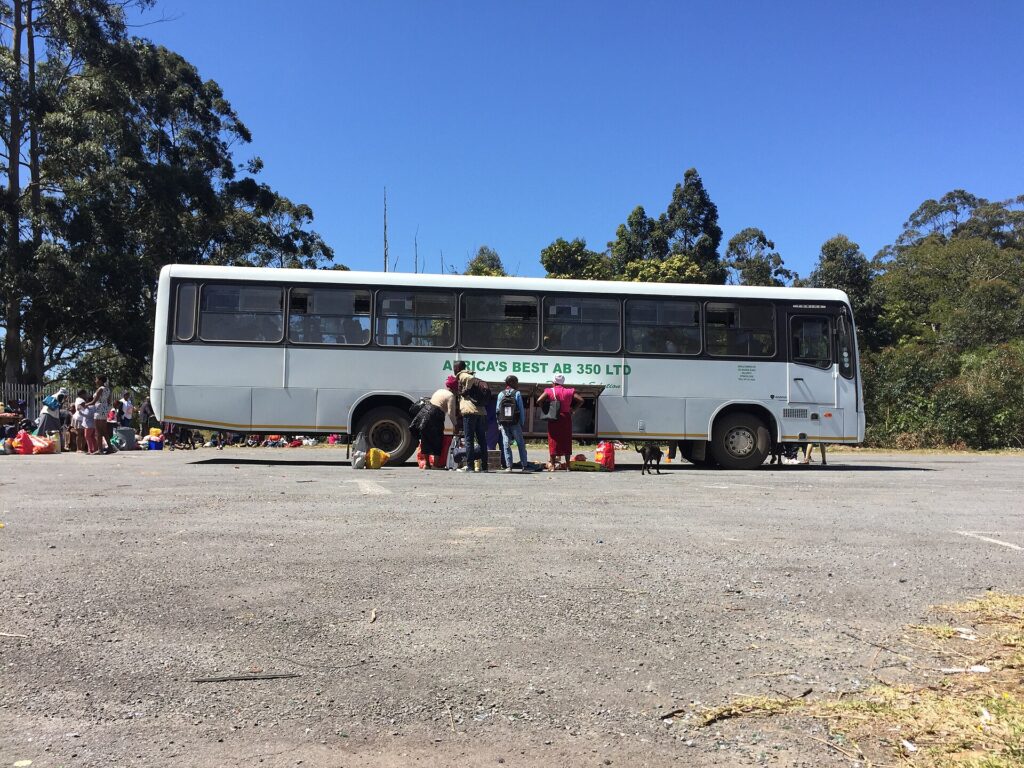
Movement is at the heart of Nguni history. Earlier migrations, over centuries, brought Nguni speakers into the south-east and spread them along the coast; the Xhosa moved westward, the Southern Ndebele separated and moved inland to the highveld. The great movement of the early 19th century, the Mfecane, saw communities flee or expand from the area of the Zulu kingdom.
The most striking exchange is linguistic. The click consonants of isiXhosa and isiZulu came from contact with Khoekhoe and San peoples, through intermarriage and incorporation over centuries; isiXhosa has the largest share. The Xhosa name of God, uThixo, comes from Khoekhoe. Some Xhosa clans trace descent from Khoekhoe ancestors.
Nguni stories exist to hold together lineages, chiefdoms and kingdoms whose members trace descent from named ancestors. Praise poetry declares who a king or person is, and records their deeds and failings; clan praises tell a person their place; folktales teach children how to live; and accounts of the ancestors explain why things are as they are.
The Sacred · Deities and Spirits
The emergence from uhlanga, the bed of reeds; the chameleon and the lizard and the origin of death.
Named in Zulu accounts of the beginning of things, beside or before uNkulunkulu.
Appears in accounts of lightning, of the izinyanga zezulu (sky doctors) and of the rites for those struck by lightning.
Appears in spring rites and songs of girls and women asking for rain and good harvests.
Named in Xhosa accounts of creation and in older Xhosa prayer.
Named in Ntsikana's Great Hymn, Ulo Thixo omkhulu.
The chameleon and the lizard: sent with the message of eternal life, but delayed on the way.
The chameleon and the lizard: arrives first with the message of death.
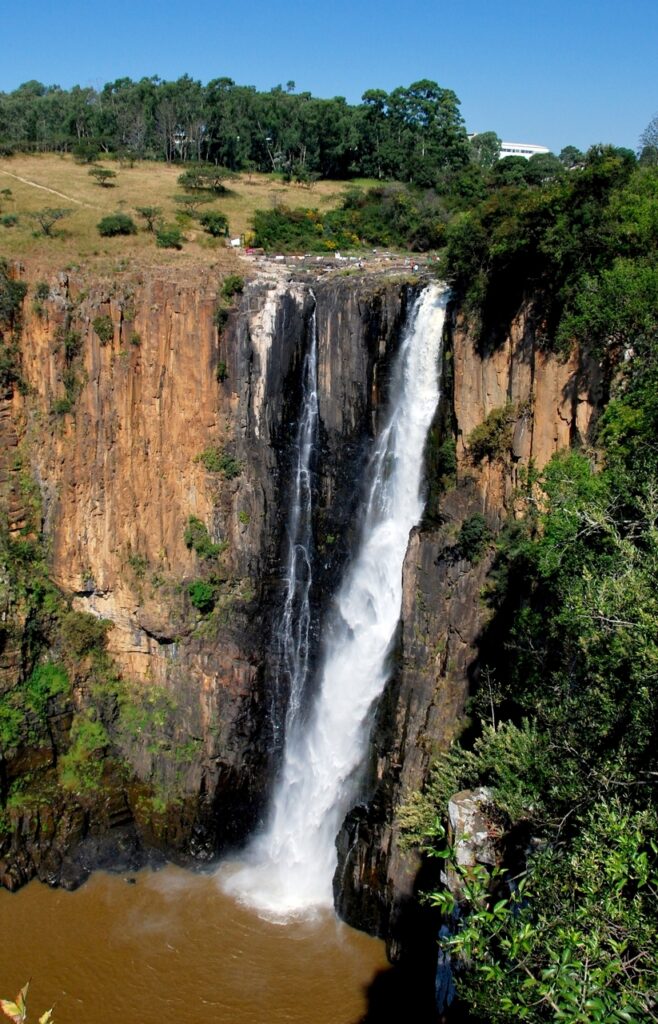
Associated with the pool below KwaNogqaza (Howick Falls) and with violent storms.
Sacredness in Nguni tradition comes chiefly from the ancestors and from the sky.
Cattle are sacred. They are the property of the lineage, its living and dead together, and are sacrificed to the amadlozi. The cattle byre (isibaya) is a sacred space where the ancestors are close, and where men of the household speak to them.
The umsamo, the back of the main hut, is the place in the home associated with the ancestors, where offerings are kept.
Plants and medicines are sacred: impepho, a herb burned as incense to call the ancestors; ubulawu, foaming root medicines used to open dreams and bring clarity, especially among Xhosa diviners.
Words are sacred: clan praises (izithakazelo, iziduko) call the ancestors by name, and the izibongo of kings speak to royal ancestors.
The sky is sacred: lightning is a sign of the Lord of the Sky, and a place or person struck by lightning requires special treatment.
Royal objects, such as the Zulu inkatha yesizwe, held the nation's unity; such objects belong to their keepers.
The mechanism of sacredness is the ancestors' presence or the sky's power: something becomes sacred because the dead claim it, or because the heavens have touched it.
Nguni religion centres on a creator or first being, a sky power, and the ancestors, with a small number of other named beings.
uNkulunkulu, 'the great-great one', is in Zulu tradition the first being, who came out of a bed of reeds (uhlanga), created people and cattle and sent the message of life and death. Scholars have debated whether uNkulunkulu was understood as creator God or as first ancestor; Callaway's informants described both. uMvelinqangi, 'the one who appeared first', is another Zulu name for the first being.
iNkosi yeZulu, the Lord of the Sky, controls thunder, lightning and rain. He is not usually approached by ordinary prayer but through specialists and rules.
Nomkhubulwane, the Princess of the Sky (iNkosazana yeZulu), is a female being of rain, fertility and agriculture, honoured by girls and women.
Among the amaXhosa, uQamata is a name for the creator, and uThixo, borrowed from the Khoekhoe Tsui-//goab, became the name of God and is now used in Christian worship.
Below these stand the ancestors, who are the beings most often addressed. The high beings are distant; the ancestors are near, and they carry the living's concerns.
Ancestors (amadlozi in isiZulu, izinyanya in isiXhosa) are present and active. They watch over their descendants, protect them, bring them good fortune, and withdraw protection when they are neglected or offended. They are not worshipped as gods; they are senior members of the family who have passed into another state.
They communicate through dreams, through signs (such as the appearance of a particular snake, which may be understood as an ancestor visiting), through illness and misfortune that a diviner interprets, and through the diviner's own spirits.
The protocol is ordered. The head of the household addresses the ancestors, usually in the cattle byre or at the umsamo, burning impepho and reciting the clan praises. Important matters require the sacrifice of a goat or cow, whose meat is shared by the family. The ancestors are addressed with respect, informed of events (birth, marriage, a journey, a death) and asked for help.
What the ancestors want is to be remembered and informed, to receive their share of sacrifice, to see the lineage continue through children and marriage, and to see the family keep ukuhlonipha. A family that forgets them may suffer until it returns to them.
Nguni thought, as recorded by Callaway, Berglund and Harriet Ngubane, describes the non-physical world less as numbered layers than as regions and kinds of beings.
The sky (izulu) is the domain of the Lord of the Sky (iNkosi yeZulu), associated with thunder, lightning, hail and rain. Specialists known as izinyanga zezulu, 'sky doctors', work with these forces.
The earth holds the ancestors, who live beneath and around the homestead and are close to the cattle byre and the hut.
Water holds its own spirits. Among the amaXhosa, abantu bomlambo, 'people of the river', live in deep pools and may call a person down to them; those who return may become diviners. Snakes associated with water, such as Mamlambo, and storm serpents such as Inkanyamba, belong to this realm.
The wild, beyond the homestead, holds dangers, including beings used for harm by abathakathi.
Crossing happens in specific ways. The ancestors come to the living in dreams and through diviners; the living reach them through sacrifice, impepho and praise; a person may be called under the water or through illness to become a healer. Crossing is governed by respect, timing and the right specialist.
Ritual marks every transition and restores balance when it is lost.
Birth: a child is introduced to the ancestors, often with a small sacrifice (imbeleko). Coming of age: ulwaluko and intonjane among the amaXhosa; umemulo among the Zulu for young women; the Southern Ndebele wela for young men; and the annual reed dance (umhlanga) in Eswatini and at the Zulu royal residence. Marriage: the negotiation of ilobolo and the wedding ceremonies join two lineages and their ancestors. Death: burial, mourning, cleansing of the family from umnyama (death's darkness) and later the ukubuyisa ceremony, bringing the spirit home.
Restoration: sacrifice to the ancestors when misfortune shows they are displeased; healing and purification by izangoma and izinyanga; rain ceremonies; and the royal first-fruits festival, umkhosi wokweshwama, which renews the king and the nation each year. The Swazi incwala is a related kingship ritual.
In stories, ritual appears as event (a wedding where the monster is revealed), as frame (tales told during ceremonies) and as resolution (sacrifice that restores the family). Praise poetry itself is ritual speech, performed at ceremonies that renew kings.
uNkulunkulu, 'the great-great one', is in Zulu tradition the first being, who came out of the bed of reeds (uhlanga) and brought out people and cattle. He sent the chameleon with the message that people would live forever, and then the lizard with the message that they would die; the lizard arrived first, and death came. Callaway's informants describe uNkulunkulu both as creator and as first ancestor, and scholars still debate the balance. He is not depicted in images and is not usually given regular offerings.
uMvelinqangi, 'the one who appeared first', is a Zulu name for the first being, sometimes treated as the same as uNkulunkulu, sometimes as earlier or higher.
iNkosi yeZulu, the Lord of the Sky, governs thunder, lightning, hail and rain. Lightning is his sign; specialists turn aside storms, and those struck by lightning are treated with special rites.
Nomkhubulwane, iNkosazana yeZulu, the Princess of the Sky, is associated with rain, fertility, crops and young women. Girls and women honour her with songs and rites in spring; some accounts describe her as appearing in mist or rain.
uQamata and uThixo are Xhosa names for the creator; uThixo, from Khoekhoe, is now the name of God in Xhosa Christian usage.
Amadlozi (isiZulu) and izinyanya (isiXhosa): ancestral spirits who protect, guide and correct their descendants. They are addressed by the household head with impepho, clan praises and sacrifice, and they communicate through dreams, signs and diviners. Some ancestors may visit the homestead in the form of particular snakes, which are not to be killed.
The diviner's ancestors: the spirits who call an isangoma and guide them in divination, often including ancestors from both sides of the family.
Abantu bomlambo, 'people of the river': Xhosa water spirits living in deep pools, who may call a person down to them. A person taken by them and returned may become a healer; the family must not mourn as for the dead, or the person may not come back.
Amakhosi: royal ancestors, whose care extends over the whole nation and who are addressed at national ceremonies.
Beings of harm, linked to abathakathi: familiars said to be sent by those who work secret harm, such as the tikoloshe.
The rules of interaction are ukuhlonipha and right order: the ancestors are addressed through the senior person, informed of events, given their share, and never neglected.
Unwabu, the chameleon, and intulo, the lizard: the messengers of uNkulunkulu in the story of the origin of death. The chameleon is slow and stopped to eat; the lizard ran and brought the message of death first. The chameleon is regarded with some ambivalence because of this story.
Impundulu, the lightning bird: recorded especially among the amaXhosa and amaMpondo, a bird associated with lightning and storms, which is also said to be used by those who harm.
Inkanyamba: a great serpent of storms and deep water, associated in Zulu tradition with tornadoes and with the pool below KwaNogqaza (Howick Falls).
Mamlambo: a river serpent or water being associated with wealth, said to bring riches to those who keep it but at a heavy cost.
Isiququmadevu: the swallowing monster of the Zulu tale of Untombinde, recorded by Callaway, which swallows people and is finally killed, releasing those inside.
Utikoloshe (tokoloshe): a small, harmful being said to be sent by those who work harm; beds were traditionally raised on bricks against it.
Hlakanyana: the Zulu trickster, a tiny figure born talking, who tricks his elders and many animals.
Among the prohibitions recorded:
Respect: ukuhlonipha forbids married women in some communities from saying the names of their husband's senior male relatives, and words containing those names' syllables, and requires avoidance behaviours. Disrespect toward elders and ancestors is a serious wrong.
Kinship: marriage within the clan (people sharing a clan name) is generally forbidden.
Death: after a death, the family carries umnyama and must follow mourning rules until cleansed; certain activities are avoided during mourning.
Lightning: a place or person struck by lightning requires specialist treatment, and ordinary mourning rites may not apply; disregarding this is believed to invite further strikes.
Sacred places and objects: the cattle byre and umsamo have rules of entry and conduct; royal objects belong to their keepers.
Secret harm: ubuthakathi is the gravest prohibition.
Consequences may be immediate (illness, lightning), delayed (misfortune that a diviner later traces) or collective (the whole family or nation suffers).
What cannot be undone easily is killing within the community and the breaking of the bond with the ancestors; both require extensive ritual to put right.
This part carries no pictures. Gods, spirits, the ancestors and ceremonies are named, with their roles, and drawn as marks only.
The Stories · Signature Stories
The story of uNkulunkulu, the chameleon and the lizard is the most widely told Nguni origin story, recorded by Henry Callaway in the 1860s and known across Zulu, Xhosa and related nations. In the beginning, uNkulunkulu came out of the bed of reeds, uhlanga, and brought out people and cattle.
The Telling · Oral Tradition · Narrative Structure
The Figures · Survival and Diaspora
The Praised King: a ruler such as Shaka, Dingane, Mzilikazi or Hintsa, whose deeds are gathered into praise. Great and flawed, he is both celebrated and criticised; his arc is the nation's judgement of him.
The Imbongi: the praise poet who speaks truth to power. His role is to name the king and remind him that he rules through the people.
The Daring Girl: a young woman who leaves home, meets danger, marries a stranger or rescues others. Her courage and respect are tested and rewarded; her arc runs from risk to honour.
The Two Sisters: one kind, one proud, set side by side so that their different fates make the moral plain.
The Trickster, Hlakanyana: tiny, quick and clever, who outwits his elders and the animals, but whose tricks sometimes rebound.
The Diviner (isangoma): who suffers the calling, trains, and becomes the one who reveals hidden causes; often the turning point of a story.
The Prophet: Ntsikana, Nxele, Nongqawuse; figures who speak to the nation in crisis, sometimes leading it to renewal, sometimes to disaster.
The Umthakathi: who works harm in secret and must be exposed.
Each stands in relation to community: as leader, voice, tester, healer or threat.
Survival and diaspora
Yes. The tradition is living. Across South Africa, Eswatini, Zimbabwe and further north, Nguni families honour amadlozi and izinyanya, sacrifice to them at births, weddings and funerals, and recite clan praises. Izangoma and izinyanga practise widely, and South Africa's Traditional Health Practitioners Act of 2007 recognises them in law.
The Nguni tradition did not pass through the Atlantic slave trade in significant documented numbers, and there is no recorded Nguni-derived religion in the Americas. Its diaspora is internal to Africa first. The Mfecane carried Nguni language and culture north: the Ndebele of Zimbabwe, the Ngoni of Malawi, Zambia and Tanzania, and the Shangaan of the Gaza kingdom.
Since the end of apartheid, Nguni traditions have been publicly reclaimed. The Zulu reed dance at eNyokeni was revived by King Goodwill Zwelithini in the 1980s and 1990s and now draws thousands of young women. Male circumcision has been revived among some Zulu communities. Royal houses have been recognised in law.
The Catalog · its places, peoples, practices and sources

The World Bible
For the reader who wants all of it: every section of Nguni Nations, in its eleven parts.
Nguni (NGOO-nee) is a name scholars use for a family of closely related peoples and languages; the peoples themselves speak first of their nations: amaZulu (ah-mah-ZOO-loo), amaXhosa (ah-mah-KHO-sah, with a lateral click for the x), amaNdebele (ah-mah-ndeh-BEH-leh), emaSwati and others. Abenguni appears in older usage as a name for the coastal peoples. The languages are isiZulu, isiXhosa, isiNdebele (in two distinct forms, Southern in South Africa and Northern in Zimbabwe) and siSwati.
The tradition's own words name its forms. Izibongo (ee-zee-BOHN-goh) are praise poems, performed by an imbongi (eem-BOHN-gee), the praise poet. Folktales are izinganekwane in isiZulu and iintsomi (singular intsomi, een-TSOH-mee) in isiXhosa. Izithakazelo (Zulu) and iziduko (Xhosa) are clan praise names. Ancestors are amadlozi in isiZulu and izinyanya in isiXhosa. The philosophy of shared personhood is ubuntu, summed up in the saying umuntu ngumuntu ngabantu, 'a person is a person through other people'.
The three click letters of isiXhosa and isiZulu are written c (dental), q (alveolar) and x (lateral).
This tradition belongs to the Nguni-speaking peoples of the south-eastern lowlands and coast of Southern Africa, between the Drakensberg (uKhahlamba) and the Indian Ocean.
The amaXhosa live in the Eastern Cape, divided historically into houses descended from the ancestor Phalo, the Gcaleka and the Rharhabe, with the abaThembu, amaMpondo and amaMfengu as related neighbouring nations. The amaZulu are centred in KwaZulu-Natal, where the Zulu clan rose to found a kingdom under Shaka in the early 19th century. The amaNdebele are two peoples: the Southern Ndebele of Mpumalanga and Gauteng (Ndzundza and Manala), who separated centuries ago, and the Ndebele of south-western Zimbabwe, founded by Mzilikazi, who left Shaka in the 1820s. The emaSwati of Eswatini and the Ngoni of Malawi, Zambia and Tanzania are kin.
Nguni speakers were settled in the south-east by at least the 16th century, when Portuguese shipwreck survivors recorded them; how much earlier is debated by archaeologists and linguists. The great movements of the early 19th century, called the Mfecane in isiZulu-derived usage and Difaqane in Sesotho, scattered Nguni communities across the subcontinent and shaped many of their stories.
Nguni stories exist to hold together lineages, chiefdoms and kingdoms whose members trace descent from named ancestors. Praise poetry declares who a king or person is, and records their deeds and failings; clan praises tell a person their place; folktales teach children how to live; and accounts of the ancestors explain why things are as they are.
The great events behind the tradition are the rise of new kingdoms in the late 18th and early 19th centuries, the wars and dispersals of the Mfecane, a century of frontier wars between the amaXhosa and the Cape Colony (1779 to 1879), the Xhosa cattle-killing of 1856 to 1857, the Anglo-Zulu war of 1879, the destruction of Ndebele states in 1883 and 1893, and the long century of land loss and apartheid. Praise poetry and prophecy were among the main ways these events were understood.
Sacred and secular contexts overlap. Folktales are largely secular and told at night. Izibongo of kings are public and political, but they also address the ancestors and are performed at royal ceremonies. Clan praises are spoken in ritual to call the amadlozi. Divination and healing rites belong to sacred contexts, led by izangoma.
This holding is drawn from published scholarship and recorded oral literature; review with community elders, praise poets and izangoma has not yet been done, and is still needed.
The main early record is Henry Callaway's bilingual collections of Zulu tales and religious accounts (1868 and 1870), taken down from named Zulu speakers. The James Stuart Archive, edited by Colin Webb and John Wright from 1976, records the testimony of many Zulu speakers about the 19th century. For Xhosa: Harold Scheub, The Xhosa Ntsomi (1975); Jeff Opland, Xhosa Oral Poetry (1983); J. B. Peires, The House of Phalo (1981) and The Dead Will Arise (1989). For Zulu religion and poetry: Axel-Ivar Berglund, Zulu Thought-Patterns and Symbolism (1976); Trevor Cope, Izibongo: Zulu Praise-Poems (1968); Liz Gunner and Mafika Gwala, Musho! (1991). For the Zulu kingdom: Carolyn Hamilton, Terrific Majesty (1998).
Writers and scholars from inside the tradition include S. E. K. Mqhayi, A. C. Jordan, B. W. Vilakazi, Mazisi Kunene, Harriet Ngubane (on Zulu medicine) and Zakes Mda. Institutions engaged with the tradition include the Killie Campbell Africana Library, the University of KwaZulu-Natal and the Pan South African Language Board.
1. Ubuntu: personhood achieved through relations with others; generosity, hospitality and recognition of others' dignity.
2. Ukuhlonipha: respect, shown in speech, posture and avoidance, especially toward elders, in-laws and the ancestors. Married women in some communities avoid saying their in-laws' names and use a respect vocabulary (isihlonipho).
3. Loyalty to lineage and nation: the clan name and its praises, and loyalty to the chief or king.
4. Cattle as the bond between people and ancestors: cattle are wealth, bridewealth (ilobolo), and the medium of sacrifice.
5. Courage and honour, especially in praise poetry, set beside the duty to rule justly.
The priority runs from ancestors and lineage to the living group and then to the individual. Western stories often treat the self-made individual as the hero; in Nguni praise poetry even the greatest king is praised and criticised in the same breath, because he is answerable to his people. A reader may find unfamiliar the way a story judges a hero not by success but by right relation, and the way the dead are treated as parties to present decisions.
Causation is understood through relationships. Illness, misfortune or prosperity may be traced to the amadlozi, who withdraw protection when neglected; to umthakathi (a person who uses harmful medicine in secret); to pollution (umnyama, 'darkness'), which follows death and certain events; or to natural causes. An isangoma (diviner) is consulted to find out which.
The individual exists within lineage and community. Ubuntu holds that one becomes fully a person through others, and the living stand in an unbroken line with the dead.
Time is both successive and returning. Genealogies and praise poems move forward through generations of kings and ancestors, while the seasonal ceremonies, such as the first-fruits festival, return each year. The ancestors are not left behind in time; they are addressed in the present and are expected to act.
Reality is one world with visible and invisible parts. The sky above is the realm of the Lord of the Sky and lightning; the earth holds the dead; water holds spirits such as the abantu bomlambo, 'people of the river', who may call a person to become a healer. Movement between these is real and has consequences.
Stories are told to teach, to praise, to criticise, to remember and to call the ancestors.
Folktales, iintsomi and izinganekwane, are told mainly by women, especially grandmothers, to children at night. Harold Scheub's recordings show Xhosa women as master performers who build new meanings from old images. These tales teach the dangers of greed, disobedience and pride.
Praise poetry is performed by the imbongi, a specialist poet attached to a chief or king, at installations, gatherings and royal events. The imbongi has the licence to criticise the ruler in public, which gives him a power no ordinary subject holds. Ordinary people also compose and perform their own praises, and those of their cattle and companions.
Clan praises are recited by the head of a family when addressing the amadlozi, at ceremonies of birth, marriage and death.
Historical accounts are held by elders and court specialists. Prophecy, through figures such as Ntsikana, Nxele and Nongqawuse among the amaXhosa, has been a form of story in times of crisis.
The power of the storyteller lies in naming: to praise is to make a person known, and to omit or mock is to unmake them.
Two main forms shape Nguni storytelling.
The intsomi or inganekwane is a performed tale built from repeated images and a song. Harold Scheub showed that Xhosa performers work with a core image, often a song or a repeated action, and expand it, linking episodes by parallel patterning: the same act happens to the first sister and then the second, with different results. Meaning comes from the contrast of the parallel episodes and from the performer's choices, not from a fixed text.
The izibongo is a sequence of praise names and stanzas, each condensing a deed or quality, not told in chronological order. A king's praise poem gathers his battles, alliances and faults into a cumulative portrait. The story is in the accumulation; the listener assembles the history from praise names already known.
Taken together the tradition is a hybrid: patterned, episodic tales held by song; cumulative, non-linear praise; and lineal genealogy that moves forward through kings. Story movement is like building a portrait or a lineage, piece by piece, rather than climbing a single arc to a climax.
Tension in Nguni narrative is often driven by a breach of right relation: disobedience to elders, breaking a taboo, neglect of the ancestors, jealousy between co-wives or siblings, a ruler who abuses power.
In folktales, a common engine is the test. A girl leaves home against advice, or a pair of sisters meet a stranger; one behaves with respect and is rewarded, the other is proud and is punished. The tension is the gap between right and wrong conduct, made visible through parallel episodes. Monsters such as the isiququmadevu of the Untombinde tale bring real danger, but the danger is usually triggered by breaking a rule.
In praise poetry and history, conflict in the Western sense is present: Shaka against rival chiefdoms, the amaXhosa against the colonial frontier, Zulu against British in 1879. But the poems frame these within questions of honour, legitimacy and the people's judgement of their leaders.
In prophecy, the tension is collective imbalance: a nation suffering loss and seeking a way to restore the world. The Xhosa cattle-killing is the tragic case, in which the hope of restoration through sacrifice ended in famine.
In folktales, the protagonist is often a girl, a young woman or a child, or the small trickster Hlakanyana, who is born talking and outwits adults. Girls who leave home, meet monsters, marry strangers or rescue their siblings are central figures in Xhosa and Zulu tales recorded by Scheub and Callaway.
In praise poetry the protagonist is a named person, most often a king or chief, such as Shaka, Dingane, Mzilikazi or Hintsa, but the praise portrait is also a portrait of the nation through its leader. Ordinary people are protagonists of their own praises.
In ancestral accounts, the protagonist is an ancestor and, ultimately, the lineage. uNkulunkulu, the first being who came out of the reeds, is both creator and first ancestor; the story of people's origin is the story of a lineage beginning.
In prophecy, the protagonist is the nation. Nongqawuse's prophecy concerned the whole Xhosa people and their dead, who were to rise.
This means a story is usually measured by what happens to a household, lineage or nation through the protagonist, not only by what happens to the protagonist alone.
A satisfying ending in this tradition restores right relation: the respectful sister is rewarded, the proud one punished, the lost child returned, the monster defeated, the family reunited. Many tales end with marriage or a return home in honour. Some close with an explanation of the origin of a custom or an animal's appearance.
In the chameleon and lizard story, the resolution is not happy but explanatory: death came into the world because the slow chameleon was overtaken by the lizard. The ending makes sense of the human condition.
In praise poetry there is no closing as such; the poem ends when the poet stops, but the praise lives on, added to by later poets. A king's life is resolved by his praise remaining in the people's mouths.
Historical and prophetic stories sometimes end tragically. The cattle-killing ended in famine and the loss of land. The stories do not soften that, and later writers such as Zakes Mda have returned to it.
Resolution is completed through the ancestors. A good life ends with the person becoming idlozi, brought home through ritual, which is the ending every life is expected to reach.
Nguni narrative time runs in several streams at once.
Genealogical time is linear: the kings of the Zulu are counted from Malandela and Zulu to Senzangakhona, Shaka, Dingane and Mpande; the Xhosa trace their royal houses to Tshawe and Phalo. This line is the backbone of history.
Praise poetry is not linear. A praise poem gathers deeds from different moments of a life into a single performance, so many times exist side by side. Listeners hear a king's whole life at once.
Seasonal time is circular. The first-fruits ceremony (umkhosi wokweshwama) and other royal rites recur each year, renewing the king and the land.
Ancestral time is layered. The dead are present now and active; they appear in dreams and speak through diviners. A wrong done to an ancestor long ago may surface in a present illness.
Folktales stand outside dated time, opened by a formula and set in the time of the tale.
The tradition expects readers to hold these at once: a line of generations, a returning year, a gathered portrait, and the constant presence of the dead.
The community is central. In praise poetry, the poet speaks for the people to the king and to the ancestors; the people's approval, shown in shouts and responses, confirms the praise. The king's worth is decided by the community, not only by his own deeds.
In folktales, the community frames the tale: the girl leaves the homestead and returns to it, and her success or failure is judged by it. Characters relate to community through obligation. The disobedient child endangers the family, the proud sister shames it, and the respectful sister honours it.
In ritual and ceremony, the community gathers to address the amadlozi, sacrifice cattle, sing and dance. The ancestors are part of the community, and so are the unborn.
The ubuntu principle shapes the stories directly. A person who isolates themselves, who hoards, who refuses hospitality, or who secretly harms others (umthakathi), stands against the community and is the classic figure of danger.
What the community expects of a story is that it teach right relation, honour the ancestors and leaders who deserve it, criticise those who do not, and remind everyone of who they are and where they belong.
Morality is relational. Right action builds and keeps relations with others, the ancestors and the nation; wrong action breaks them.
Condemnation falls on secret harm (ubuthakathi), on disrespect toward elders, in-laws and ancestors, on greed and hoarding, on incest and on breaking ritual rules, such as those that apply after a death. A ruler who is cruel, kills without cause or neglects his people earns criticism even in his own praise poem; Shaka's izibongo contains lines on his ruthlessness alongside his greatness.
Honour comes from ubuntu and ukuhlonipha: generosity, hospitality, respect, courage, justice in leadership and loyalty to the lineage. A person who shares food, welcomes strangers and keeps faith with the ancestors is honoured.
Stories teach moral logic through parallel episodes and their outcomes. Two sisters meet the same test; the kind one is rewarded and the rude one is punished. The repeated structure makes the lesson plain without a stated moral.
Morality is not absolute in the sense of a written code, but it is firm. The test is always whether an act honours or damages the bonds that make people human.
The central transformation is from living person to idlozi, an ancestor. After death and burial, a ceremony (ukubuyisa in isiZulu, 'bringing back') returns the spirit to the home, where it becomes a protector of the family. This is the expected and celebrated transformation.
A second transformation is ukuthwasa, the calling of a diviner. A person suffers illness, dreams and disturbance; this is understood as the ancestors calling them to become an isangoma. Through training and ceremony, the sufferer becomes a healer. What was illness becomes vocation.
Initiation transforms boys into men and girls into women. Among the amaXhosa, ulwaluko makes an inkwenkwe (boy) into an indoda (man); intonjane marks the coming of age of girls. Among the Zulu, umemulo celebrates a young woman's readiness for marriage.
In folktales, transformations are often literal: a man becomes a snake, a girl marries a monster, animals take human form. Many tales end with the lifting of a curse.
What the tradition mourns is the failed transformation: a person who dies badly, is not brought home, or is lost to secret harm, and cannot take a place among the ancestors.
Sacredness in Nguni tradition comes chiefly from the ancestors and from the sky.
Cattle are sacred. They are the property of the lineage, its living and dead together, and are sacrificed to the amadlozi. The cattle byre (isibaya) is a sacred space where the ancestors are close, and where men of the household speak to them.
The umsamo, the back of the main hut, is the place in the home associated with the ancestors, where offerings are kept.
Plants and medicines are sacred: impepho, a herb burned as incense to call the ancestors; ubulawu, foaming root medicines used to open dreams and bring clarity, especially among Xhosa diviners.
Words are sacred: clan praises (izithakazelo, iziduko) call the ancestors by name, and the izibongo of kings speak to royal ancestors.
The sky is sacred: lightning is a sign of the Lord of the Sky, and a place or person struck by lightning requires special treatment.
Royal objects, such as the Zulu inkatha yesizwe, held the nation's unity; such objects belong to their keepers.
The mechanism of sacredness is the ancestors' presence or the sky's power: something becomes sacred because the dead claim it, or because the heavens have touched it.
Ancestors (amadlozi in isiZulu, izinyanya in isiXhosa) are present and active. They watch over their descendants, protect them, bring them good fortune, and withdraw protection when they are neglected or offended. They are not worshipped as gods; they are senior members of the family who have passed into another state.
They communicate through dreams, through signs (such as the appearance of a particular snake, which may be understood as an ancestor visiting), through illness and misfortune that a diviner interprets, and through the diviner's own spirits.
The protocol is ordered. The head of the household addresses the ancestors, usually in the cattle byre or at the umsamo, burning impepho and reciting the clan praises. Important matters require the sacrifice of a goat or cow, whose meat is shared by the family. The ancestors are addressed with respect, informed of events (birth, marriage, a journey, a death) and asked for help.
What the ancestors want is to be remembered and informed, to receive their share of sacrifice, to see the lineage continue through children and marriage, and to see the family keep ukuhlonipha. A family that forgets them may suffer until it returns to them.
Nguni thought, as recorded by Callaway, Berglund and Harriet Ngubane, describes the non-physical world less as numbered layers than as regions and kinds of beings.
The sky (izulu) is the domain of the Lord of the Sky (iNkosi yeZulu), associated with thunder, lightning, hail and rain. Specialists known as izinyanga zezulu, 'sky doctors', work with these forces.
The earth holds the ancestors, who live beneath and around the homestead and are close to the cattle byre and the hut.
Water holds its own spirits. Among the amaXhosa, abantu bomlambo, 'people of the river', live in deep pools and may call a person down to them; those who return may become diviners. Snakes associated with water, such as Mamlambo, and storm serpents such as Inkanyamba, belong to this realm.
The wild, beyond the homestead, holds dangers, including beings used for harm by abathakathi.
Crossing happens in specific ways. The ancestors come to the living in dreams and through diviners; the living reach them through sacrifice, impepho and praise; a person may be called under the water or through illness to become a healer. Crossing is governed by respect, timing and the right specialist.
Ritual marks every transition and restores balance when it is lost.
Birth: a child is introduced to the ancestors, often with a small sacrifice (imbeleko). Coming of age: ulwaluko and intonjane among the amaXhosa; umemulo among the Zulu for young women; the Southern Ndebele wela for young men; and the annual reed dance (umhlanga) in Eswatini and at the Zulu royal residence. Marriage: the negotiation of ilobolo and the wedding ceremonies join two lineages and their ancestors. Death: burial, mourning, cleansing of the family from umnyama (death's darkness) and later the ukubuyisa ceremony, bringing the spirit home.
Restoration: sacrifice to the ancestors when misfortune shows they are displeased; healing and purification by izangoma and izinyanga; rain ceremonies; and the royal first-fruits festival, umkhosi wokweshwama, which renews the king and the nation each year. The Swazi incwala is a related kingship ritual.
In stories, ritual appears as event (a wedding where the monster is revealed), as frame (tales told during ceremonies) and as resolution (sacrifice that restores the family). Praise poetry itself is ritual speech, performed at ceremonies that renew kings.
Nguni religion centres on a creator or first being, a sky power, and the ancestors, with a small number of other named beings.
uNkulunkulu, 'the great-great one', is in Zulu tradition the first being, who came out of a bed of reeds (uhlanga), created people and cattle and sent the message of life and death. Scholars have debated whether uNkulunkulu was understood as creator God or as first ancestor; Callaway's informants described both. uMvelinqangi, 'the one who appeared first', is another Zulu name for the first being.
iNkosi yeZulu, the Lord of the Sky, controls thunder, lightning and rain. He is not usually approached by ordinary prayer but through specialists and rules.
Nomkhubulwane, the Princess of the Sky (iNkosazana yeZulu), is a female being of rain, fertility and agriculture, honoured by girls and women.
Among the amaXhosa, uQamata is a name for the creator, and uThixo, borrowed from the Khoekhoe Tsui-//goab, became the name of God and is now used in Christian worship.
Below these stand the ancestors, who are the beings most often addressed. The high beings are distant; the ancestors are near, and they carry the living's concerns.
In izibongo, the imbongi performs at great speed and in a raised voice, often in a single breath for each line, with rising intensity and a fall at the end of each stanza. Praise names are strung together with parallelism: the same structure repeated with new content. Linking, where the end of one line echoes in the start of the next, and repetition of key names give the poems their drive. The poet uses vivid metaphor: Shaka is the 'one who drinks water from the Thukela', the elephant, the sky.
In iintsomi and izinganekwane, the teller uses changes of voice, pace and gesture to play each character. Xhosa performers, as Scheub recorded, often begin with a formula such as Kwathi ke kaloku ngantsomi, 'it happened, according to the intsomi', and close with a phrase marking the end. Repeated actions and songs, often in parallel sets, structure the tale; a song may recur at each turning point.
Clan praises (izithakazelo, iziduko) are recited in a set sequence, quietly and respectfully when addressing ancestors.
Silence and indirection carry weight. In ukuhlonipha, respect is shown by avoiding certain words and names, and elders speak through proverbs (izaga, izaci).
Izibongo are performed standing, often with spear and shield or a staff; the imbongi moves forward and back, gestures, and may wear skins associated with rank. At a king's installation or a royal ceremony, the poet's performance is part of a larger spectacle of regiments, dance and song.
Music is central. Zulu and Xhosa vocal music uses rich harmonies and call and response. Instruments include the uhadi (Xhosa musical bow with a calabash resonator), the umakhweyana (Zulu bow), drums (izigubhu, ingoma) and rattles. Xhosa women's split-tone singing (umngqokolo) is a famous technique. Dances include the Zulu war dance (indlamu) and dances of initiation and wedding ceremonies.
Dress and adornment carry meaning: beadwork indicates age, marital status and region, and was used to send messages; Southern Ndebele women's beadwork and painted homesteads display identity. Isangoma wear beads, cloth and other marks of their calling.
In folktale telling, the setting is the homestead at night, often by firelight, with the teller seated among children. The body acts out the tale: the voice of the monster, the walk of the girl, the gestures of the trickster.
Listeners take part throughout. In iintsomi and izinganekwane, the audience joins the songs embedded in the tale, claps rhythm and answers the teller. Scheub's recordings show the audience singing, commenting and shaping the pace; a skilled teller reads the audience and expands or shortens episodes in response.
In izibongo, the crowd responds to the imbongi with shouts of approval, ululation and the royal salute (Bayede! for the Zulu king). These responses confirm the praise and push the poet to greater heights. When praise turns to criticism, the audience's response signals whether the community agrees.
At ceremonies, participation is essential. Family and guests sing and dance as the ancestors are addressed, share meat from the sacrifice and join the clan praise. In divination, the client or family responds to the isangoma's statements with Siyavuma, 'we agree', a form well recorded in Zulu divination, which guides the diviner toward the cause.
The audience is co-creator in every form. A tale, a praise or a ceremony is complete only when the people present have answered it.
Praise names carry history in compressed form. Each name in a king's izibongo recalls a deed; the poem as a whole is an archive. Later poets learn the praises of earlier kings and add new ones, so the royal poems grow over generations. Jeff Opland's and Trevor Cope's work shows how this inherited material stays stable while new material is added.
Clan praises (izithakazelo, iziduko) hold the names of founding ancestors, places and animals of a clan; reciting them links a person to the whole lineage.
Song and parallel structure fix the folktales. A child remembers a tale through its song and its repeated episodes.
Genealogies of kings and chiefs are held by elders and court specialists and recited when succession is in question.
Visual encoding: beadwork colours and patterns hold meanings that can be read by those who know them. Southern Ndebele mural painting and beadwork carry a recognisable visual language of identity.
The ancestors themselves are a memory device: because they must be named and addressed in order, their names are spoken again and again.
The written record, from Callaway in the 1860s to the many books in isiZulu and isiXhosa since, has joined these oral devices.
The power system in this tradition is the relationship with the ancestors and with medicines (imithi, umuthi), worked by specialists.
The isangoma (plural izangoma) is a diviner called by the ancestors, who can find hidden causes of illness and misfortune through the ancestors' guidance, dreams and divination. The inyanga (plural izinyanga) is a specialist in medicines: plants and other materials that heal, protect and strengthen. The two roles overlap. Izinyanga zezulu work with the forces of the sky to turn away lightning and hail.
What can be done: illness can be diagnosed and treated, a homestead protected, a warrior strengthened for battle, an ancestor's anger understood and settled, a person cleansed of umnyama.
What cannot be done legitimately: secret harm is ubuthakathi, the work of the umthakathi, and is the greatest wrong. The ancestors cannot be commanded; they must be honoured and asked.
The rules are relational. Power used openly for the good of others is approved; power used secretly to harm or to gain at another's cost is condemned. Healers are tested by their communities, and a healer's legitimacy depends on the ancestors' calling and on the community's trust.
Power comes from the ancestors first. An isangoma's power to see comes from the amadlozi who called them; a king's from his descent and the royal ancestors; a household head's from his place in the lineage.
Knowledge of medicines comes from training and inheritance. Izinyanga learn plants and preparations from senior healers, often in their own families. Power from the sky comes from relationship with iNkosi yeZulu, managed by specialists.
National power came, in the Zulu kingdom, from the king's ritual position: the first-fruits ceremony strengthened him, and the inkatha yesizwe was held to bind the nation. Military power came from the regiments (amabutho) and from the ritual preparation of warriors.
Stolen or illegitimate power belongs to the umthakathi, who is said to use forbidden medicines and familiars to harm others for gain.
Access has costs. The calling of an isangoma comes with illness and suffering, and training, ukuthwasa, is long, demanding and expensive; the new diviner must obey the ancestors for life. A king is bound by ritual obligations and criticised by his poets. Power is never free; it binds the holder to those who gave it.
Among the prohibitions recorded:
Respect: ukuhlonipha forbids married women in some communities from saying the names of their husband's senior male relatives, and words containing those names' syllables, and requires avoidance behaviours. Disrespect toward elders and ancestors is a serious wrong.
Kinship: marriage within the clan (people sharing a clan name) is generally forbidden.
Death: after a death, the family carries umnyama and must follow mourning rules until cleansed; certain activities are avoided during mourning.
Lightning: a place or person struck by lightning requires specialist treatment, and ordinary mourning rites may not apply; disregarding this is believed to invite further strikes.
Sacred places and objects: the cattle byre and umsamo have rules of entry and conduct; royal objects belong to their keepers.
Secret harm: ubuthakathi is the gravest prohibition.
Consequences may be immediate (illness, lightning), delayed (misfortune that a diviner later traces) or collective (the whole family or nation suffers).
What cannot be undone easily is killing within the community and the breaking of the bond with the ancestors; both require extensive ritual to put right.
Initiation into adulthood takes different forms across the Nguni nations.
Among the amaXhosa, ulwaluko is the initiation of young men, involving circumcision and a period of seclusion in a special lodge, after which the initiate (umkhwetha) returns as a man (indoda). It confers adult status and full membership in the community. The details of the seclusion belong to the initiates and those who have gone through it, and are not described here. Intonjane is the coming-of-age rite for young women.
Among the Zulu, male circumcision was set aside in Shaka's time and has been revived in some places in recent decades; umemulo marks a young woman's readiness for marriage, and the reed dance celebrates young women.
Among the Southern Ndebele, wela is the initiation of young men, held at intervals of several years, and girls have their own rites.
The making of an isangoma, ukuthwasa, is a separate initiation. It begins with illness and dreams, moves through training with an experienced diviner (gobela), and ends with ceremonies at which the new diviner is presented to the community.
In each, the child or the sufferer is set aside and the adult or healer is born. Initiation is administered by elders and specialists, and its keeping belongs to them.
The Nguni nations are patrilineal and patrilocal: descent passes through men, and a woman usually moves to her husband's family. Cattle, the medium of ancestral contact, are handled by men, and men lead sacrifice in the cattle byre.
Yet women hold great power within this frame. Senior wives and royal women held real authority: in the Zulu kingdom, women of the royal house such as Shaka's mother Nandi and his aunt Mkabayi held influence and military households of their own. Among the emaSwati, the queen mother (Ndlovukati) shares rule with the king.
Women are prominent as izangoma; in many regions, most diviners are women, and the calling gives them authority, including over men. Women are the main tellers of folktales, and Xhosa women's iintsomi performances are among the great oral arts recorded.
Nomkhubulwane is honoured by girls and women, and her rites are their own.
Southern Ndebele women are the painters of homestead murals and makers of beadwork, which carry identity.
In stories, women appear as daring girls, wise sisters, cruel co-wives and mothers who protect children. A young woman's courage is a central theme of the tales.
Age is the backbone of social order. Children learn through obedience and stories; young men and women pass through initiation and take adult roles; married adults run homesteads; elders lead families and address the ancestors.
In the Zulu kingdom, Shaka organised young men into age regiments (amabutho), which served the king for years before being allowed to marry. Regiments of young women were also formed. Age sets thus became a structure of the state.
Among the amaXhosa, initiation divides boys (amakhwenkwe) from men (amadoda), and men who have not been initiated are not regarded as men in full.
What elders hold that others cannot access is the right to address the ancestors on behalf of the family, knowledge of genealogy and clan praises, knowledge of land and custom, and authority in settling disputes. Younger people defer to them in speech and posture.
The ancestors are the senior-most elders. A person who dies old, with descendants, has completed the course of age and becomes a protector. A person who dies young, especially before marriage, may require special rites, because the full course has been cut short.
There is no caste system among the Nguni nations, but there have been clear ranks.
Royal houses stand at the top: the Zulu royal house descended from Zulu kaMalandela; the Xhosa house of Tshawe; the house of Mzilikazi among the Zimbabwean Ndebele; the Dlamini kings of Eswatini. Below them are chiefs, councillors (izinduna), commoners and, in the past, dependants and captives incorporated into a household.
In the Zimbabwean Ndebele state, society was ranked by origin: the Zansi, descendants of those who came from the south with Mzilikazi; the Enhla, incorporated on the way; and the Hole, incorporated in the new land. These ranks faded over time.
Wealth was measured in cattle, and the man with many cattle could marry more wives and command more followers.
Storytellers are not a separate class. The imbongi holds a special position: often of ordinary birth, he has the licence to speak to the king as no one else can. Folktale tellers are grandmothers in every household.
In stories, rank appears in the contrast between royalty and ordinary people, and in tales where a humble girl marries a chief or a proud ruler is brought down.
The homestead (umuzi) is the basic unit: a household of a man, his wives and children, arranged around the cattle byre. Homesteads belong to lineages, and lineages to clans (izibongo, isiduko) sharing a name and praise. People who share a clan name across great distances are kin.
Chiefdoms gather many clans under a chief of the ruling lineage. Kingdoms such as the Zulu, the Swazi and Mzilikazi's Ndebele brought many chiefdoms under a king, with royal homesteads, regiments and officials. The Xhosa royal houses held a looser authority over many chiefdoms.
Membership carries obligations: to share in ilobolo and ceremonies, to support kin, to show ukuhlonipha, to serve the chief or king, and to keep faith with the ancestors. In return, membership gives land, cattle, protection, a place in ritual and a future among the ancestors.
Expulsion is serious. In the past a person accused of ubuthakathi could be killed or driven out, and their property seized. Exile cut a person from land, kin and the ancestors. The Mfecane created many exiles, and their stories of new beginnings in distant lands, such as Mzilikazi's, are part of the tradition.
The Nguni homeland lies between the Drakensberg (uKhahlamba, 'barrier of spears') and the Indian Ocean: a land of rolling hills, river valleys and grassland, cut by rivers that run east to the sea: the Thukela, the Mfolozi, the Mzimvubu, the Kei and the Fish. Summer rains, often with violent thunderstorms, are followed by dry winters. The coast is warm and humid; the uplands are cooler.
This land shaped the stories in clear ways. Cattle could be grazed widely, so cattle became the measure of wealth and the bond with ancestors. Thunderstorms and lightning, among the most frequent in the world in parts of the region, made iNkosi yeZulu and the sky doctors central. Rivers and deep pools are homes of spirits and serpents.
The Southern Ndebele live on the highveld of Mpumalanga, and the Zimbabwean Ndebele on the granite country around Bulawayo and the Matobo Hills, a different land whose shrines they came to share with the Kalanga.
Land means home, ancestors and nation. The loss of land in the colonial and apartheid eras is one of the deepest wounds in modern Nguni stories, and the graves of ancestors bind people to places they may no longer own.
eMakhosini, 'the place of the kings', in KwaZulu-Natal: the valley where early Zulu kings, including Senzangakhona, are buried. It is a site of royal ancestors and of the nation's origin.
Isandlwana: the hill where the Zulu army defeated a British force on 22 January 1879. Its slopes hold the graves of the fallen and are a site of national memory and commemoration.
The Ncome River (Blood River): site of the battle of 16 December 1838 between the Zulu army and Voortrekkers, now commemorated with a museum telling the Zulu side.
The Gxarha River in the Eastern Cape: the place where Nongqawuse received her prophecy in 1856, beside a pool.
KwaNogqaza (Howick Falls): a waterfall in KwaZulu-Natal associated with Inkanyamba, the great storm serpent, and a place where healers go.
eNtumbane, in the Matobo Hills: the burial place of Mzilikazi, sacred to the Zimbabwean Ndebele.
The royal residences, such as eNyokeni at Nongoma, where the Zulu reed dance is held.
In narratives, these sites function as sources of ancestral power, thresholds to the water spirits and places where the nation's story is told.
The Nguni universe, as recorded by Callaway and Berglund, has three main regions: sky, earth and water, with the homestead at the centre.
Above is the sky (izulu), domain of iNkosi yeZulu, thunder, lightning, hail and rain, and of Nomkhubulwane, the Princess of the Sky. The sky is powerful and dangerous; one does not approach it directly but through specialists and rules.
The earth holds the living and the dead. The ancestors are beneath and around the homestead, near the cattle byre and the umsamo. The homestead is arranged so that its sacred places face them.
The water, in deep pools and rivers, holds spirits that may call a person to become a healer; it is a threshold between worlds.
The wild, beyond the homestead, is the place of danger and of those who work harm.
In the origin story, people came out of uhlanga, a bed of reeds, so the beginning of humanity is tied to a marshy place in the earth.
Movement between realms happens through death (to the ancestors), through dreams and divination (from the ancestors), through being called to the water (for healers), and through ritual sacrifice and praise, which carry the living's messages to the dead.
By the 16th century, Nguni-speaking communities were living along the south-eastern coast, where Portuguese shipwreck survivors described them in the 1550s and after.
In 1779, the first of a century of frontier wars between the amaXhosa and the Cape Colony began along the Fish River.
By c. 1816, Shaka had become chief of the Zulu and was building the regiments and alliances that made the Zulu kingdom.
In 1819, the Xhosa prophet and war-leader Nxele (Makana) led an attack on Grahamstown, and was later imprisoned on Robben Island.
In the early 1820s, Mzilikazi broke from Shaka and led his followers north; they settled near Bulawayo by c. 1840.
In 1828, Shaka was killed by his brothers Dingane and Mhlangana.
In 1835, Zwangendaba's Ngoni crossed the Zambezi, a crossing traditionally linked to a solar eclipse of that year.
In 1838, the Zulu army fought the Voortrekkers at Ncome (Blood River).
In 1856 to 1857, the Xhosa cattle-killing, following Nongqawuse's prophecy, ended in famine and land loss.
In 1879, the Zulu defeated a British force at Isandlwana before the kingdom fell at Ulundi.
In 1883, the Ndzundza Ndebele were defeated by the Transvaal and scattered.
In 1893, the Ndebele kingdom in Zimbabwe fell to the British South Africa Company.
In 1906, the Bambatha rebellion in Natal was crushed.
In 1994, South Africa held its first democratic elections.
Movement is at the heart of Nguni history. Earlier migrations, over centuries, brought Nguni speakers into the south-east and spread them along the coast; the Xhosa moved westward, the Southern Ndebele separated and moved inland to the highveld.
The great movement of the early 19th century, the Mfecane, saw communities flee or expand from the area of the Zulu kingdom. Mzilikazi took his people across the highveld and finally to Zimbabwe; Soshangane founded the Gaza kingdom in Mozambique; Zwangendaba's Ngoni crossed the Zambezi and settled in Malawi, Zambia and Tanzania; others fled south into the Eastern Cape, where many became the amaMfengu. Historians disagree on the causes and scale of the Mfecane: Julian Cobbing argued in 1988 that colonial slave raiding and frontier pressure were at least as important as Zulu expansion, and the debate continues.
What was carried was language, clan names, praise poetry, regimental organisation and the cult of ancestors; the Ngoni of Malawi still perform praises in an Nguni idiom. What was lost was contact with ancestral graves and, among some, the language itself, as Ngoni groups adopted local languages.
In the 20th century, migrant labour to the mines and cities moved millions, carrying praise poetry into new settings.
The most striking exchange is linguistic. The click consonants of isiXhosa and isiZulu came from contact with Khoekhoe and San peoples, through intermarriage and incorporation over centuries; isiXhosa has the largest share. The Xhosa name of God, uThixo, comes from Khoekhoe. Some Xhosa clans trace descent from Khoekhoe ancestors.
The Nguni nations also exchanged with Sotho-Tswana neighbours, and the Ndebele of Zimbabwe absorbed Kalanga, Shona and Sotho people and came to send messengers to the Mwari shrines of the Matobo Hills.
With Europeans, exchange was set amid conflict. Missions came from the early 19th century; Ntsikana composed the first Xhosa Christian hymn, and the Bible was translated into isiXhosa and isiZulu. Many Nguni Christians continue to honour ancestors, and churches such as the Nazareth Baptist Church (amaNazaretha), founded by Isaiah Shembe in 1910, joined Christian and Zulu practice.
Writers adopted print: Xhosa newspapers from the 1860s, and S. E. K. Mqhayi's praise poems and prose in the early 20th century. The tradition kept its integrity by bringing new forms into old ones: praise poetry for new leaders, the Bible's God named with an older name, ancestors honoured alongside churches.
Yes. The tradition is living. Across South Africa, Eswatini, Zimbabwe and further north, Nguni families honour amadlozi and izinyanya, sacrifice to them at births, weddings and funerals, and recite clan praises. Izangoma and izinyanga practise widely, and South Africa's Traditional Health Practitioners Act of 2007 recognises them in law. Ulwaluko, umemulo, the reed dance and the first-fruits ceremony continue.
Izibongo are performed for kings, chiefs and also for national leaders; imbongi such as Zolani Mkiva performed at Nelson Mandela's inauguration in 1994. Praise poetry has entered schools, universities, trade union meetings and popular music.
Southern Ndebele house painting and beadwork are known worldwide, through artists such as Esther Mahlangu.
What has changed is the setting: most Nguni today are Christian, many live in cities, and folktale telling by grandmothers is less frequent. Ulwaluko has faced public concern over deaths in some initiation schools, and communities and government have worked on safety. Some knowledge of royal ritual and older poetry has been lost.
Contemporary practitioners include izangoma, izinyanga, imbongi, royal houses, mural painters, teachers and writers in isiZulu, isiXhosa and isiNdebele.
The Nguni tradition did not pass through the Atlantic slave trade in significant documented numbers, and there is no recorded Nguni-derived religion in the Americas.
Its diaspora is internal to Africa first. The Mfecane carried Nguni language and culture north: the Ndebele of Zimbabwe, the Ngoni of Malawi, Zambia and Tanzania, and the Shangaan of the Gaza kingdom. In each place, newcomers kept regimental organisation, praise poetry and the ancestor cult, while absorbing local peoples and, in some cases, local languages. The Ngoni of Malawi hold the Umthetho festival, recalling their origins.
Colonisation and migrant labour displaced Nguni people within South Africa: to mine compounds and townships, where praise poetry, choral music such as isicathamiya and new forms of ceremony developed. Ladysmith Black Mambazo carried isicathamiya to the world.
In the 20th and 21st centuries, exiles during apartheid and later migrants to Britain, the United States and elsewhere brought praise poetry, music and ancestral practice abroad. Families abroad often return home for ceremonies, or hold them in adapted form.
Urbanisation created new forms from old ones: township praise poetry, gospel music that echoes older song, and diviners who serve city clients.
Since the end of apartheid, Nguni traditions have been publicly reclaimed. The Zulu reed dance at eNyokeni was revived by King Goodwill Zwelithini in the 1980s and 1990s and now draws thousands of young women. Male circumcision has been revived among some Zulu communities. Royal houses have been recognised in law.
The Ncome Museum, opened in 1998, presents the Zulu account of the 1838 battle alongside the Voortrekker monument. Isandlwana is commemorated each January.
Writers have returned to the tradition: Mazisi Kunene's epic Emperor Shaka the Great (1979), written in isiZulu and translated into English, retold Shaka from inside the tradition; Zakes Mda's The Heart of Redness (2000) revisits the cattle-killing. Scholars and imbongi have collected and published praise poetry in isiXhosa and isiZulu.
Southern Ndebele mural art, which scholars date mainly to the 20th century after the 1883 dispersal, has become a symbol of the nation's identity and has been revived through artists and cultural programmes.
The teaching of isiZulu, isiXhosa and isiNdebele has expanded in schools.
What remains incompletely known includes much of the older court poetry of kings before Shaka and the detail of many regional rites, which were not recorded before change came.
uNkulunkulu, 'the great-great one', is in Zulu tradition the first being, who came out of the bed of reeds (uhlanga) and brought out people and cattle. He sent the chameleon with the message that people would live forever, and then the lizard with the message that they would die; the lizard arrived first, and death came. Callaway's informants describe uNkulunkulu both as creator and as first ancestor, and scholars still debate the balance. He is not depicted in images and is not usually given regular offerings.
uMvelinqangi, 'the one who appeared first', is a Zulu name for the first being, sometimes treated as the same as uNkulunkulu, sometimes as earlier or higher.
iNkosi yeZulu, the Lord of the Sky, governs thunder, lightning, hail and rain. Lightning is his sign; specialists turn aside storms, and those struck by lightning are treated with special rites.
Nomkhubulwane, iNkosazana yeZulu, the Princess of the Sky, is associated with rain, fertility, crops and young women. Girls and women honour her with songs and rites in spring; some accounts describe her as appearing in mist or rain.
uQamata and uThixo are Xhosa names for the creator; uThixo, from Khoekhoe, is now the name of God in Xhosa Christian usage.
Amadlozi (isiZulu) and izinyanya (isiXhosa): ancestral spirits who protect, guide and correct their descendants. They are addressed by the household head with impepho, clan praises and sacrifice, and they communicate through dreams, signs and diviners. Some ancestors may visit the homestead in the form of particular snakes, which are not to be killed.
The diviner's ancestors: the spirits who call an isangoma and guide them in divination, often including ancestors from both sides of the family.
Abantu bomlambo, 'people of the river': Xhosa water spirits living in deep pools, who may call a person down to them. A person taken by them and returned may become a healer; the family must not mourn as for the dead, or the person may not come back.
Amakhosi: royal ancestors, whose care extends over the whole nation and who are addressed at national ceremonies.
Beings of harm, linked to abathakathi: familiars said to be sent by those who work secret harm, such as the tikoloshe.
The rules of interaction are ukuhlonipha and right order: the ancestors are addressed through the senior person, informed of events, given their share, and never neglected.
Unwabu, the chameleon, and intulo, the lizard: the messengers of uNkulunkulu in the story of the origin of death. The chameleon is slow and stopped to eat; the lizard ran and brought the message of death first. The chameleon is regarded with some ambivalence because of this story.
Impundulu, the lightning bird: recorded especially among the amaXhosa and amaMpondo, a bird associated with lightning and storms, which is also said to be used by those who harm.
Inkanyamba: a great serpent of storms and deep water, associated in Zulu tradition with tornadoes and with the pool below KwaNogqaza (Howick Falls).
Mamlambo: a river serpent or water being associated with wealth, said to bring riches to those who keep it but at a heavy cost.
Isiququmadevu: the swallowing monster of the Zulu tale of Untombinde, recorded by Callaway, which swallows people and is finally killed, releasing those inside.
Utikoloshe (tokoloshe): a small, harmful being said to be sent by those who work harm; beds were traditionally raised on bricks against it.
Hlakanyana: the Zulu trickster, a tiny figure born talking, who tricks his elders and many animals.
The story of uNkulunkulu, the chameleon and the lizard is the most widely told Nguni origin story, recorded by Henry Callaway in the 1860s and known across Zulu, Xhosa and related nations.
In the beginning, uNkulunkulu came out of the bed of reeds, uhlanga, and brought out people and cattle. He wished people to live, so he called the chameleon, unwabu, and said: go and tell people that they shall not die. The chameleon set out, but it walked slowly, and on the way it stopped to eat the berries of a bush.
uNkulunkulu then sent the lizard, intulo, with a second message: people shall die. The lizard ran quickly and passed the chameleon. It reached the people first and gave its message. When the chameleon finally arrived and said that people would not die, the people answered: we have already accepted the word of the lizard. And so death came into the world.
The story reveals much about the tradition. A word, once spoken and accepted, cannot be taken back: speech has power. The order of events matters; the first word sets the world. uNkulunkulu is distant and works through messengers, as the living work through the ancestors. And death is not a punishment for sin but the outcome of a delay, which is why the chameleon is regarded with mixed feeling. Death brings people to the ancestors, so the story also opens the way to the central relationship of Nguni religion.
The Praised King: a ruler such as Shaka, Dingane, Mzilikazi or Hintsa, whose deeds are gathered into praise. Great and flawed, he is both celebrated and criticised; his arc is the nation's judgement of him.
The Imbongi: the praise poet who speaks truth to power. His role is to name the king and remind him that he rules through the people.
The Daring Girl: a young woman who leaves home, meets danger, marries a stranger or rescues others. Her courage and respect are tested and rewarded; her arc runs from risk to honour.
The Two Sisters: one kind, one proud, set side by side so that their different fates make the moral plain.
The Trickster, Hlakanyana: tiny, quick and clever, who outwits his elders and the animals, but whose tricks sometimes rebound.
The Diviner (isangoma): who suffers the calling, trains, and becomes the one who reveals hidden causes; often the turning point of a story.
The Prophet: Ntsikana, Nxele, Nongqawuse; figures who speak to the nation in crisis, sometimes leading it to renewal, sometimes to disaster.
The Umthakathi: who works harm in secret and must be exposed.
Each stands in relation to community: as leader, voice, tester, healer or threat.
Untombinde and the isiququmadevu. In Callaway's Zulu collection, the king's daughter Untombinde goes with other girls to bathe in a forbidden river, against advice. A swallowing monster takes their clothes and swallows Untombinde. A rescue party is swallowed too, until a young man kills the monster, cutting it open; Untombinde and all who were swallowed come out, along with cattle and people from earlier times. Structure: warning, breach, danger, rescue, restoration. It teaches the cost of ignoring elders and shows the community restored and enlarged.
Nongqawuse's prophecy. In 1856, a young Xhosa woman, Nongqawuse, reported that at the Gxarha River she had met ancestors who said that if the people killed their cattle and destroyed their crops, the dead would rise and the colonisers would be driven into the sea. Many Xhosa followed; the predicted day passed, and tens of thousands died of famine. J. B. Peires documents it as history; it is remembered as tragedy. Structure: crisis, prophecy, collective sacrifice, failed restoration.
Hlakanyana. In Callaway's collection, the trickster is born speaking, eats the meat set aside for elders, tricks a cannibal's family and many animals, and moves from trick to trick. Structure: episodic chain. It shows the pleasure and danger of cleverness without respect.
Titles: The great-great one; first being; first ancestor
Domain: Origin of people and cattle; sender of the messages of life and death
In the stories: The emergence from uhlanga, the bed of reeds; the chameleon and the lizard and the origin of death.
Notes: Recorded in detail by Henry Callaway in the 1860s. Scholars debate whether uNkulunkulu was understood as creator God, first ancestor or both. He is not given regular offerings.
Titles: The one who appeared first
Domain: First being; origin
In the stories: Named in Zulu accounts of the beginning of things, beside or before uNkulunkulu.
Notes: Sometimes treated as the same as uNkulunkulu, sometimes as a higher or earlier being. The name is now also used in some Zulu Christian contexts.
Titles: Lord of the Sky; Lord of Heaven
Domain: Sky, thunder, lightning, hail and rain
In the stories: Appears in accounts of lightning, of the izinyanga zezulu (sky doctors) and of the rites for those struck by lightning.
Notes: Not approached by ordinary prayer but through specialists and observance of rules. Axel-Ivar Berglund's Zulu Thought-Patterns and Symbolism treats this being at length.
Titles: iNkosazana yeZulu, the Princess of the Sky
Domain: Rain, fertility, crops and young women
In the stories: Appears in spring rites and songs of girls and women asking for rain and good harvests.
Notes: Her rites belong to women. Some accounts describe her appearing in mist or rain. Interest in her festival has grown in recent decades in KwaZulu-Natal.
Titles: Creator (Xhosa)
Domain: Creation and the high power above
In the stories: Named in Xhosa accounts of creation and in older Xhosa prayer.
Notes: The name is widely recorded in isiXhosa as an older name for the creator. Details of myths about uQamata vary by source and some later retellings should be treated with caution.
Titles: God (Xhosa); from Khoekhoe Tsui-//goab
Domain: High God
In the stories: Named in Ntsikana's Great Hymn, Ulo Thixo omkhulu.
Notes: The word was borrowed from Khoekhoe and became the name of God in Xhosa Christian usage. It shows the long exchange between Xhosa and Khoekhoe peoples.
Titles: The chameleon; messenger of life
Domain: Messenger of uNkulunkulu
In the stories: The chameleon and the lizard: sent with the message of eternal life, but delayed on the way.
Notes: Because of this story the chameleon is regarded with mixed feeling. The story is recorded across Nguni and neighbouring peoples.
Titles: The lizard; messenger of death
Domain: Messenger of uNkulunkulu
In the stories: The chameleon and the lizard: arrives first with the message of death.
Notes: In Callaway's record, the lizard's speed decided the human condition. Its word, once accepted, could not be taken back.
Titles: The storm serpent
Domain: Storms, tornadoes and deep water
In the stories: Associated with the pool below KwaNogqaza (Howick Falls) and with violent storms.
Notes: Recorded in Zulu tradition; healers are said to visit the falls. Accounts of its form vary.
Also in Southern Africa