The Luba epic of Nkongolo and Kalala Ilunga
Founding story of Luba sacred kingship: the crude red king, the hunter from the east, and the son who overthrows him.
Source: Luc de Heusch, The Drunken King, 1982 (to check)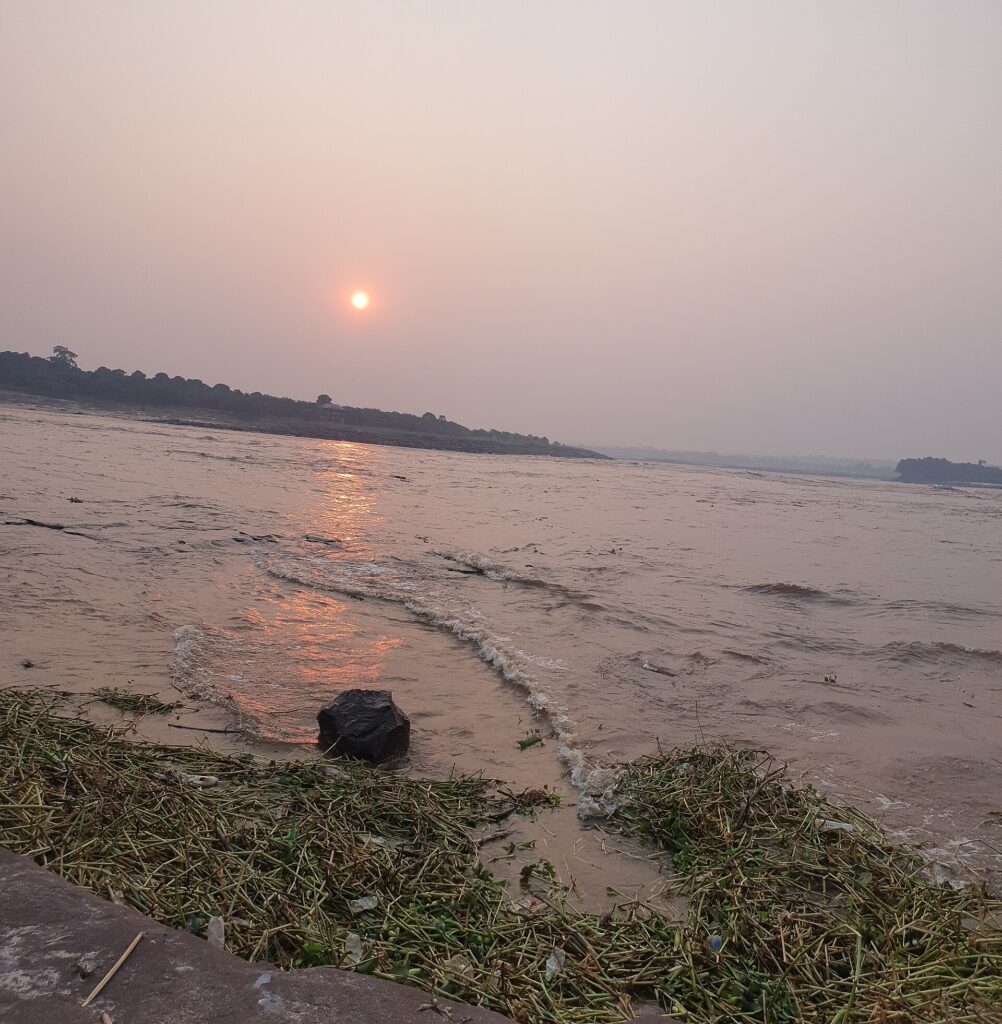
The Lore · Central Africa · Lore Universe
Congo River (Kongo, Luba, Lunda)
Kongo cosmogram (four moments of the sun), Luba Lukasa memory boards, Nkisi power figures, Lunda diaspora, BaKongo survival in Americas.
Why its stories are told
Stories are told to explain power and to place people within lineages. In Kongo homes, everyone tells tales and proverbs.
This holding gathers the lore of three peoples of the Congo basin and its southern savanna, each with its own name for itself and its ways.
The Land · Geography
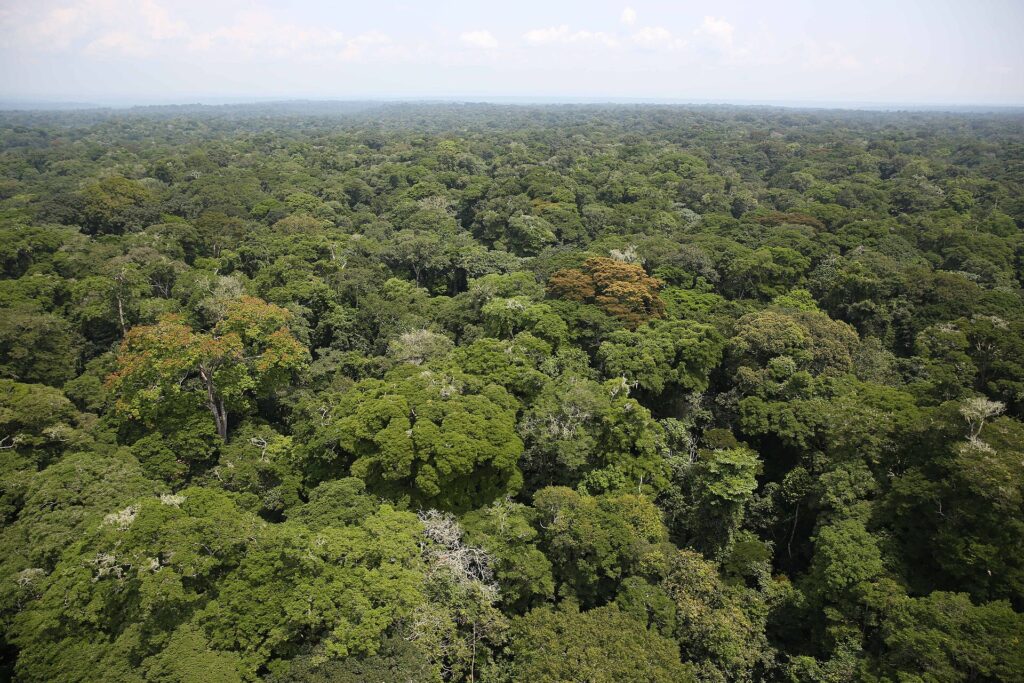
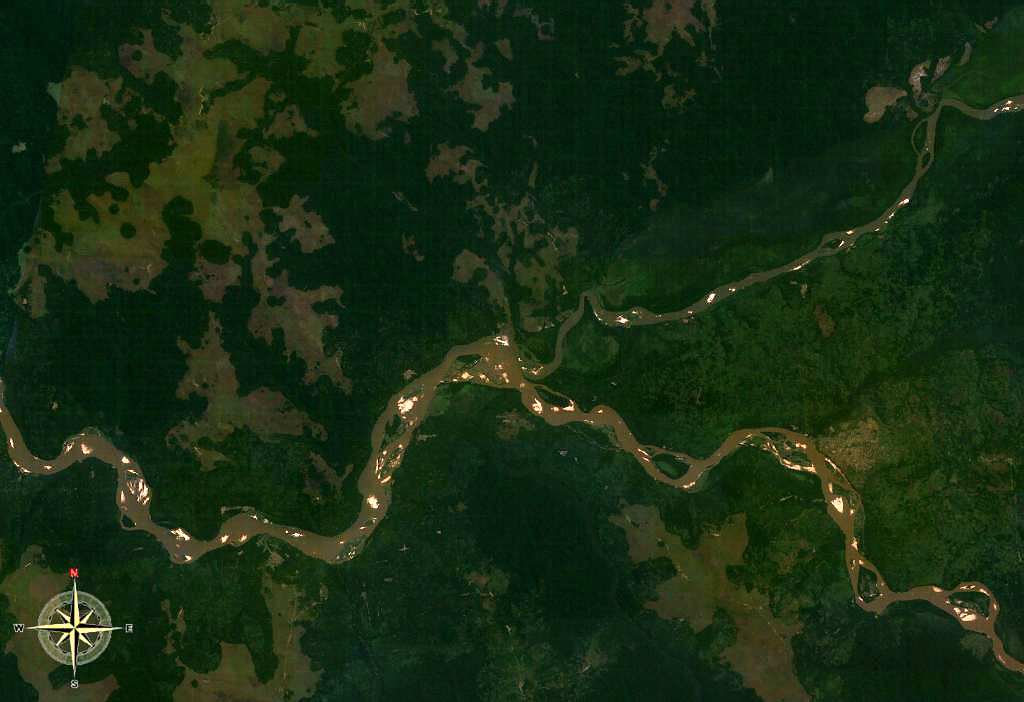
The lower Congo, the Nzadi, is one of the world's largest rivers by volume. From the Malebo Pool to the Atlantic, it runs through cataracts, including the Inga falls, and past the Mayombe forest. The Bakongo live on plateaus, savanna and forest along this course. Mbanza Kongo stands on a plateau in northern Angola.
The Luba homeland is the Upemba Depression in Katanga, where the Lualaba river spreads into lakes and swamps such as Lake Kisale. Fish, savanna farming and iron supported dense settlement.
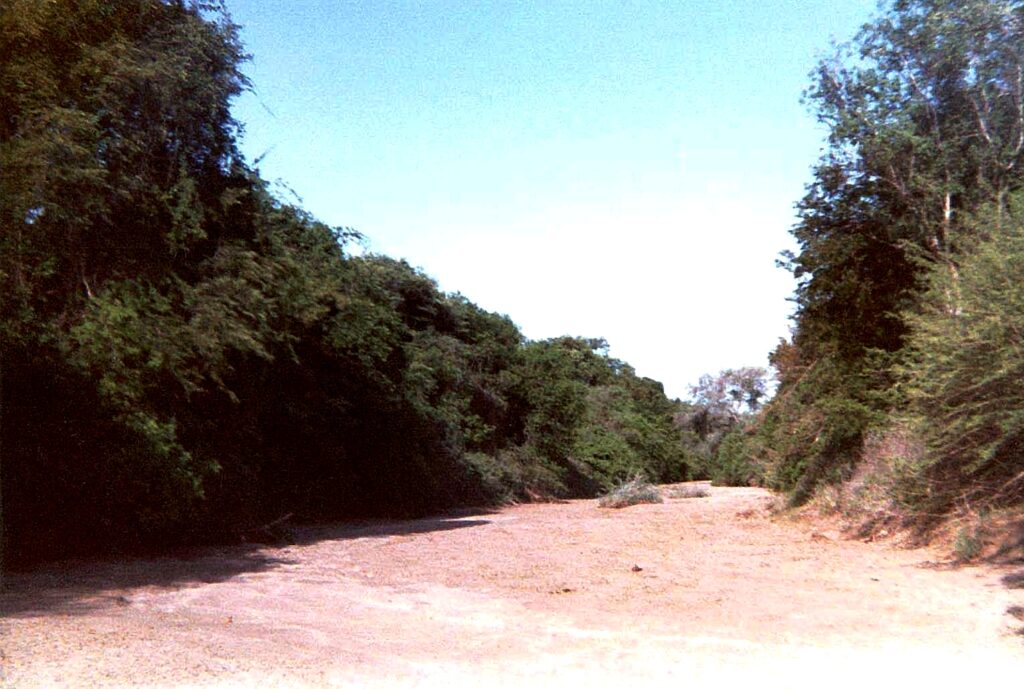
The Lunda live on the savannas and woodlands of the upper Kasai, a land of many rivers flowing north into the Congo basin. The Eastern Lunda live on the Luapula river and Lake Mweru.
The climate is tropical, with wet and dry seasons. Rivers are routes, borders and the homes of spirits.
The land shapes the stories. Rivers are crossed by founders: Lukeni crosses into Kongo, the Kazembe's people cross the Luapula. Water is the boundary between the living and the dead. Forests are places of spirits and initiation. Land belongs to the kanda and the dead; a clan's history is the history of its land.
The People · Cultural Foundation · Society
The Bakongo live along the lower Congo River (Nzadi) and its hinterland, in today's western Democratic Republic of the Congo, northern Angola, the Republic of the Congo and the Cabinda enclave. Their subgroups include the Bayombe, Bamanianga, Basolongo, Bazombo, Bandibu, Bavili and Bawoyo.
The Baluba live in the Upemba Depression and along the Lualaba river in Katanga, with a large western branch, the Luba-Kasai.
The Lunda (Aruund) live along the upper Kasai and its tributaries, around their capital Musumba, near Kapanga in southern DRC. Related groups include the Chokwe and Luvale of eastern Angola and western Zambia, and the Eastern Lunda of the Luapula valley in Zambia under the Kazembe.
All three speak Bantu languages, the result of farming and iron-working peoples settling the region over the last two to three thousand years. The Kongo kingdom was founded in the late fourteenth century, according to Thornton. Archaeology at Sanga and Katoto in the Upemba Depression shows a deep local past before the Luba kingdom. The Luba and Lunda states took shape between the sixteenth and eighteenth centuries, and the Lunda spread their titles and models of rule widely.
1. Balance between worlds. The living and the dead are two halves of one order, and health means right relations between them.
2. The matrilineal clan. Among the Bakongo, the kanda (clan, plural makanda) passes through women; a person's heir is a sister's son. The clan includes the dead and the unborn.
3. Refinement as a sign of rightful power. Luba tradition contrasts the crude Nkongolo with the refined Mbidi Kiluwe. A true ruler knows how to eat, speak and behave.
4. Memory as duty. Lukasa readers, praise singers and lineage elders hold history in trust and recite it at accession and judgment.
5. Power with accountability. Minkisi can hunt wrongdoers, and rulers can be judged. Power is necessary and dangerous.
Priority runs to the collective and the ancestors. Where Western stories often celebrate a self-made hero, these traditions celebrate the person who restores a broken order or carries on a line. A story may have a founder who commits a terrible act, like Lukeni killing his aunt, because founding a kingship meant breaking with ordinary kinship. That logic can be unfamiliar: the founding crime is what makes the ruler other than an ordinary man.
Kongo kinship is matrilineal: clan identity, land rights and succession pass through women, even when men hold office. A man's heir is often his sister's son. This gives women central weight in defining who belongs.
Women hold ritual power. Many banganga were and are women. Kimpa Vita, a young noblewoman, became the most influential prophet of eighteenth-century Kongo.
Among the Luba, royal women are pillars of kingship. Roberts and Roberts show that the king's spirit is embodied after his death by a woman, the mwadi, and that royal objects often depict women, who are described as holding the secrets of kingship. Bulanda, Kalala Ilunga's mother, is the link between the hunter from the east and the land. Women belong to Mbudye.
Among the Lunda, Lueji is the heir and founder figure. A female title, Lukokesha, holds high rank as ritual mother of the kingdom. But Lunda tradition also tells how Lueji's menstrual prohibition led her to give the regalia to her husband, a story read as explaining a shift to male rule.
Gender is joined with ritual role and kinship; women's power is often structural and hidden from view rather than absent.
Age brings authority. In Kongo, the eldest members of the kanda head it, speak for it in disputes, and keep its history and its relationship with the dead. Elders are close to the ancestors because they will soon join them.
The young owe respect and service. Initiation marks the passage to adult standing; Nkimba and mukanda turn boys into young men, and young women undergo their own rites.
In Luba and Lunda courts, senior officers and elders keep the history of titles and of the founders. Mbudye knowledge is given in grades, and the deepest grades go to those who have proven themselves over time.
Elders hold what others cannot: the history of the clan's land and migrations, the right relations with the dead, the knowledge of minkisi, and the authority to judge. In land disputes, the elder who knows where the clan came from settles the case.
Age is not everything. A royal heir may be young, and ritual skill can raise a young nganga. But elders' approval is still needed to install a ruler, and elders' knowledge is consulted.
In stories, a youth who defies elders, like Lueji's brothers, loses his place.
The Kongo kingdom had a nobility, the mwisikongo of the capital and the provinces; commoners in the villages; and enslaved people, whose numbers grew with the Atlantic trade. Thornton describes how the nobility in Mbanza Kongo competed for the throne, and how the civil wars of the late seventeenth century broke that structure.
Luba and Lunda states had royal lines, titled office holders, commoners and enslaved people. In Lunda, titles were linked in perpetual kinship, so rank was a matter of position in a network of relationships.
Storytellers sit at different levels. Mbudye members were part of the court and had high standing. Kasala poets were honoured specialists. Banganga were respected and feared. Evening tales belong to every household.
Class appears in stories in the contrast between refined rulers and crude ones, in the distance between the court and the village, and in the dangers of power. The slave trade is present in Kongo memory as a cause of ruin; Afonso I's letters complained of it in the 1520s.
The trickster tales, in which small animals defeat large ones, give the weak a voice.
In Kongo, the basic unit is the kanda, the matrilineal clan, with subdivisions down to lineages and households. The kanda holds land and is led by its senior members. Clans are linked by marriage and by relations of father's clan and mother's clan. Above them, the kingdom had provinces under governors appointed by the king in Mbanza Kongo.
Among the Luba, villages and lineages were grouped under chiefs who held their positions through links to the royal court. The king's power was partly ritual, with chiefs paying tribute and receiving bulopwe-linked emblems.
The Lunda state was a network of titles linked by perpetual kinship. Subordinate states, including those of the Kazembe in the east, kept relations with the Mwant Yav through tribute and title.
Membership brings obligations: contributing to funerals, defending kin, sharing wealth, and keeping clan rules. It brings protection, land and a place among the ancestors.
Expulsion is severe. A person cut off from the kanda has no land, no protection and no place among the dead. In the past, those accused of harmful power were sometimes expelled or sold. Losing one's clan meant losing one's future as an ancestor.
Through Time · History
By the 8th century CE, communities at Sanga and Katoto in the Upemba Depression were burying their dead with copper, pottery and iron, the deep background of the Luba.
In the late 14th century, according to Thornton, Lukeni lua Nimi founded the Kongo kingdom at Mbanza Kongo.
In 1483, the Portuguese navigator Diogo Cão reached the mouth of the Congo.
In 1491, King Nzinga a Nkuwu was baptised, taking the name João I.
In 1509, Afonso I Mvemba a Nzinga became king; he made Christianity the state religion and in the 1520s wrote to the Portuguese king against the slave trade.
In 1568, invaders called Jaga sacked Mbanza Kongo.
By the 17th century, Luba and Lunda states had taken shape; scholars date their beginnings differently.
In 1665, Kongo was defeated by the Portuguese at Mbwila, and King António I was killed; civil wars followed.
In 1706, the prophet Kimpa Vita was burned; in 1709, Pedro IV reunited the kingdom.
By the 1740s to 1760s, the Eastern Lunda under the Kazembe had settled on the Luapula.
In 1885, the Congo Free State was created under Leopold II, followed in 1908 by the Belgian Congo.
In 1921, Simon Kimbangu began healing at Nkamba and was arrested; he died in prison in 1951.
In 1960, the Congo became independent.
In 2017, Mbanza Kongo became a World Heritage Site.
These events live inside the stories: Kimpa Vita's teaching of a Kongolese Jesus, the memory of the trade, and Kimbangu as prophet.
Founders come from across a river. Lukeni lua Nimi crosses the Congo from the north to found Kongo. Mbidi Kiluwe comes from the east. Chibinda Ilunga comes from the Luba to the Lunda. These stories record movement and the meeting of peoples. The Lunda spread is the largest. After Lueji gave the regalia to Chibinda Ilunga, her brothers left.
The Kongo kingdom adopted Christianity in 1491 and made it its own. Thornton and others show that Kongo Christians understood the faith in Kongo terms: saints were linked to local spirits, the cross to the dikenga, priests to banganga. Kongo kings sent ambassadors to Portugal and Rome. Kimpa Vita taught that Jesus and the saints were Kongolese. The kingdom also resisted. Afonso I protested the slave trade.
Kongo stories exist to explain the relation between this world and the world of the dead, to account for power and its dangers, and to remember a kingdom that met Europe early, became Christian on its own terms, and was torn by war and the slave trade. The stories of Lukeni lua Nimi, of Afonso I, and of Kimpa Vita carry that history. Luba stories exist to justify bulopwe, sacred kingship.
The Sacred · Deities and Spirits
Kongo accounts of creation and the order of the worlds
The dikenga and the four moments of the sun
Kongo traditions of the simbi spirits (to check)
Local traditions of particular pools, falls and rocks
Luba accounts of creation (to check)
The Luba epic
The Luba epic
The Luba epic
Lueji and Chibinda Ilunga
Lueji and Chibinda Ilunga
In Kongo, minkisi are the clearest sacred objects. A nkisi is a container, a figure, bag, pot or shell, charged with medicines and with a spirit by a nganga. Each has its own name, rules and powers. The nkisi nkondi, a figure often studded with nails or blades, hunts wrongdoers and seals oaths. MacGaffey describes minkisi as a way of putting spirit power into a form people can work with.
Water and crossings are sacred. The Kalunga line, often figured as water, separates the living from the dead. Rivers, pools and waterfalls are homes of bisimbi spirits.
Graves are sacred: Kongo graves are marked with objects that belonged to the dead, with white things, and with signs of the dikenga.
The colour white (mpemba, also the name of white clay) belongs to the dead and to purity.
Among the Luba, the lukasa memory board, royal staffs, stools and bowls held by royal women, and the kitenta, the spirit capital of a dead king, are sacred.
Among the Lunda, the lukano, the royal bracelet, carries the sovereignty of the Mwant Yav.
Sacredness comes from contact with spirit, through a maker or a founder, and from keeping the rules attached.
Kongo thought places Nzambi a Mpungu, the high god, above all. Nzambi is the creator, remote, and seldom addressed by special shrines; Kongo Christians use the name for the Christian God.
Below Nzambi, MacGaffey identifies four kinds of power: bakulu, the honoured dead of the kanda; minkuyu, the restless dead; bisimbi, local spirits of water, rocks and forest; and the powers held in minkisi. Thompson writes of Mbumba, a rainbow serpent linked to the simbi, and of Kalunga as the great water and boundary.
These do not form a ladder of rank as much as a set of different kinds of power, each with its own relation to the living.
Luba thought has a high god, named Leza or Kabezya Mpungu in different regions, and below him the vidye spirits, often linked to the founding heroes and to dead kings. Mbidi Kiluwe and Kalala Ilunga are at the head of the royal spirit line.
Lunda thought also has a high god, Nzambi, and honours ancestors and spirits tied to the royal line and to the land.
Humans relate to the high god through acknowledgment and to the other powers through banganga, mediums, offerings and the keeping of rules.
In Kongo thought, the dead (bakulu) live in mpemba, the land of the dead, which mirrors this world. They are present and active. They watch over the kanda, protect its land, and can bless or punish. Ancestors are usually honoured at graves and at clan gatherings, and are consulted in difficulties.
MacGaffey distinguishes the bakulu, honoured ancestors, from minkuyu, the restless dead who were not properly buried or who died badly. These can trouble the living.
Ancestors communicate by dreams, by illness, through diviners, and through signs. The protocol is proper burial, regular remembrance, offerings, and respect for clan rules. What the dead want is continuity: that the kanda is kept whole, its lands held, its members fed and its rules kept.
Among the Luba, dead kings are especially active. A king's spirit stays in his kitenta, embodied by the mwadi, a woman who takes on the king's name and role. Spirit mediums, bilumbu, speak for vidye spirits.
Among the Lunda, dead title holders are present in the titles that continue.
In stories, ancestors often set the plot moving: a dream, an illness, or a death that has not been honoured properly.
Kongo thought describes two worlds, nseke (the living) and mpemba (the dead), separated by Kalunga, a boundary often described as a great water or the sea. The world of the dead lies under the water, beyond it, or in the forest, and it mirrors this world: the dead are white, they live in villages, they keep their kin.
MacGaffey groups the powers of the other world into types: bakulu, the honoured dead; minkuyu, the restless dead; bisimbi, local spirits of water and rocks; and the forces that live in minkisi. Nzambi a Mpungu is above all of them.
Crossings happen in several directions. The living cross at death. The dead return in dreams, in signs, and, in some accounts, as children reborn. Banganga cross by ritual power. Spirits enter minkisi and are made active. Water, crossroads, graves and forest edges are crossing places.
The Luba picture is similar: vidye spirits, the dead, and kings who continue as spirits at their kitenta. Mediums receive spirits and speak for them.
The conditions of crossing are ritual: proper burial, initiation, the work of a nganga, or possession. Crossing without them is dangerous.
Rituals mark the transitions of the life round. In Kongo, birth, naming, marriage and death are all marked, and funerals are the most elaborate, ensuring the dead reach mpemba and become ancestors rather than restless minkuyu. Graves are decorated with the dead person's possessions.
Initiation societies once marked passage to adulthood and membership. Kongo history records Kimpasi and Nkimba societies; their teachings belonged to members.
Rituals restore balance. A nganga diagnoses an affliction, prescribes the right nkisi, and the community may gather to settle disputes, swear oaths, or name and counter harmful power. Lemba, a Kongo society of healing and trade from the seventeenth to early twentieth centuries, dealt with the afflictions of the successful.
Rituals install rulers. The Luba installation involves Mbudye readings of the lukasa and the conferral of bulopwe. The Mwant Yav and the Kazembe are installed by officers who hold specific duties.
In stories, ritual is often both the frame and the ending. The Mutomboko ceremony re-enacts the Eastern Lunda's conquest; the Luba epic ends with the founding of bulopwe. Stories explain rituals, and rituals perform stories.
Nzambi a Mpungu is the high god of the Bakongo: creator, remote, all-powerful. Nzambi is seldom given shrines; Kongo Christians use the name for God.
Kalunga is the great water and the boundary between the living and the dead. In some uses it names the sea, in others a power or the line itself.
Mbumba, the rainbow serpent, is linked with the bisimbi spirits of water, according to Thompson.
Among the Luba, the high god is called Leza or Kabezya Mpungu in different areas. The founding heroes stand at the head of the spirit world: Mbidi Kiluwe, the refined hunter from the east; Kalala Ilunga, his son, the first sacred king; and Nkongolo Mwamba, the crude red king, associated with the rainbow. Luba royal objects depict these figures and the women linked to them.
Among the Lunda, Nzambi is the high god. Lueji and Chibinda Ilunga are founder figures, and Chibinda Ilunga is carved by the Chokwe as an ideal hunter-chief, wearing a distinctive headdress and holding a staff.
Ritual protocols run through banganga, mediums, court officers and the keeping of the prohibitions attached to each power.
Bakulu are the honoured dead of a Kongo kanda. They live in mpemba, watch over the clan and its land, and expect remembrance.
Minkuyu are the restless dead, those not properly buried or who died badly. They may trouble the living and must be quieted.
Bisimbi (singular simbi) are local spirits of waters, rocks, forest and the land. They can be approached for health and fertility and are linked with particular places. Some accounts describe them as the dead who have become spirits of the land.
Minkisi are both objects and the spirits in them. Each nkisi has a name, a personality and rules. Minkondi (singular nkondi) are hunters who enforce oaths.
Vidye are Luba spirits, linked with royal spirits and with the possession of diviners and mediums.
Royal spirits in Luba and Lunda tradition remain active through the mwadi and through titles.
Rules of interaction: honour the dead with remembrance and proper burial; approach bisimbi and minkisi through a nganga; keep the prohibitions attached to each; never use spirit power for selfish harm. A spirit that has been properly answered usually rests.
The rainbow serpent is the most prominent being. In Luba tradition, Nkongolo is linked with the rainbow, and the rainbow is spoken of as a serpent; Reefe titled his history of the Luba The Rainbow and the Kings. In Kongo, Mbumba is a rainbow serpent linked with the bisimbi.
The leopard is the royal animal of the region. Kongo and Luba chiefs wore leopard skins and teeth, and the leopard stands for the power of rulers to judge and punish.
The dog appears in many minkisi as a hunter between worlds, especially the double-headed dog figure Kozo, which sees both the living and the dead; such figures belong to the Kongo nkisi tradition.
The tortoise and small antelopes appear in Kongo and Luba tales as tricksters who outwit larger animals through patience and cunning.
The python and the crocodile appear in water traditions linked with bisimbi and Kalunga.
Animals in the stories relate to humans as helpers, enemies and signs. Hunting is a powerful theme: the founders Mbidi Kiluwe and Chibinda Ilunga are hunters, and the hunter's knowledge of the bush, of animals and of medicines is a form of power that leads to kingship.
Every nkisi carries its own prohibitions (bizila or nlongo in Kikongo): foods, acts or places to avoid. The owner and those it protects must keep them. Breaking them can make the nkisi fail or turn against the breaker.
Marriage within one's own kanda is forbidden.
Rulers have special prohibitions. Luba tradition stresses that a king must not eat or drink in public; this is part of the contrast between Nkongolo and Mbidi Kiluwe. The Lunda lukano is subject to rules about who may touch it. In the Lunda tradition, Lueji's menstrual seclusion meant she could not handle the regalia, and so she passed it to Chibinda Ilunga; Lunda tradition explains the transfer of power through this prohibition.
Abuse of kin and elders is condemned. Lueji's brothers lost the right to rule by mistreating their father.
Using harmful power is the gravest offence. Those accused could be tested, expelled or killed in the past, and accusations remain a source of harm today, sometimes falling on children and the elderly.
Some things cannot be undone: death, the loss of regalia to another line, the founding crime of a king.
This part carries no pictures. Gods, spirits, the ancestors and ceremonies are named, with their roles, and drawn as marks only.
The Stories · Signature Stories
The Luba epic of Nkongolo and Kalala Ilunga is the most widely told founding story of the southern savanna. Nkongolo Mwamba, the red king, ruled the Luba lands. Tradition describes him as cruel and crude: he ate and drank in public, had no manners, and married his own sisters. A hunter came from the east, Mbidi Kiluwe, refined in his habits.
The Telling · Oral Tradition · Narrative Structure
The Figures · Survival and Diaspora
The hunter from elsewhere: Mbidi Kiluwe, Chibinda Ilunga. He comes from outside, skilled and refined, marries into the land, and founds a new line. His arc is arrival, marriage and departure or rule.
The crude king: Nkongolo. He holds power but lacks refinement and kindness. His arc ends in overthrow, and he becomes part of the sacred landscape.
The founding son: Kalala Ilunga. Born of the outsider and the land, threatened by the old king, he flees, returns and rules.
The royal woman: Lueji, Bulanda, the mwadi. She holds the right to rule or the link to the land, chooses or bears the founder, and keeps the king's memory after his death.
The departing brother: Kinguri, Chinyama. Losing the regalia, he leaves with followers and founds a new state, keeping a tie to the centre.
The prophet: Kimpa Vita, Simon Kimbangu. Arising when the order has decayed, the prophet calls for restoration and is punished by those in power, but the movement outlives them.
The nganga: healer and maker of minkisi, honoured and feared.
The trickster: tortoise or antelope, who beats the strong by cunning.
Survival and diaspora
Yes. The tradition lives today in changed forms across DRC, Angola, the Republic of the Congo and Zambia. In Kongo regions, clan structures, funerals, honouring of the dead, proverbs and healing continue. Banganga still work, and many people combine Christian faith with older practice.
Kongo is one of the African traditions that most shaped the Americas. In Cuba, Palo (Regla de Palo Monte) is Kongo-derived. Its central object, the nganga or prenda, is a charged vessel whose name and logic come from Kongo nganga and nkisi. In Haiti, Vodou includes Kongo nanchon (nations) and the Petwo rites, which scholars link to Kongo practice.
Kimbanguism is the largest movement to have come from Kongo tradition. Founded on the work of Simon Kimbangu, it was banned under Belgian rule and became a recognised church in 1959. Fu-Kiau's work on Kongo cosmology is itself a revival: a Mukongo teacher writing down and explaining the dikenga and the four moments of the sun for Kongo and diaspora readers.
The Catalog · its places, peoples, practices and sources
The World Bible
For the reader who wants all of it: every section of Basin Empires, in its eleven parts.
This holding gathers the lore of three peoples of the Congo basin and its southern savanna, each with its own name for itself and its ways.
The Bakongo (bah-KOHNG-goh; one person a Mukongo or Mwisikongo) speak Kikongo (kee-KOHNG-goh). The kingdom was Kongo, its capital Mbanza Kongo (m-BAHN-zah KOHNG-goh). The Kongo sign of the cosmos is the dikenga dia Kongo (dee-KENG-gah dee-ah KOHNG-goh), also called the yowa. Kikongo has many varieties, including Kiyombe, Kimanianga, Kisolongo and Kizombo, and Kituba (Kikongo ya leta) is a widely used trade form.
The Baluba (bah-LOO-bah; one person a Muluba) speak Kiluba in Katanga and Tshiluba in Kasai. Their idea of sacred kingship is bulopwe (boo-LOH-pweh), and their memory board is the lukasa (loo-KAH-sah).
The Lunda call themselves Aruund (ah-ROOND) and their language Ruund; their emperor is the Mwant Yav (mwahnt YAHV). Peoples who trace descent from the Lunda, such as the Eastern Lunda of Kazembe, speak other languages.
The word nkisi (n-KEE-see; plural minkisi) means a power object or the spirit it holds. The high god is Nzambi a Mpungu (n-ZAHM-bee ah m-POON-goo).
The Bakongo live along the lower Congo River (Nzadi) and its hinterland, in today's western Democratic Republic of the Congo, northern Angola, the Republic of the Congo and the Cabinda enclave. Their subgroups include the Bayombe, Bamanianga, Basolongo, Bazombo, Bandibu, Bavili and Bawoyo.
The Baluba live in the Upemba Depression and along the Lualaba river in Katanga, with a large western branch, the Luba-Kasai.
The Lunda (Aruund) live along the upper Kasai and its tributaries, around their capital Musumba, near Kapanga in southern DRC. Related groups include the Chokwe and Luvale of eastern Angola and western Zambia, and the Eastern Lunda of the Luapula valley in Zambia under the Kazembe.
All three speak Bantu languages, the result of farming and iron-working peoples settling the region over the last two to three thousand years. The Kongo kingdom was founded in the late fourteenth century, according to Thornton. Archaeology at Sanga and Katoto in the Upemba Depression shows a deep local past before the Luba kingdom. The Luba and Lunda states took shape between the sixteenth and eighteenth centuries, and the Lunda spread their titles and models of rule widely.
Kongo stories exist to explain the relation between this world and the world of the dead, to account for power and its dangers, and to remember a kingdom that met Europe early, became Christian on its own terms, and was torn by war and the slave trade. The stories of Lukeni lua Nimi, of Afonso I, and of Kimpa Vita carry that history.
Luba stories exist to justify bulopwe, sacred kingship. The Luba epic of Nkongolo, Mbidi Kiluwe and Kalala Ilunga explains why kings must be refined, why the royal line came from a hunter from the east, and how a cruel ruler was replaced. Kings across the region later claimed this lineage.
Lunda stories, chiefly of Lueji and Chibinda Ilunga, explain how a Luba hunter came to rule, and why Lunda princes left to found states to the west and south.
Stories serve to place rulers, explain rites, settle claims and teach conduct. Evening tales and proverbs are open to everyone. The histories read on a lukasa belong to Mbudye members. The making and use of minkisi belong to the banganga, ritual experts, and what is restricted to them is theirs to keep.
Inside voices come first. Kimbwandende Kia Bunseki Fu-Kiau, a Mukongo teacher from the Manianga region, wrote on Kongo thought in Kikongo and French, and later in English as African Cosmology of the Bântu-Kôngo (2001). Clémentine Madiya Faïk-Nzuji studied Luba heroic poetry. Isidore Ndaywel è Nziem wrote a general history of the Congo. The Kongo kings' own letters, including Afonso I's letters to the Portuguese king in the 1520s, are among the oldest written African sources.
For Kongo: Wyatt MacGaffey, Religion and Society in Central Africa (1986) and Kongo Political Culture (2000); John Thornton, The Kongolese Saint Anthony (1998); Robert Farris Thompson and Joseph Cornet, The Four Moments of the Sun (1981); John Janzen, Lemba 1650–1930 (1982).
For Luba: Mary Nooter Roberts and Allen F. Roberts, Memory: Luba Art and the Making of History (1996); Thomas Reefe, The Rainbow and the Kings (1981); Luc de Heusch, The Drunken King (1982).
For Lunda: Jan Vansina, Kingdoms of the Savanna (1966).
Living keepers include the Mwant Yav's court at Musumba, the Kazembe's court at Mwansabombwe, and Kongo elders and banganga. This holding has not been reviewed by those keepers; entries marked ‘to check’ await that.
1. Balance between worlds. The living and the dead are two halves of one order, and health means right relations between them.
2. The matrilineal clan. Among the Bakongo, the kanda (clan, plural makanda) passes through women; a person's heir is a sister's son. The clan includes the dead and the unborn.
3. Refinement as a sign of rightful power. Luba tradition contrasts the crude Nkongolo with the refined Mbidi Kiluwe. A true ruler knows how to eat, speak and behave.
4. Memory as duty. Lukasa readers, praise singers and lineage elders hold history in trust and recite it at accession and judgment.
5. Power with accountability. Minkisi can hunt wrongdoers, and rulers can be judged. Power is necessary and dangerous.
Priority runs to the collective and the ancestors. Where Western stories often celebrate a self-made hero, these traditions celebrate the person who restores a broken order or carries on a line. A story may have a founder who commits a terrible act, like Lukeni killing his aunt, because founding a kingship meant breaking with ordinary kinship. That logic can be unfamiliar: the founding crime is what makes the ruler other than an ordinary man.
Nothing happens without a cause in the world of persons. Illness, death, bad luck or sudden wealth may be traced to ancestors, to a nkisi, to a simbi spirit, or to kindoki, harmful power used by a person. Divination and the banganga find the cause.
The person exists inside the clan, which joins the living and the dead. MacGaffey describes Kongo thought as holding the two worlds as mirror images across a boundary, Kalunga.
Time is cyclical, and the dikenga shows it. Fu-Kiau describes four moments of the sun: musoni (conception, before dawn), kala (birth, at sunrise), tukula (maturity, at noon) and luvemba (death, at sunset). After luvemba, the soul passes into the land of the dead and may return, so life turns like the sun. Thompson calls these the four moments of the sun.
Reality is double. Nseke is the world of the living; mpemba is the white world of the dead, under the water or beyond the forest. Kings, banganga and the dead move between them.
Luba and Lunda thought shares much of this: spirits of the dead, the presence of former kings in the living world, and a sacred kingship that bridges the two.
Stories are told to explain power and to place people within lineages.
In Kongo homes, everyone tells tales and proverbs. Elders of the kanda tell clan origins, especially at funerals, land disputes and successions, when knowing where the clan came from settles who owns what. Banganga hold the stories of particular minkisi.
Among the Luba, the Mbudye society held royal history, and its members read the lukasa at royal installations and other occasions. Praise poets performed kasala, Luba heroic poetry, honouring the dead and the living. Royal women, including the mwadi who embodies a dead king, also held historical knowledge.
Among the Lunda, court officers recite the history of titles and the relations between them, since Lunda politics rests on perpetual kinship between titles.
Stories are told in the evening, at funerals, at installations, at court hearings and at healing rites. The power belongs to whoever can speak authoritatively. Roberts and Roberts show that each lukasa reading varied with the reader and the occasion: history was performed to fit the present, and the right to perform it was itself a form of rule.
The basic pattern is the founding of rule by an outsider. In Luba tradition, a crude local king, Nkongolo, is displaced by the son of a refined hunter from the east. In Lunda tradition, a Luba hunter, Chibinda Ilunga, marries the Lunda heir Lueji and takes the regalia. In Kongo tradition, Lukeni lua Nimi crosses the river and founds a kingdom by conquest. Each tells how a new kind of order was imposed on an older one.
The second pattern is cyclical, shown by the dikenga: birth, maturity, death and return. Kongo stories of the dead who return, of minkisi that are made, used and discarded, and of prophets who appear when the order has decayed, follow the sun's turning.
The third pattern is departure and spreading. Lunda princes leave after a quarrel and found new states; the Kazembe leads the Eastern Lunda to the Luapula. These stories branch outward from a centre.
The tradition is a hybrid: founding narrative, turning cycle and branching migration. Story movement usually begins with a disorder, moves through a crossing, often of a river, and ends with a new rule installed and remembered in ritual.
The deepest tension is between kinds of order. Nkongolo is crude, eats in public, and is associated with the red of the rainbow and of disorder; Mbidi Kiluwe and his son are refined, and associated with a proper kingship. De Heusch reads this as a contrast between two ideas of rule. The conflict is between ways of being, not just between men.
A second source of tension is between kinship and kingship. Lukeni kills his aunt, breaking with his clan, to become king. Lueji's brothers lose the regalia because they mistreated their father. Rule requires stepping outside ordinary kin obligations, and that creates tension.
A third is affliction: illness, misfortune or barrenness signals a broken relation with the dead or the use of harmful power. Stories turn on finding the cause.
A fourth, especially in Kongo history, is the decay of the realm: civil war, slave raiding, the destruction of Mbanza Kongo. Prophets such as Kimpa Vita and later Simon Kimbangu arise in answer.
Conflict in the Western sense, hero against villain, is present in the Luba epic, but the driving force is restoring right order.
Founding heroes are the main protagonists. Kalala Ilunga, Chibinda Ilunga and Lukeni lua Nimi are individuals, but each stands for a dynasty and a model of rule. Their personal qualities, refinement, hunting skill or daring, become qualities of kingship.
Women often hold the centre. Lueji is the rightful heir of the Lunda and the one who chooses Chibinda Ilunga. Kimpa Vita is a young noblewoman who becomes a prophet. Bulanda, Kalala Ilunga's mother, links the hunter from the east to the land.
Peoples are protagonists in migration stories. The departure of Kinguri and his followers, or of the Kazembe's people, is the story of a whole community moving.
Spirits and minkisi act as protagonists in Kongo tradition. A nkisi nkondi hunts down a wrongdoer; bisimbi act in waters and rocks.
The dead act too. Ancestors send dreams and illness and must be answered.
In everyday tales, small animals such as the tortoise and the antelope outwit stronger ones, and ordinary people face the consequences of greed, carelessness or envy.
The tradition rarely gives a protagonist who stands alone: every hero is someone's son or daughter and the founder of someone's line.
Founding stories end with new rule installed. Kalala Ilunga defeats Nkongolo and becomes the first of the sacred kings; Chibinda Ilunga holds the lukano, and his son becomes the first Mwant Yav; Lukeni establishes Mbanza Kongo. The resolution is an institution that continues.
The defeated are often transformed rather than erased. Luba tradition associates Nkongolo with the rainbow serpent, and his remains are linked to a sacred site. Lueji's brothers leave but found their own states. The losing side becomes part of the map.
Kongo stories of affliction end with restoration: the cause is found, the nkisi is applied, the dead are honoured, and health returns. Prophetic stories end ambiguously. Kimpa Vita is burned, but her movement leads to the kingdom's reunion; Simon Kimbangu is imprisoned, but his church grows.
Cycle completion is the deeper satisfaction. A life that reaches luvemba and passes to the dead, honoured properly, is complete.
A satisfying ending puts each party in its proper place, living and dead, ruler and ruled, and often founds something that the listeners still see: a title, a ceremony, a site.
Kongo time turns. The dikenga describes a life as four stations of the sun: musoni, kala, tukula and luvemba. After death the person continues below the Kalunga line in mpemba, and may return. Fu-Kiau describes the person as a ‘second sun’ who rises and sets. A story of a life is a story of a round.
Dynastic time runs in lines. Kongo kings are counted from Lukeni; Luba kings from Kalala Ilunga; Lunda Mwant Yav from Yav a Nawej. These lists are condensed at the start and fuller near the present, as historians note.
Lunda time has a special feature: positional succession and perpetual kinship. A new holder of a title takes on its whole identity, including the kin relations of the first holder. A present Kazembe may be spoken of as the son of the Mwant Yav, because the first Kazembe was. Vansina described this system in Kingdoms of the Savanna. Time folds: the founding relationships are re-enacted in each generation.
Luba time is layered too. A dead king continues as a spirit at his kitenta, embodied by a woman, the mwadi. Past rulers are present in the court.
The community is a main actor. In Kongo, the matrilineal kanda is the unit of life: it holds land, honours its dead and decides succession. A person's story is part of the kanda's story, which includes ancestors in the land of the dead.
In Luba and Lunda traditions, the kingdom is a community of titles. Office holders, councils and royal women all have parts to play, and stories of founding explain why each title relates to the others as it does.
Individuals relate to the community through obligations: to honour the dead, support kin, accept judgment, and not use harmful power. A person suspected of kindoki can be cut off.
Communities move in stories. The departure of Lunda princes takes whole populations; the Eastern Lunda's journey to the Luapula is a collective story celebrated in the Mutomboko ceremony.
The community expects stories to confirm its claims: to land, to titles, to rank. A clan's origin story is evidence in a dispute. A Mutomboko performance confirms the Kazembe's rule. A lukasa reading at an installation affirms that the new king is rightful.
Right action keeps the living and dead in balance and keeps kin in good relations. Wrong action breaks those relations.
Condemnation falls on harmful power used for oneself (kindoki), on greed, on crudeness in a ruler, and on mistreatment of kin and elders. Lueji's brothers lose the right to rule because they beat their drunk father. Nkongolo is condemned for cruelty and lack of refinement.
Honour goes to the person who heals, who judges fairly, who carries out duties to the dead, and who rules with dignity. Banganga are honoured when they heal and feared when they harm.
Morality is relational and context-bound. The same power can heal or harm depending on its use. Founding kings may commit acts that would be crimes in ordinary life, and tradition treats this as part of what makes them kings, not as an excuse for others.
Stories teach moral logic by consequence and by contrast. The crude king and the refined one, the brothers and the sister, the healer and the one who harms are set side by side. Proverbs, often carved on Woyo pot lids or spoken in court, condense the lesson into a form that can be cited in daily disputes.
Transformation is built into the cosmos: every person passes through the four moments of the sun and becomes one of the dead. A story that follows this round celebrates it.
Rulers transform at accession. A Luba king becomes the holder of bulopwe, a sacred state passed from Mbidi Kiluwe through Kalala Ilunga. A Lunda title holder becomes the title, taking on its identity. Rites mark this change, and their details belong to the courts.
Objects transform. An nkisi is made from a container and medicines (bilongo), and becomes a holder of spirit only when charged by a nganga. When it is no longer needed, it can be set aside.
Communities transform through departure. A group that leaves the Lunda centre becomes a new people with its own state while keeping perpetual kinship with the Mwant Yav.
Kongo history adds a transformation the tradition mourns: the decay of the kingdom through war and slave raiding, and the destruction of Mbanza Kongo in the seventeenth century. Prophetic movements seek to reverse it, as Kimpa Vita called for the capital to be resettled.
The tradition celebrates passage into a higher state and mourns disorder and loss of the centre.
In Kongo, minkisi are the clearest sacred objects. A nkisi is a container, a figure, bag, pot or shell, charged with medicines and with a spirit by a nganga. Each has its own name, rules and powers. The nkisi nkondi, a figure often studded with nails or blades, hunts wrongdoers and seals oaths. MacGaffey describes minkisi as a way of putting spirit power into a form people can work with.
Water and crossings are sacred. The Kalunga line, often figured as water, separates the living from the dead. Rivers, pools and waterfalls are homes of bisimbi spirits.
Graves are sacred: Kongo graves are marked with objects that belonged to the dead, with white things, and with signs of the dikenga.
The colour white (mpemba, also the name of white clay) belongs to the dead and to purity.
Among the Luba, the lukasa memory board, royal staffs, stools and bowls held by royal women, and the kitenta, the spirit capital of a dead king, are sacred.
Among the Lunda, the lukano, the royal bracelet, carries the sovereignty of the Mwant Yav.
Sacredness comes from contact with spirit, through a maker or a founder, and from keeping the rules attached.
In Kongo thought, the dead (bakulu) live in mpemba, the land of the dead, which mirrors this world. They are present and active. They watch over the kanda, protect its land, and can bless or punish. Ancestors are usually honoured at graves and at clan gatherings, and are consulted in difficulties.
MacGaffey distinguishes the bakulu, honoured ancestors, from minkuyu, the restless dead who were not properly buried or who died badly. These can trouble the living.
Ancestors communicate by dreams, by illness, through diviners, and through signs. The protocol is proper burial, regular remembrance, offerings, and respect for clan rules. What the dead want is continuity: that the kanda is kept whole, its lands held, its members fed and its rules kept.
Among the Luba, dead kings are especially active. A king's spirit stays in his kitenta, embodied by the mwadi, a woman who takes on the king's name and role. Spirit mediums, bilumbu, speak for vidye spirits.
Among the Lunda, dead title holders are present in the titles that continue.
In stories, ancestors often set the plot moving: a dream, an illness, or a death that has not been honoured properly.
Kongo thought describes two worlds, nseke (the living) and mpemba (the dead), separated by Kalunga, a boundary often described as a great water or the sea. The world of the dead lies under the water, beyond it, or in the forest, and it mirrors this world: the dead are white, they live in villages, they keep their kin.
MacGaffey groups the powers of the other world into types: bakulu, the honoured dead; minkuyu, the restless dead; bisimbi, local spirits of water and rocks; and the forces that live in minkisi. Nzambi a Mpungu is above all of them.
Crossings happen in several directions. The living cross at death. The dead return in dreams, in signs, and, in some accounts, as children reborn. Banganga cross by ritual power. Spirits enter minkisi and are made active. Water, crossroads, graves and forest edges are crossing places.
The Luba picture is similar: vidye spirits, the dead, and kings who continue as spirits at their kitenta. Mediums receive spirits and speak for them.
The conditions of crossing are ritual: proper burial, initiation, the work of a nganga, or possession. Crossing without them is dangerous.
Rituals mark the transitions of the life round. In Kongo, birth, naming, marriage and death are all marked, and funerals are the most elaborate, ensuring the dead reach mpemba and become ancestors rather than restless minkuyu. Graves are decorated with the dead person's possessions.
Initiation societies once marked passage to adulthood and membership. Kongo history records Kimpasi and Nkimba societies; their teachings belonged to members.
Rituals restore balance. A nganga diagnoses an affliction, prescribes the right nkisi, and the community may gather to settle disputes, swear oaths, or name and counter harmful power. Lemba, a Kongo society of healing and trade from the seventeenth to early twentieth centuries, dealt with the afflictions of the successful.
Rituals install rulers. The Luba installation involves Mbudye readings of the lukasa and the conferral of bulopwe. The Mwant Yav and the Kazembe are installed by officers who hold specific duties.
In stories, ritual is often both the frame and the ending. The Mutomboko ceremony re-enacts the Eastern Lunda's conquest; the Luba epic ends with the founding of bulopwe. Stories explain rituals, and rituals perform stories.
Kongo thought places Nzambi a Mpungu, the high god, above all. Nzambi is the creator, remote, and seldom addressed by special shrines; Kongo Christians use the name for the Christian God.
Below Nzambi, MacGaffey identifies four kinds of power: bakulu, the honoured dead of the kanda; minkuyu, the restless dead; bisimbi, local spirits of water, rocks and forest; and the powers held in minkisi. Thompson writes of Mbumba, a rainbow serpent linked to the simbi, and of Kalunga as the great water and boundary.
These do not form a ladder of rank as much as a set of different kinds of power, each with its own relation to the living.
Luba thought has a high god, named Leza or Kabezya Mpungu in different regions, and below him the vidye spirits, often linked to the founding heroes and to dead kings. Mbidi Kiluwe and Kalala Ilunga are at the head of the royal spirit line.
Lunda thought also has a high god, Nzambi, and honours ancestors and spirits tied to the royal line and to the land.
Humans relate to the high god through acknowledgment and to the other powers through banganga, mediums, offerings and the keeping of rules.
Kongo storytelling is full of proverbs. A speaker in a dispute or at a gathering builds an argument through proverbs, and listeners judge skill by how well they are chosen. Tales include songs that listeners join, and a teller changes voice for each character.
Call-and-response runs through Kongo singing, both in daily life and in ritual. A lead singer gives a line and the group answers.
Luba kasala, heroic poetry performed especially among the Luba-Kasai, is recited in long, rapid sequences of names and praises. Faïk-Nzuji describes how kasala strings together lineages, epithets and allusions, rising in intensity, often at funerals.
The Luba epic is told in many versions, from long performances to short summaries, and its tellers use set formulas and repeated episodes.
Lunda court speech uses titles, kinship terms and formal address. History is spoken in terms of relationships between titles.
Silence matters in ritual contexts. Some names and words may only be spoken by certain people, and the right not to say something is part of authority. Drum language is used too: drums can carry phrases, signals and names.
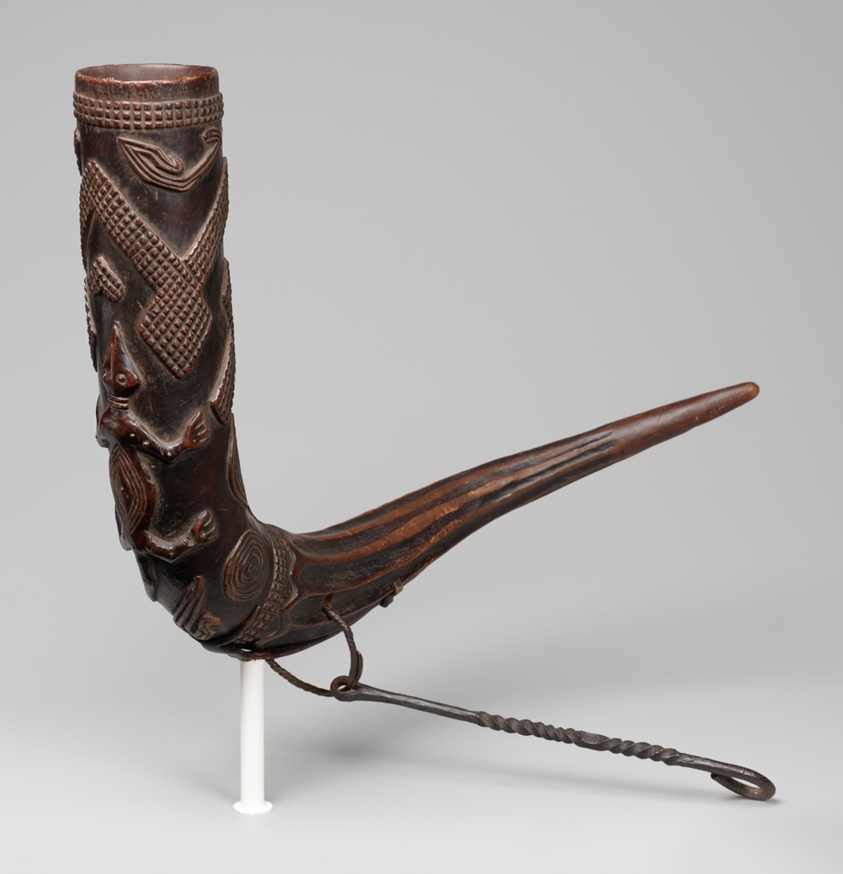
Drums are central. Kongo ngoma drums accompany dances, funerals and healing. Slit drums carry signals. Ivory side-blown horns were court instruments of the Kongo kingdom.
The Luba court used drums, slit gongs and singing, and Mbudye members performed dances with distinctive body paint; Roberts and Roberts describe Mbudye performance as combining dance, song and the reading of the lukasa.
Masks are important among the Chokwe, Luvale and Lunda-related peoples. The makishi masquerades of mukanda, the boys' initiation, are performed in Zambia, Angola and DRC; UNESCO recognised the Makishi masquerade in 2005. Chokwe masks such as mwana pwo portray an ideal young woman.
The Mutomboko ceremony of the Eastern Lunda includes the Kazembe's dance with a sword, before his people, at the end of a re-enactment of the crossing of the Luapula.
Kongo funerals involve dance, song and the display of the dead's possessions.
In healing, a nganga may dance, chant and handle the nkisi.
The body is fully engaged: performers dance, gesture, point, move between groups. Telling and performing are not separated.
Listeners in Kongo, Luba and Lunda performances are active.
In evening tales, children and adults sing back the songs inside the tale, answer questions, and complete phrases. A teller who stops may be pushed to go on.
In proverb exchanges and court hearings, listeners respond to each proverb with approval or with a counter-proverb. The judgment of the gathering decides who argued better.
In kasala, listeners cheer, call out, and sometimes give gifts to the poet when a name or deed moves them.
In call-and-response singing, the response is the audience's part, and without it the song cannot continue.
In Mbudye performances, the audience watches the reading of the lukasa and the dance, and the reading responds to the occasion and to who is present.
In the Mutomboko ceremony, crowds of thousands follow, sing, ululate and respond to the Kazembe's dance; the crowd's response is part of the ceremony.
In healing and oath rites, the community gathered around a nkisi nkondi is witness and participant: an oath sworn in public binds the swearer before everyone, and the gathering's presence is what gives it force.
The lukasa is the best-known memory device in the region. It is a hand-held wooden board, studded with beads and shells or carved with signs, used by members of the Luba Mbudye society. Roberts and Roberts describe how readers trace its surface while reciting the history of kings, migrations, the places of royal spirits and the rules of the society. The board does not fix one text; it prompts a reading that the reader shapes to the occasion. Its full meaning belongs to Mbudye members.
Other devices: Luba royal staffs and stools carry carved figures that recall the founders; Woyo carved pot lids carry proverbs in pictures; Kongo graves use objects and signs that tell who the dead person was; Lunda titles carry their history in their names.
Specialists keep knowledge: Mbudye members, banganga, kasala poets, Lunda court officers.
Positional succession is itself a memory system. Each new holder takes on the relations of the first, so history is remembered through who stands in which relation to whom.
What prevents loss is the duty of the keepers and the occasions that require the knowledge, such as installations and funerals. When those occasions stop, knowledge fades.
The Kongo system of power centres on minkisi. A nganga composes a nkisi from a container and medicines (bilongo), chosen for what they stand for as well as for their substance. Once charged, the nkisi holds a spirit that can heal, protect, find thieves, enforce oaths, or punish wrongdoers. A nkisi nkondi is activated by driving a nail or blade into it, as part of an oath or appeal.
What can be done: healing, protection, divination, judgment, enforcement of agreements. What cannot be done: the high god cannot be commanded; death cannot be reversed; a nkisi only works within its own rules.
The stated rule is that every nkisi has its own prohibitions, which its owner and those protected by it must keep. If they are broken, it may fail or turn on them.
The unstated rule is that power is double. The same ability that heals can harm. Kindoki, harmful power, is believed to work through hidden means, and a nganga must counter it.
Among the Luba, power runs through bulopwe, royal spirits, and diviners (bilumbu) possessed by vidye spirits. Diviners use instruments such as the kashekesheke, a small carved figure, to answer questions.
Power comes from the dead. Ancestors and the spirits of mpemba give authority, healing and protection. A chief or kanda head holds power because he represents the dead.
It comes from spirits of the land. Bisimbi of waters and rocks can be approached for help.
It comes from minkisi, which hold spirits and are made by banganga.
It comes from royal descent. Luba bulopwe passes through the blood of Mbidi Kiluwe and Kalala Ilunga; Lunda sovereignty comes with the lukano and with the title of Mwant Yav.
It can be earned through initiation into societies such as Mbudye or Lemba, or through training as a nganga or diviner.
It is believed that harmful power can be stolen or misused: kindoki may be thought to grow through selfish use of power.
Access is unequal: royal descent belongs to the line; nganga training is usually passed through apprenticeship; society membership is by initiation.
The cost is obligation and danger. A nganga is bound by the rules of each nkisi. A chief who fails his people can be accused of harming them. Lemba membership was expensive. Power must be given back to the community, or its holder will be suspected of using it to harm.
Every nkisi carries its own prohibitions (bizila or nlongo in Kikongo): foods, acts or places to avoid. The owner and those it protects must keep them. Breaking them can make the nkisi fail or turn against the breaker.
Marriage within one's own kanda is forbidden.
Rulers have special prohibitions. Luba tradition stresses that a king must not eat or drink in public; this is part of the contrast between Nkongolo and Mbidi Kiluwe. The Lunda lukano is subject to rules about who may touch it. In the Lunda tradition, Lueji's menstrual seclusion meant she could not handle the regalia, and so she passed it to Chibinda Ilunga; Lunda tradition explains the transfer of power through this prohibition.
Abuse of kin and elders is condemned. Lueji's brothers lost the right to rule by mistreating their father.
Using harmful power is the gravest offence. Those accused could be tested, expelled or killed in the past, and accusations remain a source of harm today, sometimes falling on children and the elderly.
Some things cannot be undone: death, the loss of regalia to another line, the founding crime of a king.
Several initiation institutions are recorded.
In Kongo history, Kimpasi was an initiation society that took members through a symbolic death and rebirth, and Nkimba was a boys' initiation society along the lower Congo in the late nineteenth and early twentieth centuries. Their teachings belonged to members.
Lemba, documented by Janzen, initiated traders, chiefs and healers to protect them and regulate their wealth along trade routes from the seventeenth to the early twentieth century.
Among the Luba, Mbudye initiates men and women into the knowledge of royal history and of the lukasa. Roberts and Roberts describe grades of membership, each giving access to deeper knowledge. Its teachings belong to its members.
Among the Chokwe, Luvale and Lunda-related peoples, mukanda is the boys' initiation: circumcision, seclusion in a camp, instruction and the makishi masquerade. Boys leave as children and return as young men.
Nganga training is a form of initiation: an apprentice, often called by an illness or dream, is trained by a master.
Royal installation is the highest initiation, administered by court officers.
What dies is the former state; what is born is a person with new knowledge and status.
Kongo kinship is matrilineal: clan identity, land rights and succession pass through women, even when men hold office. A man's heir is often his sister's son. This gives women central weight in defining who belongs.
Women hold ritual power. Many banganga were and are women. Kimpa Vita, a young noblewoman, became the most influential prophet of eighteenth-century Kongo.
Among the Luba, royal women are pillars of kingship. Roberts and Roberts show that the king's spirit is embodied after his death by a woman, the mwadi, and that royal objects often depict women, who are described as holding the secrets of kingship. Bulanda, Kalala Ilunga's mother, is the link between the hunter from the east and the land. Women belong to Mbudye.
Among the Lunda, Lueji is the heir and founder figure. A female title, Lukokesha, holds high rank as ritual mother of the kingdom. But Lunda tradition also tells how Lueji's menstrual prohibition led her to give the regalia to her husband, a story read as explaining a shift to male rule.
Gender is joined with ritual role and kinship; women's power is often structural and hidden from view rather than absent.
Age brings authority. In Kongo, the eldest members of the kanda head it, speak for it in disputes, and keep its history and its relationship with the dead. Elders are close to the ancestors because they will soon join them.
The young owe respect and service. Initiation marks the passage to adult standing; Nkimba and mukanda turn boys into young men, and young women undergo their own rites.
In Luba and Lunda courts, senior officers and elders keep the history of titles and of the founders. Mbudye knowledge is given in grades, and the deepest grades go to those who have proven themselves over time.
Elders hold what others cannot: the history of the clan's land and migrations, the right relations with the dead, the knowledge of minkisi, and the authority to judge. In land disputes, the elder who knows where the clan came from settles the case.
Age is not everything. A royal heir may be young, and ritual skill can raise a young nganga. But elders' approval is still needed to install a ruler, and elders' knowledge is consulted.
In stories, a youth who defies elders, like Lueji's brothers, loses his place.
The Kongo kingdom had a nobility, the mwisikongo of the capital and the provinces; commoners in the villages; and enslaved people, whose numbers grew with the Atlantic trade. Thornton describes how the nobility in Mbanza Kongo competed for the throne, and how the civil wars of the late seventeenth century broke that structure.
Luba and Lunda states had royal lines, titled office holders, commoners and enslaved people. In Lunda, titles were linked in perpetual kinship, so rank was a matter of position in a network of relationships.
Storytellers sit at different levels. Mbudye members were part of the court and had high standing. Kasala poets were honoured specialists. Banganga were respected and feared. Evening tales belong to every household.
Class appears in stories in the contrast between refined rulers and crude ones, in the distance between the court and the village, and in the dangers of power. The slave trade is present in Kongo memory as a cause of ruin; Afonso I's letters complained of it in the 1520s.
The trickster tales, in which small animals defeat large ones, give the weak a voice.
In Kongo, the basic unit is the kanda, the matrilineal clan, with subdivisions down to lineages and households. The kanda holds land and is led by its senior members. Clans are linked by marriage and by relations of father's clan and mother's clan. Above them, the kingdom had provinces under governors appointed by the king in Mbanza Kongo.
Among the Luba, villages and lineages were grouped under chiefs who held their positions through links to the royal court. The king's power was partly ritual, with chiefs paying tribute and receiving bulopwe-linked emblems.
The Lunda state was a network of titles linked by perpetual kinship. Subordinate states, including those of the Kazembe in the east, kept relations with the Mwant Yav through tribute and title.
Membership brings obligations: contributing to funerals, defending kin, sharing wealth, and keeping clan rules. It brings protection, land and a place among the ancestors.
Expulsion is severe. A person cut off from the kanda has no land, no protection and no place among the dead. In the past, those accused of harmful power were sometimes expelled or sold. Losing one's clan meant losing one's future as an ancestor.
The lower Congo, the Nzadi, is one of the world's largest rivers by volume. From the Malebo Pool to the Atlantic, it runs through cataracts, including the Inga falls, and past the Mayombe forest. The Bakongo live on plateaus, savanna and forest along this course. Mbanza Kongo stands on a plateau in northern Angola.
The Luba homeland is the Upemba Depression in Katanga, where the Lualaba river spreads into lakes and swamps such as Lake Kisale. Fish, savanna farming and iron supported dense settlement.
The Lunda live on the savannas and woodlands of the upper Kasai, a land of many rivers flowing north into the Congo basin. The Eastern Lunda live on the Luapula river and Lake Mweru.
The climate is tropical, with wet and dry seasons. Rivers are routes, borders and the homes of spirits.
The land shapes the stories. Rivers are crossed by founders: Lukeni crosses into Kongo, the Kazembe's people cross the Luapula. Water is the boundary between the living and the dead. Forests are places of spirits and initiation. Land belongs to the kanda and the dead; a clan's history is the history of its land.
Mbanza Kongo, in northern Angola, was the capital of the Kongo kingdom. Kongo tradition and Kimpa Vita's teaching made it a holy city; she said Jesus was born there. Ruins of the cathedral and royal sites remain. It became a World Heritage Site in 2017.
Nkamba, in Kongo Central province, DRC, is the birthplace of Simon Kimbangu and the holy city of the Kimbanguist church, called by followers the New Jerusalem. Pilgrims come to bathe in its sacred water and visit Kimbangu's mausoleum.
The Nzadi, the Congo River, is a crossing place and a home of spirits.
Sanga and Lake Kisale, in the Upemba Depression, are archaeological sites of the ancestors of the Luba and are linked to the early Luba kingdom.
The kitenta of each Luba king, the spirit capital where his memory is kept by the mwadi, is a sacred site.
Musumba, near Kapanga, is the capital of the Mwant Yav of the Lunda.
Mwansabombwe, on the Luapula river in Zambia, is the capital of the Kazembe and the site of the Mutomboko ceremony.
Graves are sacred in all three traditions. In stories, these sites are destinations, crossing points and centres of power.
The dikenga dia Kongo is a cross within a circle. Fu-Kiau describes the horizontal line as Kalunga, the boundary between the world of the living (nseke), above, and the world of the dead (mpemba), below. The vertical line joins the high god above with the dead below. Around the circle travel the four moments of the sun: musoni, kala, tukula and luvemba. The sign shows the structure of the cosmos and the path of a life together.
The dead live in mpemba, beneath the water, beyond the sea, or under the earth. Their world mirrors ours: when it is day for the living, it is night for the dead.
One moves between realms at death, through rites, through crossing water, and through the work of banganga. Crossroads are crossing points, which is one reason the cross of the dikenga is drawn at sites of oath and ritual.
Thompson traces the dikenga's presence in Kongo art, grave decoration, and practices in the Americas.
Luba cosmology places the dead and the vidye spirits close to the living, and kings at the centre, linking the two. The east is significant: Mbidi Kiluwe came from the east, the side of refinement.
By the 8th century CE, communities at Sanga and Katoto in the Upemba Depression were burying their dead with copper, pottery and iron, the deep background of the Luba.
In the late 14th century, according to Thornton, Lukeni lua Nimi founded the Kongo kingdom at Mbanza Kongo.
In 1483, the Portuguese navigator Diogo Cão reached the mouth of the Congo.
In 1491, King Nzinga a Nkuwu was baptised, taking the name João I.
In 1509, Afonso I Mvemba a Nzinga became king; he made Christianity the state religion and in the 1520s wrote to the Portuguese king against the slave trade.
In 1568, invaders called Jaga sacked Mbanza Kongo.
By the 17th century, Luba and Lunda states had taken shape; scholars date their beginnings differently.
In 1665, Kongo was defeated by the Portuguese at Mbwila, and King António I was killed; civil wars followed.
In 1706, the prophet Kimpa Vita was burned; in 1709, Pedro IV reunited the kingdom.
By the 1740s to 1760s, the Eastern Lunda under the Kazembe had settled on the Luapula.
In 1885, the Congo Free State was created under Leopold II, followed in 1908 by the Belgian Congo.
In 1921, Simon Kimbangu began healing at Nkamba and was arrested; he died in prison in 1951.
In 1960, the Congo became independent.
In 2017, Mbanza Kongo became a World Heritage Site.
These events live inside the stories: Kimpa Vita's teaching of a Kongolese Jesus, the memory of the trade, and Kimbangu as prophet.
Founders come from across a river. Lukeni lua Nimi crosses the Congo from the north to found Kongo. Mbidi Kiluwe comes from the east. Chibinda Ilunga comes from the Luba to the Lunda. These stories record movement and the meeting of peoples.
The Lunda spread is the largest. After Lueji gave the regalia to Chibinda Ilunga, her brothers left. Kinguri went west, and his followers are linked in tradition with the Imbangala of Angola. Chinyama went south-west, linked to the Luvale. Lunda titles and ways of rule spread widely: to the Chokwe, Luvale, Ndembu, and to the Eastern Lunda of Kazembe on the Luapula. Each carried Lunda titles and perpetual kinship.
What was carried: titles, regalia, the founding story, the relation to the Mwant Yav. What was lost: languages, as many Lunda-descended groups speak other languages; and parts of earlier local histories.
The Atlantic trade forced the largest movement. From the late fifteenth century to the nineteenth, very large numbers of people from Kongo and the wider region were taken to Brazil, the Caribbean, North America and elsewhere. They carried Kongo ideas of the dead, of minkisi, of the dikenga and of song, which took new forms.
The Kongo kingdom adopted Christianity in 1491 and made it its own. Thornton and others show that Kongo Christians understood the faith in Kongo terms: saints were linked to local spirits, the cross to the dikenga, priests to banganga. Kongo kings sent ambassadors to Portugal and Rome. Kimpa Vita taught that Jesus and the saints were Kongolese.
The kingdom also resisted. Afonso I protested the slave trade. Later kings fought the Portuguese at Mbwila.
Copper, salt, cloth and ivory moved across Central Africa long before Europeans arrived, and Luba and Lunda states were part of these networks. Later they traded with the Portuguese in Angola and with Swahili traders from the east.
Within Central Africa, Luba and Lunda shared ideas of kingship: the Lunda story says a Luba hunter founded their dynasty. Lunda titles spread to many neighbours.
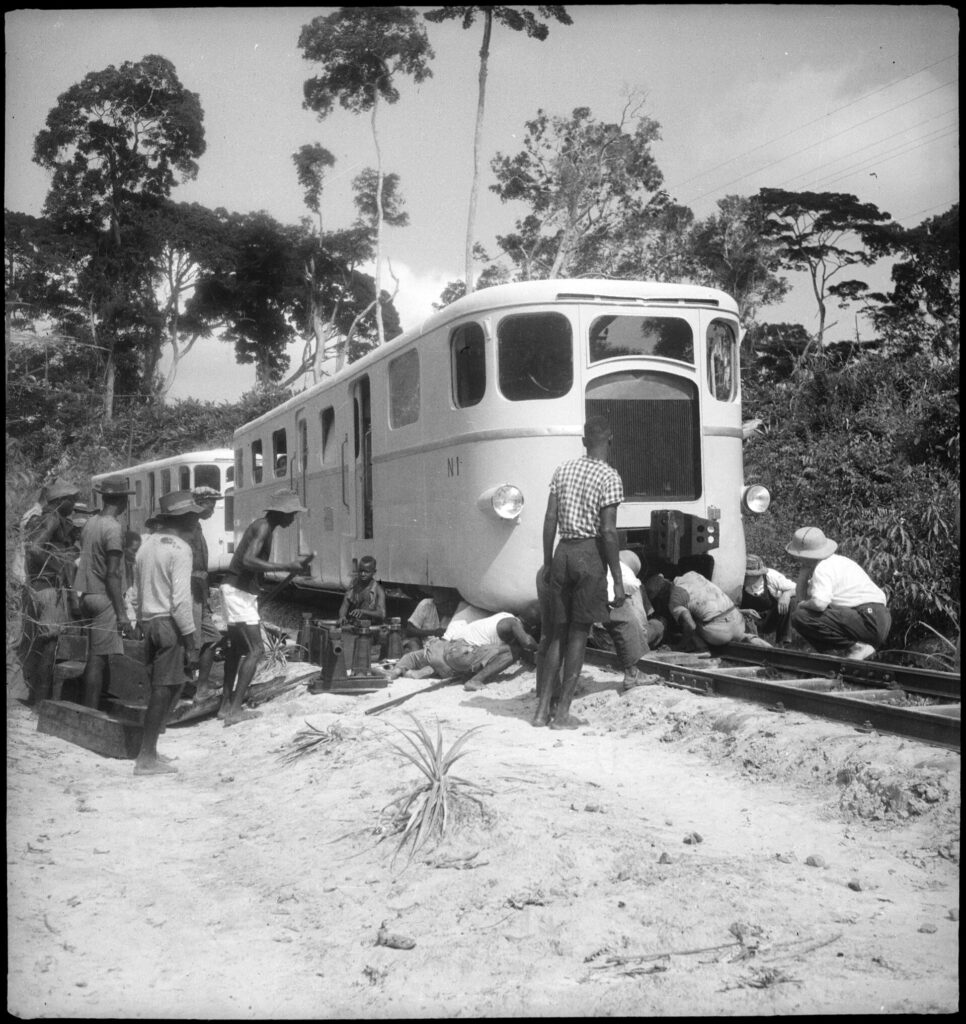
Belgian colonial rule and missionary work pressed hard against minkisi; many were taken or burned, and large numbers are now in European museums.
The tradition kept its integrity by making new forms. The Kimbanguist church, founded on Kimbangu's teaching, is African-led Christianity. Healing, ancestral practice and clan structures continue alongside churches.
Yes. The tradition lives today in changed forms across DRC, Angola, the Republic of the Congo and Zambia.
In Kongo regions, clan structures, funerals, honouring of the dead, proverbs and healing continue. Banganga still work, and many people combine Christian faith with older practice. The Kimbanguist church, with millions of members, is a living Kongo religious institution centred on Nkamba.
The Mwant Yav still reigns at Musumba as a traditional ruler of the Lunda, and the Kazembe at Mwansabombwe, where the Mutomboko ceremony is held each year.
Luba royal courts and chiefs continue; Mbudye has declined, and much lukasa knowledge is held only by a few.
Mukanda and makishi continue among Chokwe, Luvale and Lunda communities.
Much was lost: many minkisi were taken to Europe; colonial rule disrupted initiation societies; urbanisation weakens clan knowledge. Accusations of harmful power, especially against children in cities, are a serious problem that churches and families struggle with.
Contemporary practitioners include banganga, Kimbanguist leaders, Lunda and Luba court officers, makishi dancers, and scholars and writers who come from these communities.
Kongo is one of the African traditions that most shaped the Americas.
In Cuba, Palo (Regla de Palo Monte) is Kongo-derived. Its central object, the nganga or prenda, is a charged vessel whose name and logic come from Kongo nganga and nkisi.
In Haiti, Vodou includes Kongo nanchon (nations) and the Petwo rites, which scholars link to Kongo practice.
In Brazil, the Angola and Congo nations of Candomblé, the Congada coronations of a King of Congo, and many words in Brazilian Portuguese come from Kongo and related languages.
In Jamaica, Kumina is a Kongo-derived religious practice.
In the United States, Thompson and others trace Kongo influence in grave decoration in the South, in the ring shout, in charm bundles, and in Congo Square in New Orleans, where enslaved Africans gathered to dance. Thornton argues that the leaders of the 1739 Stono Rebellion in South Carolina were Kongolese.
Diaspora communities created new forms from fragments: an nkisi became a prenda; the dikenga appeared as a cross on a grave or a ground drawing; Kongo songs survived as words in new languages.
Modern Congolese communities in Brussels, Paris and elsewhere carry music, churches and clan ties.
Kimbanguism is the largest movement to have come from Kongo tradition. Founded on the work of Simon Kimbangu, it was banned under Belgian rule and became a recognised church in 1959.
Fu-Kiau's work on Kongo cosmology is itself a revival: a Mukongo teacher writing down and explaining the dikenga and the four moments of the sun for Kongo and diaspora readers.
Bundu dia Kongo, a political and religious movement in Kongo Central, calls for a return to Kongo religion and identity; it has clashed with the Congolese state and remains contested.
Angola has worked to recognise Mbanza Kongo as heritage, leading to its World Heritage listing in 2017.
In Zambia, the Mutomboko ceremony is a major public event, and the Kazembe's court keeps its history. Makishi masquerade is recognised and taught.
Scholars and museums have begun discussing the return of minkisi and Luba objects from European collections, and Belgium's Africa Museum in Tervuren has been reorganised.
In the diaspora, practitioners of Palo, Kumina and Haitian Vodou, and artists across the Americas, draw on Kongo signs.
What remains lost includes much of the knowledge of Kimpasi, Lemba and Mbudye, and the contexts of many objects held abroad.
Nzambi a Mpungu is the high god of the Bakongo: creator, remote, all-powerful. Nzambi is seldom given shrines; Kongo Christians use the name for God.
Kalunga is the great water and the boundary between the living and the dead. In some uses it names the sea, in others a power or the line itself.
Mbumba, the rainbow serpent, is linked with the bisimbi spirits of water, according to Thompson.
Among the Luba, the high god is called Leza or Kabezya Mpungu in different areas. The founding heroes stand at the head of the spirit world: Mbidi Kiluwe, the refined hunter from the east; Kalala Ilunga, his son, the first sacred king; and Nkongolo Mwamba, the crude red king, associated with the rainbow. Luba royal objects depict these figures and the women linked to them.
Among the Lunda, Nzambi is the high god. Lueji and Chibinda Ilunga are founder figures, and Chibinda Ilunga is carved by the Chokwe as an ideal hunter-chief, wearing a distinctive headdress and holding a staff.
Ritual protocols run through banganga, mediums, court officers and the keeping of the prohibitions attached to each power.
Bakulu are the honoured dead of a Kongo kanda. They live in mpemba, watch over the clan and its land, and expect remembrance.
Minkuyu are the restless dead, those not properly buried or who died badly. They may trouble the living and must be quieted.
Bisimbi (singular simbi) are local spirits of waters, rocks, forest and the land. They can be approached for health and fertility and are linked with particular places. Some accounts describe them as the dead who have become spirits of the land.
Minkisi are both objects and the spirits in them. Each nkisi has a name, a personality and rules. Minkondi (singular nkondi) are hunters who enforce oaths.
Vidye are Luba spirits, linked with royal spirits and with the possession of diviners and mediums.
Royal spirits in Luba and Lunda tradition remain active through the mwadi and through titles.
Rules of interaction: honour the dead with remembrance and proper burial; approach bisimbi and minkisi through a nganga; keep the prohibitions attached to each; never use spirit power for selfish harm. A spirit that has been properly answered usually rests.
The rainbow serpent is the most prominent being. In Luba tradition, Nkongolo is linked with the rainbow, and the rainbow is spoken of as a serpent; Reefe titled his history of the Luba The Rainbow and the Kings. In Kongo, Mbumba is a rainbow serpent linked with the bisimbi.
The leopard is the royal animal of the region. Kongo and Luba chiefs wore leopard skins and teeth, and the leopard stands for the power of rulers to judge and punish.
The dog appears in many minkisi as a hunter between worlds, especially the double-headed dog figure Kozo, which sees both the living and the dead; such figures belong to the Kongo nkisi tradition.
The tortoise and small antelopes appear in Kongo and Luba tales as tricksters who outwit larger animals through patience and cunning.
The python and the crocodile appear in water traditions linked with bisimbi and Kalunga.
Animals in the stories relate to humans as helpers, enemies and signs. Hunting is a powerful theme: the founders Mbidi Kiluwe and Chibinda Ilunga are hunters, and the hunter's knowledge of the bush, of animals and of medicines is a form of power that leads to kingship.
The Luba epic of Nkongolo and Kalala Ilunga is the most widely told founding story of the southern savanna.
Nkongolo Mwamba, the red king, ruled the Luba lands. Tradition describes him as cruel and crude: he ate and drank in public, had no manners, and married his own sisters.
A hunter came from the east, Mbidi Kiluwe, refined in his habits. He married Nkongolo's sisters Bulanda and Mabela. But he and Nkongolo quarrelled, and Mbidi returned to the east, leaving Bulanda pregnant.
Bulanda bore a son, Kalala Ilunga. He grew strong and skilful and won fame as a warrior. Nkongolo grew jealous. He planned to kill Kalala by having him dance over a pit hidden under a mat, set with spikes. A drummer warned Kalala through the drum, and Kalala leapt over the pit, threw his spear into the ground, and fled east to his father's people.
He returned with an army. Nkongolo fled, was captured, and was killed. Kalala Ilunga became king and founded the line of sacred kings who hold bulopwe.
The story shows the Luba idea that true rule is refined, comes from a line tied to the east, and must replace crude power. De Heusch reads it as a myth about the origin of the state.
The hunter from elsewhere: Mbidi Kiluwe, Chibinda Ilunga. He comes from outside, skilled and refined, marries into the land, and founds a new line. His arc is arrival, marriage and departure or rule.
The crude king: Nkongolo. He holds power but lacks refinement and kindness. His arc ends in overthrow, and he becomes part of the sacred landscape.
The founding son: Kalala Ilunga. Born of the outsider and the land, threatened by the old king, he flees, returns and rules.
The royal woman: Lueji, Bulanda, the mwadi. She holds the right to rule or the link to the land, chooses or bears the founder, and keeps the king's memory after his death.
The departing brother: Kinguri, Chinyama. Losing the regalia, he leaves with followers and founds a new state, keeping a tie to the centre.
The prophet: Kimpa Vita, Simon Kimbangu. Arising when the order has decayed, the prophet calls for restoration and is punished by those in power, but the movement outlives them.
The nganga: healer and maker of minkisi, honoured and feared.
The trickster: tortoise or antelope, who beats the strong by cunning.
Lueji and Chibinda Ilunga (Lunda). Yala Mwaku, a Lunda ruler, was beaten by his sons Kinguri and Chinyama while drunk. His daughter Lueji cared for him, and he gave her the lukano, the royal bracelet. A Luba hunter, Chibinda Ilunga, arrived; Lueji married him. During her menstrual seclusion she could not hold the lukano, so she gave it to him. Her brothers left to found new states. Her son, Yav a Nawej, became the first Mwant Yav.
Structure: a breach of filial duty, a transfer of power through a woman and a prohibition, and a branching departure. It explains Lunda rule and the spread of Lunda titles.
Kimpa Vita (Kongo). In 1704 a young noblewoman, Kimpa Vita, said Saint Anthony had entered her. She taught that Jesus was born at Mbanza Kongo, called for the abandoned capital to be resettled, and gathered thousands of followers. In 1706 she was burned. Soon after, the kingdom was reunited.
Structure: decay, a prophet's call, sacrifice and restoration. Thornton shows how it joins Kongo and Christian ideas.
Lukeni lua Nimi (Kongo). A young man crosses the river, kills his aunt, and founds Kongo by conquest.
Structure: a founding crime that separates king from kin.
Titles: Nzambi; the high god
Domain: Creation, the whole of the cosmos
In the stories: Kongo accounts of creation and the order of the worlds
Notes: Nzambi a Mpungu is the remote high god of the Bakongo. Nzambi is acknowledged but seldom given shrines. Kongo Christians use the name for God.
Titles: The great water; the boundary
Domain: The boundary between the living and the dead; the sea
In the stories: The dikenga and the four moments of the sun
Notes: Kalunga is the water or line that separates nseke from mpemba. The dead cross Kalunga at death. The word also names the sea in Kongo and related languages.
Titles: Mbumba Luangu; rainbow serpent
Domain: Rainbow, water, bisimbi spirits
In the stories: Kongo traditions of the simbi spirits (to check)
Notes: Thompson describes Mbumba as a rainbow serpent linked with the bisimbi. It appears in Kongo art and minkisi. Details vary by region.
Titles: Simbi; spirits of the land and water
Domain: Waters, rocks, forests, fertility
In the stories: Local traditions of particular pools, falls and rocks
Notes: Bisimbi are local spirits of the Kongo landscape. They are approached for health and fertility. In the Americas, the simbi of Haitian Vodou carry the name.
Titles: Kabezya Mpungu (in some Luba areas)
Domain: High god of the Luba
In the stories: Luba accounts of creation (to check)
Notes: Luba speakers in different regions name the high god differently. Leza is also the name of the high god among many neighbouring peoples. Like Nzambi, the high god is remote.
Titles: The red king
Domain: Crude power; the rainbow
In the stories: The Luba epic
Notes: Nkongolo is the first Luba king in the epic, remembered as cruel and crude. He is overthrown by Kalala Ilunga. Tradition links him with the rainbow serpent.
Titles: The hunter from the east
Domain: Refinement, the source of sacred kingship
In the stories: The Luba epic
Notes: Mbidi Kiluwe is the refined hunter who marries Nkongolo's sisters and fathers Kalala Ilunga. Bulopwe, sacred royalty, is traced through his blood. He is honoured as a royal spirit.
Titles: First sacred king of the Luba
Domain: Sacred kingship, bulopwe
In the stories: The Luba epic
Notes: Kalala Ilunga escapes Nkongolo's trap, returns with an army, and becomes king. Later Luba kings and many neighbouring dynasties claim descent from him. He is honoured as a royal spirit.
Titles: Ruwej
Domain: Lunda sovereignty; founding mother
In the stories: Lueji and Chibinda Ilunga
Notes: Lueji is the heir who receives the lukano from her father and gives it to Chibinda Ilunga. Her son becomes the first Mwant Yav. She is central in Lunda and Chokwe tradition.
Titles: Tshibinda Ilunga; the Luba hunter
Domain: Hunting, civilising rule
In the stories: Lueji and Chibinda Ilunga
Notes: Chibinda Ilunga is the Luba hunter who marries Lueji and takes the regalia. Chokwe carvers made celebrated figures of him as an ideal hunter-chief. Some Luba traditions link him with Kalala Ilunga's line.
Also in Central Africa